
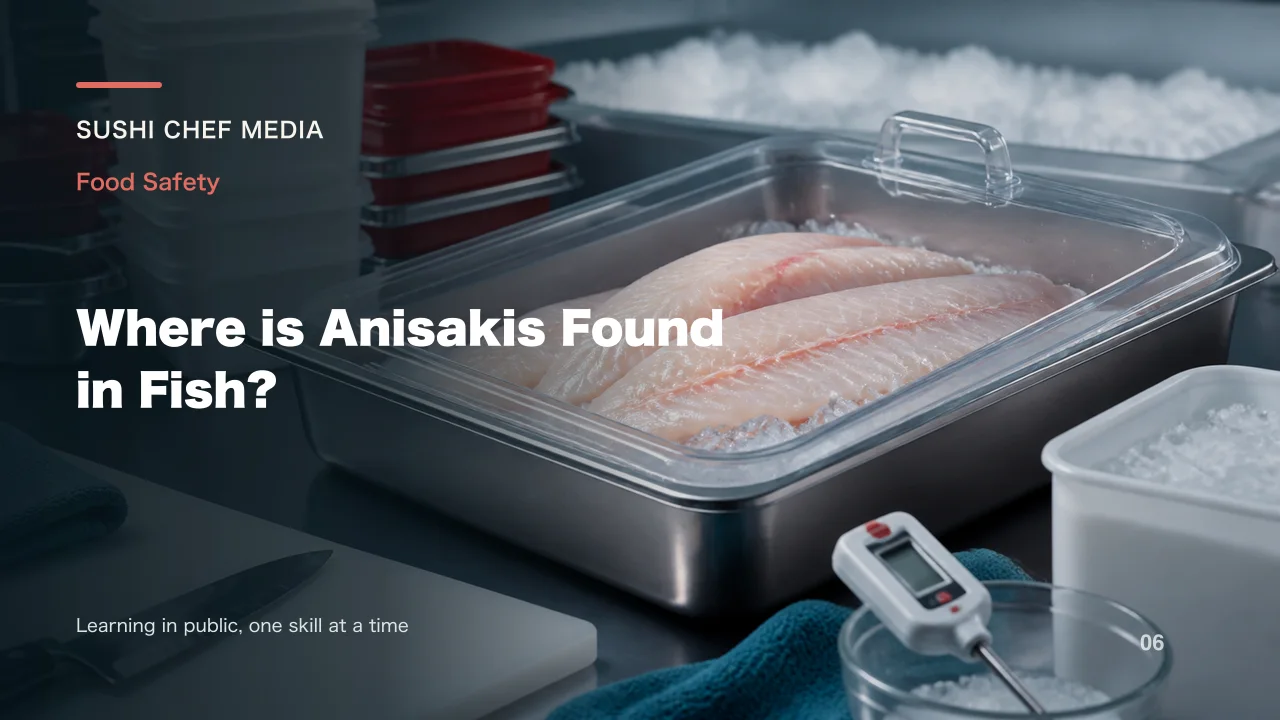
Anisakis is a parasitic worm that infects seafood such as mackerel, horse mackerel, Pacific saury, bonito, sardines, salmon, and squid. It primarily inhabits the internal organs, but once the fish dies, it is known to migrate from the internal organs to the muscle tissue. Anisakis larvae measure about 2–3 cm in length and 0.5–1 mm in width, appearing like thick white threads.
-
Purchasing Fish and Removing Internal Organs
- When purchasing fish, choose the freshest possible and promptly remove the internal organs.
-
Visual Inspection
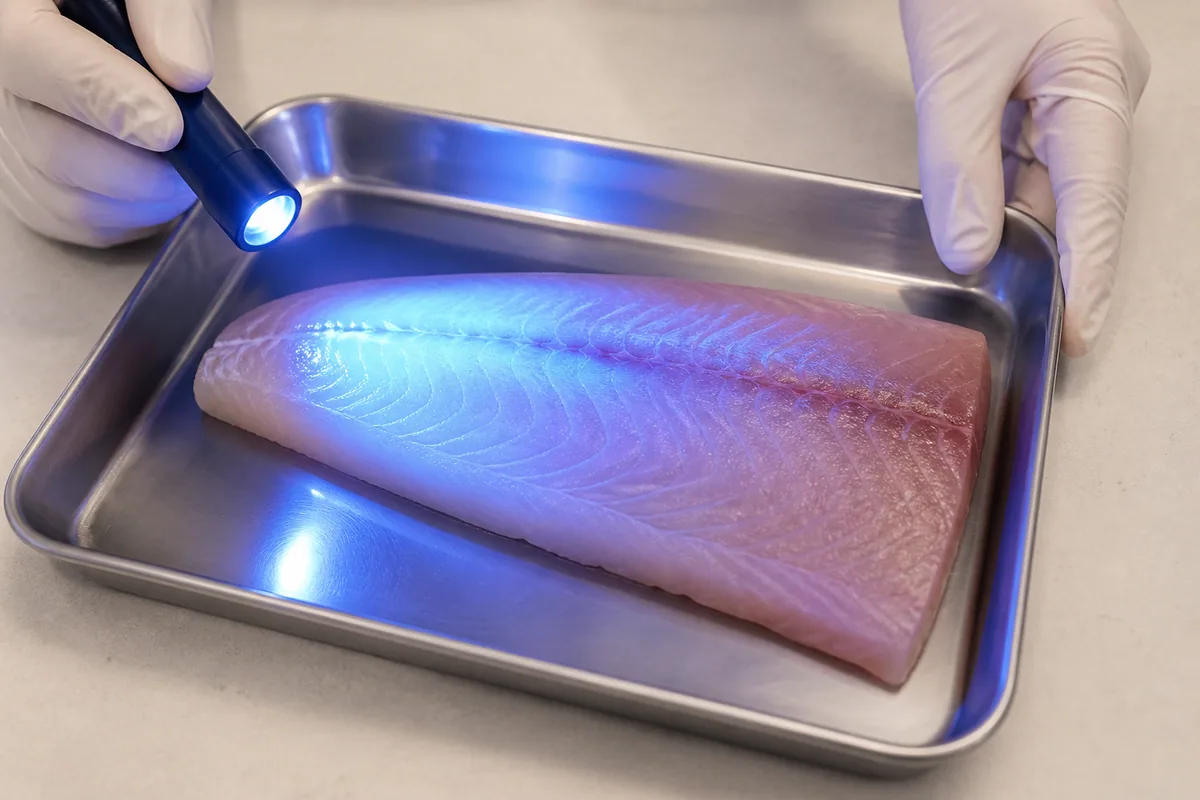
- Check the internal organs and muscle tissue visually for Anisakis larvae. If found, remove them.
Important Points
-
Freezing Treatment
- Anisakis larvae die if frozen at -20°C for 24 hours or longer. Freezing is recommended to prevent consumption of live larvae when eating raw.
-
Heating Treatment
- Heating fish to over 70°C kills Anisakis larvae. Thorough cooking is recommended to avoid eating raw parasites.
Pre-Service Checks
- Verification of Freezing and Heating Conditions
- Because freezing and heating requirements vary depending on fish species, thickness, temperature, and hygiene conditions, confirm specific guidelines and apply appropriate processing.
Summary
Anisakis is a parasite that infects the internal organs and muscle of fish and can cause food poisoning. When purchasing fish, select fresh specimens, promptly remove internal organs, and visually inspect to remove any Anisakis larvae found. To avoid raw consumption risks, ensure proper freezing or heating treatment of fish.