
その他の調査Practiced
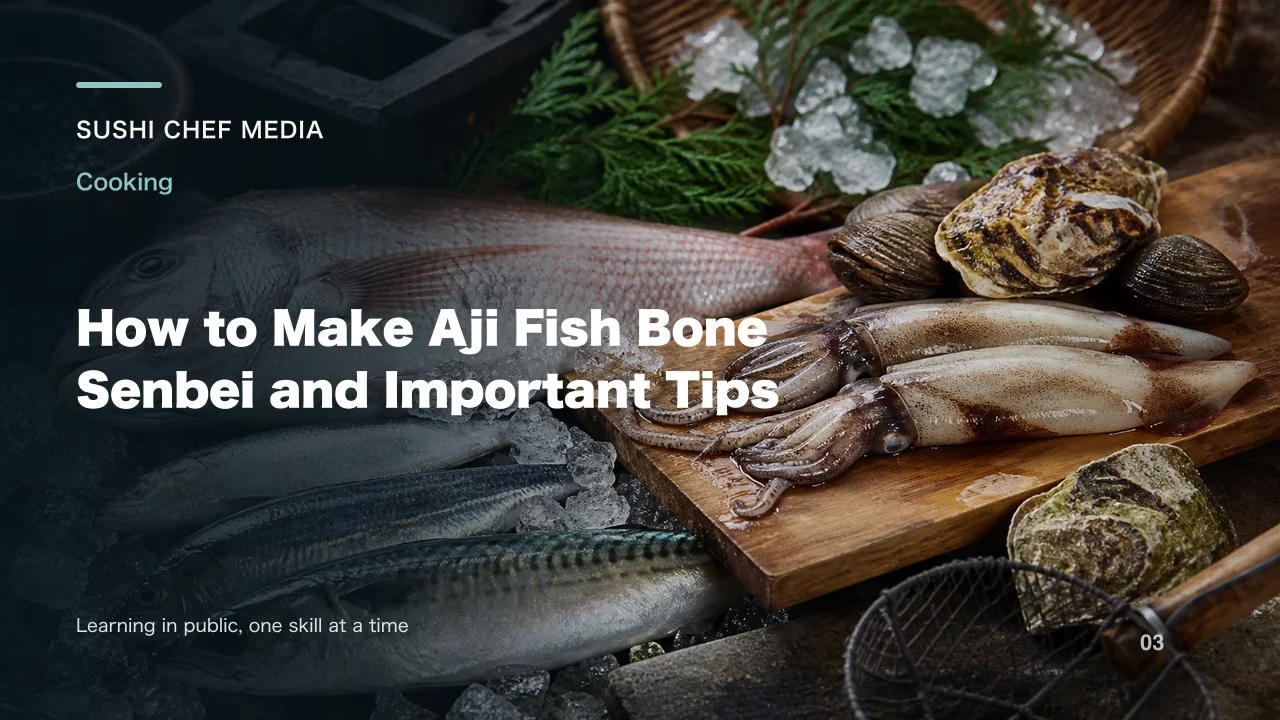
How to Make Aji Fish Bone Senbei and Important Tips
Explains how to make calcium-rich Aji fish bone senbei using the backbone of Aji fish, along with important precautions.
PORTFOLIO NOTES / ENGLISH
Short, readable notes for anyone who wants to understand my current level, practice method, and direction.
Explains how to make calcium-rich Aji fish bone senbei using the backbone of Aji fish, along with important precautions.
Introducing sushi ingredients that best showcase the richness and aroma of red vinegar, categorized by lean tuna, bluefish, simmered items, and shellfish.
An explanation of why red vinegar is said to not pair well with white fish and squid, and how blending it with rice vinegar makes it easier to use.
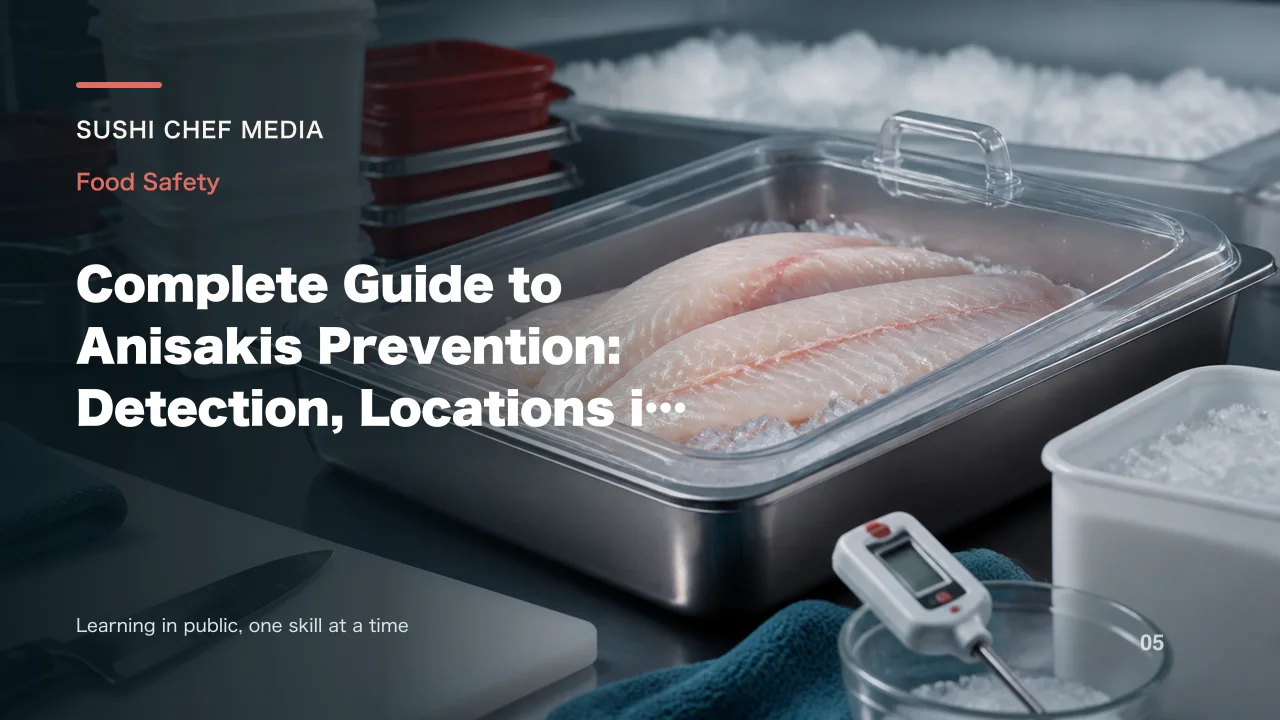
This guide consolidates methods for detecting Anisakis, understanding where they reside in fish, fish species considerations, the use of blacklights, and the conditions for free...
This article organizes the core temperature and time standards for heating as a countermeasure against Anisakis, based on information from the Ministry of Health, Labour and Wel...
Anisakis is a nematode parasite found in seafood that can be visually removed, but complete elimination is considered difficult.

This article explains histamine countermeasures when handling tuna, bonito, mackerel, and others, from purchase to preprocessing and storage in order.
This article explains how to check raw consumption labels and cold storage management when handling blocks of tuna, white fish, blue fish, squid, etc. until the next morning.
Step-by-step instructions, tips, common pitfalls, and unexpected points when making crispy crackers from fish skin.

This article explains why the taste and condition of fish change differently during storage depending on species, focusing on moisture, fat, bloodline, and histamine factors.

An organized explanation based on official information about the mechanism of histamine food poisoning caused by fish, fish species prone to cause it, symptoms, and basic preven...
Explains whether histamine food poisoning can be prevented by heating, clarifies the difference with anisakis parasites, and advises on deciding not to eat suspicious fish.

This article organizes specific conditions such as leaving fish at room temperature, thawing, and long-term storage that increase the risk of histamine food poisoning.
This article explains why nigiri sushi made with bonito is less common than tuna, focusing on its aroma, flesh texture, and rapid freshness changes.
Organizing moisture control, condiments, simmered soy sauce (nikiri), and torching techniques when preparing skipjack tuna (katsuo) sushi, aimed at beginners.
Guidance on how long to marinate bonito in koikuchi soy sauce, the combination of ginger and scallions, and cautions against over-marinating.
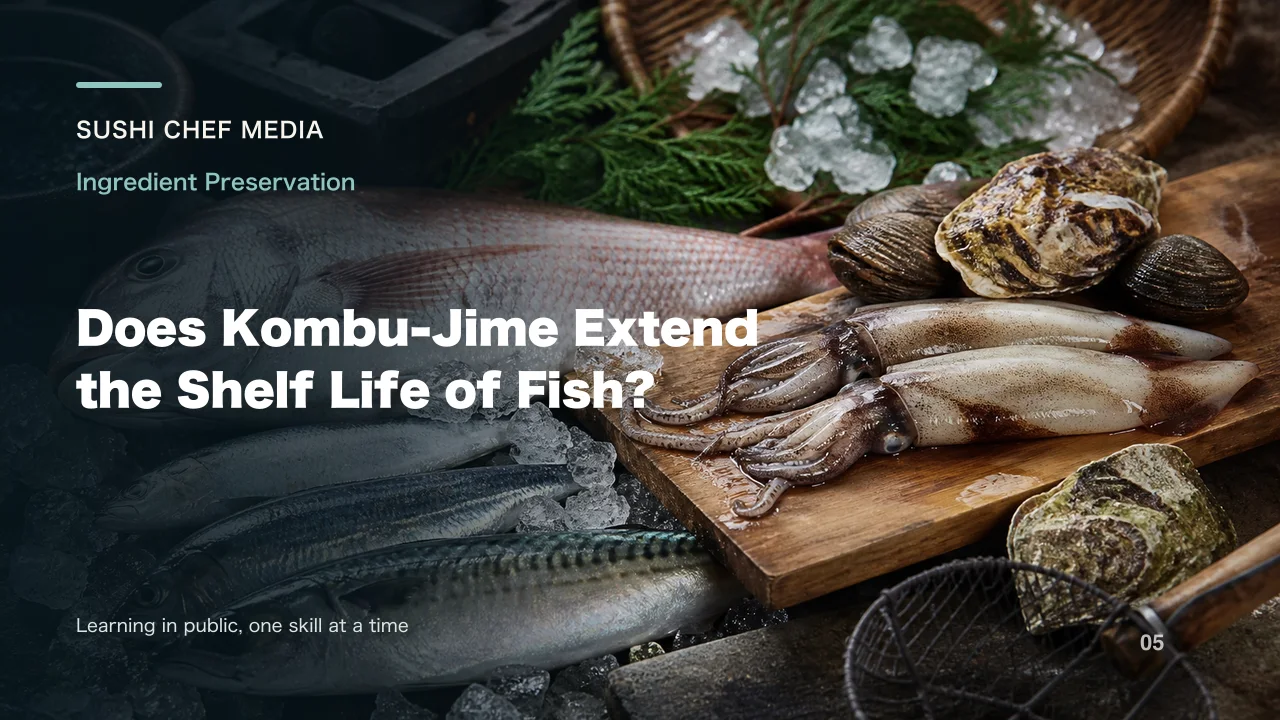
Kombu-jime is known as a technique to enhance the flavor of fish by applying kelp (kombu), but scientific evidence regarding its effects on extending shelf life or providing bac...

An actual trial of kombu-jime (kelp curing) on sea bream comparing the taste difference without aging and the drying out after 3 days, organizing an easy-to-adjust period for ho...
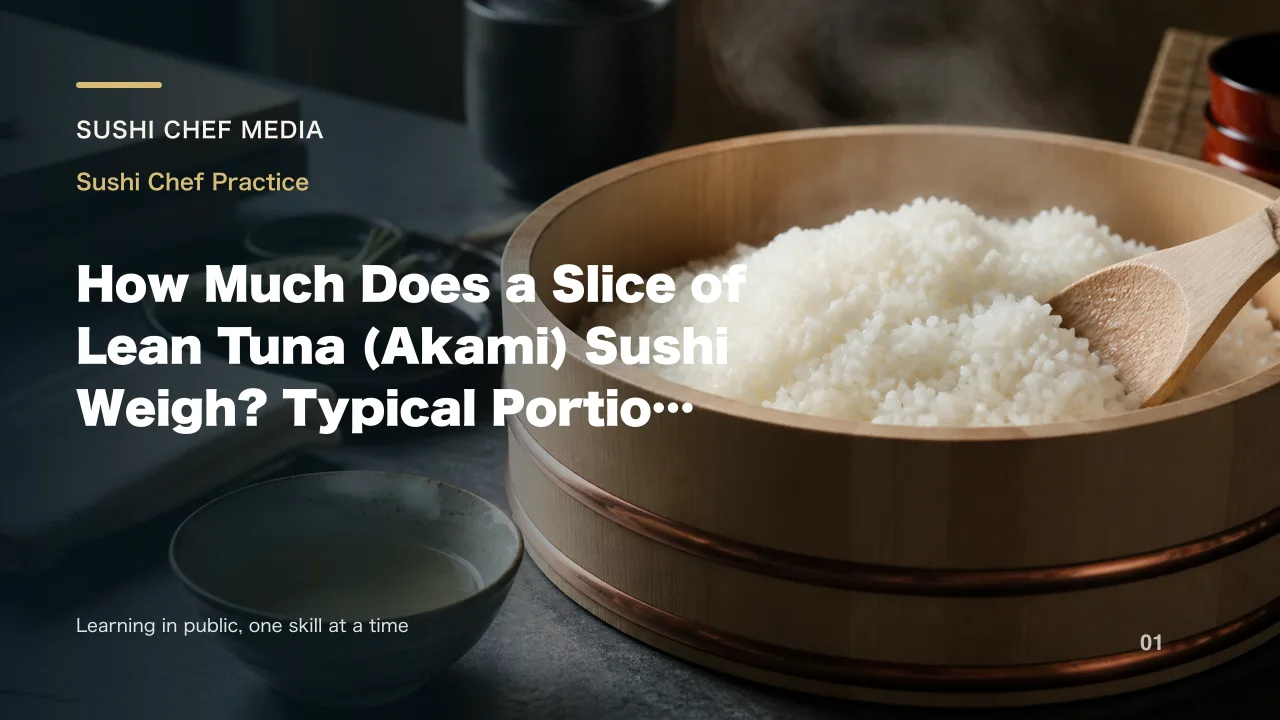
This article introduces the typical size range of 8 to 18 grams for lean tuna sushi slices and a method to practice balancing the slice with sushi rice.
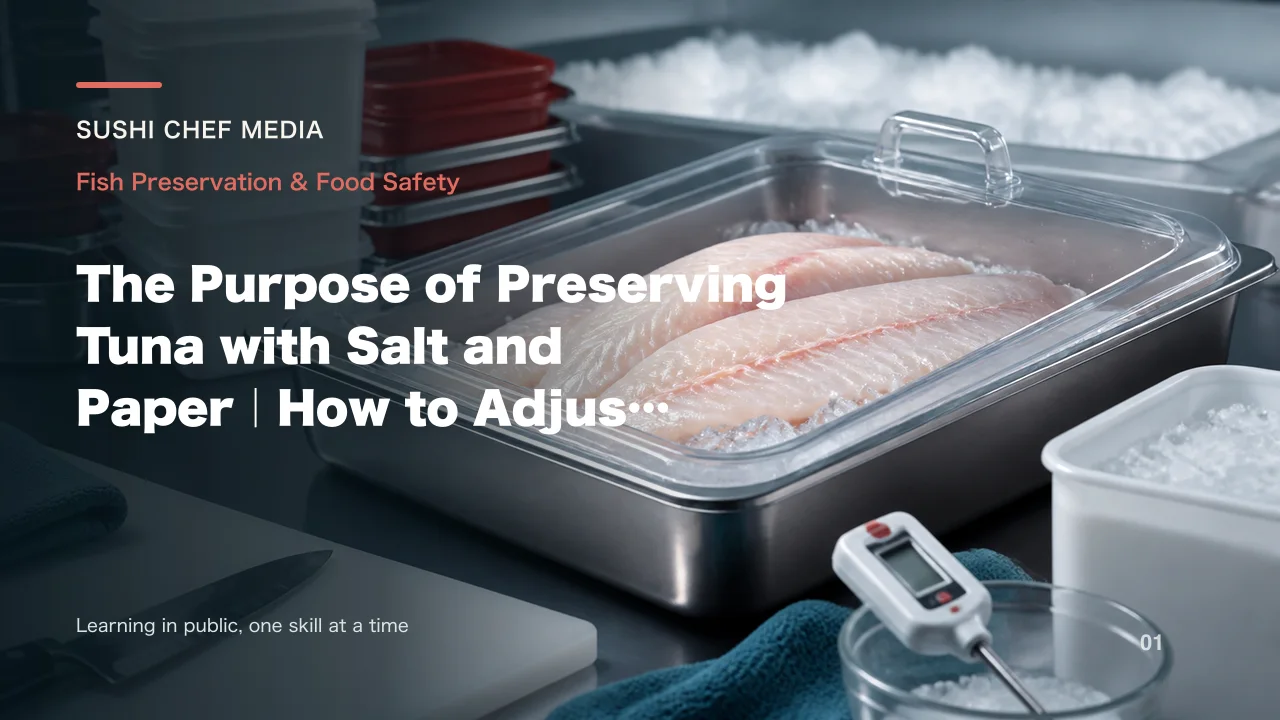
Explains the purpose of applying salt and wrapping tuna in paper, clarifying why this method does not extend the safe storage period.
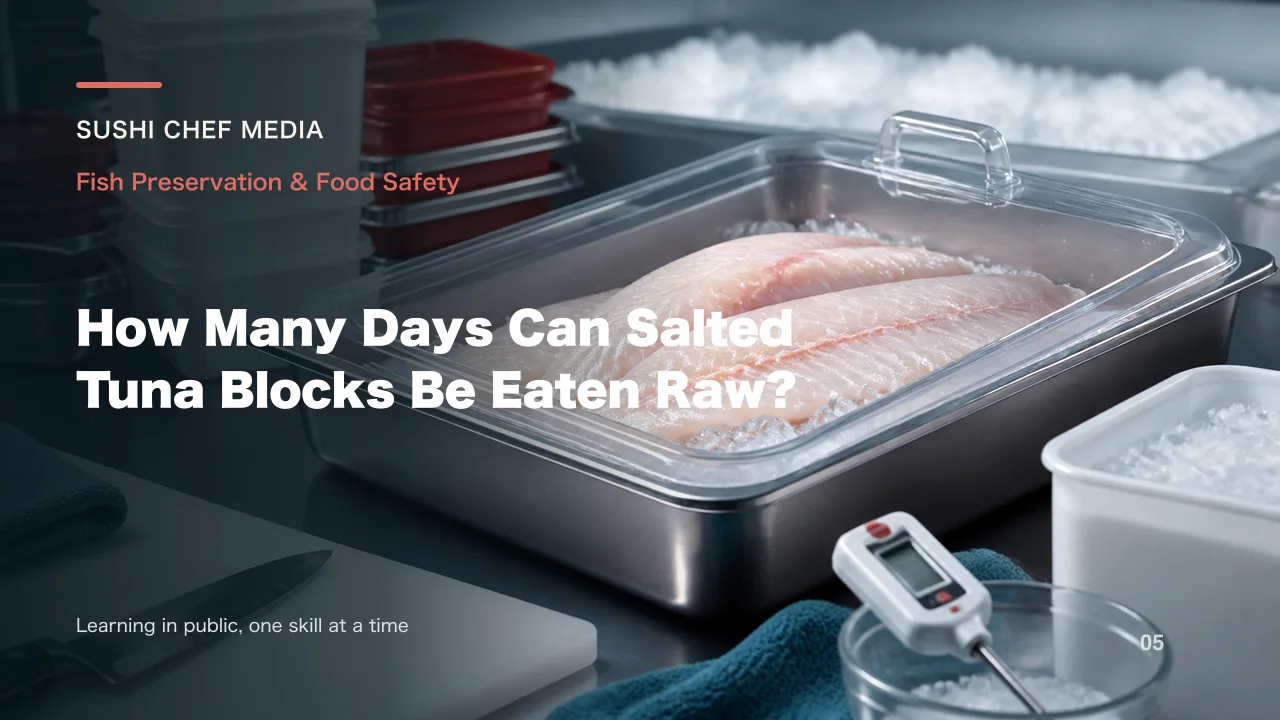
This article organizes how to consider expiration dates and storage temperatures when eating tuna treated with salt and paper raw.
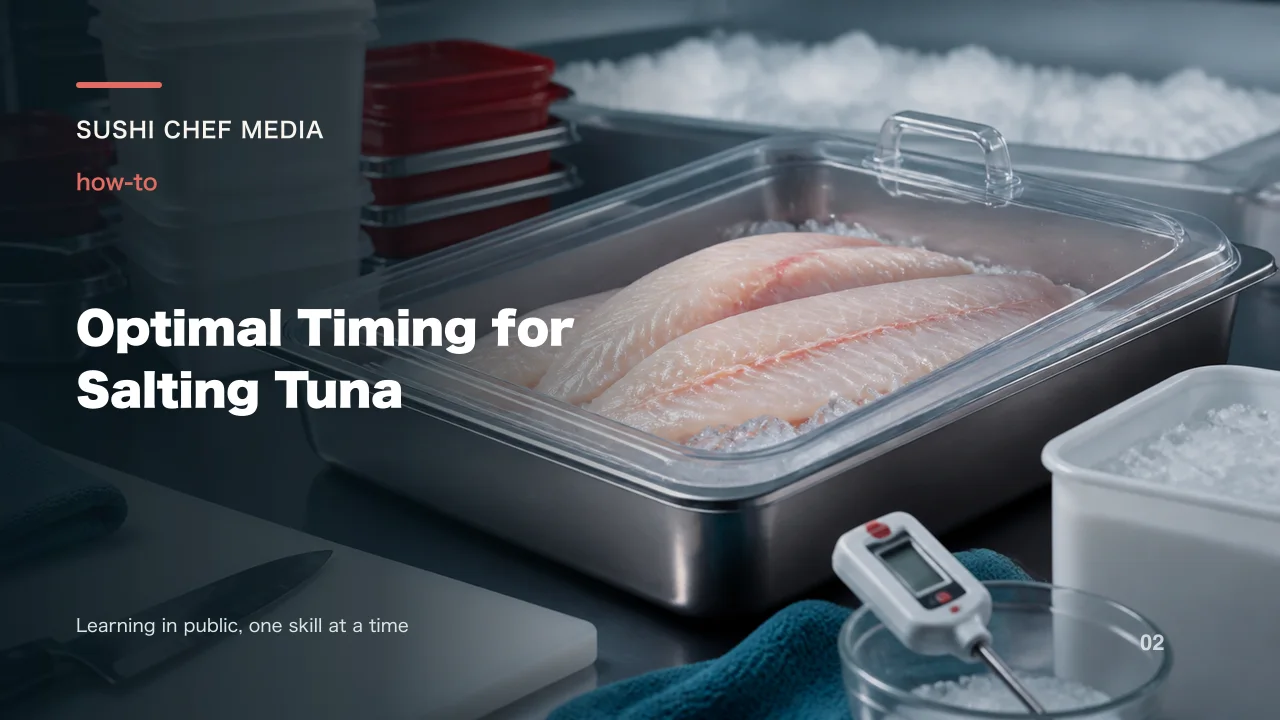
The time to salt tuna varies depending on the fish type, thickness, temperature, and hygiene conditions. Generally, 5 to 10 minutes, and at most 15 to 20 minutes, serves as a pr...
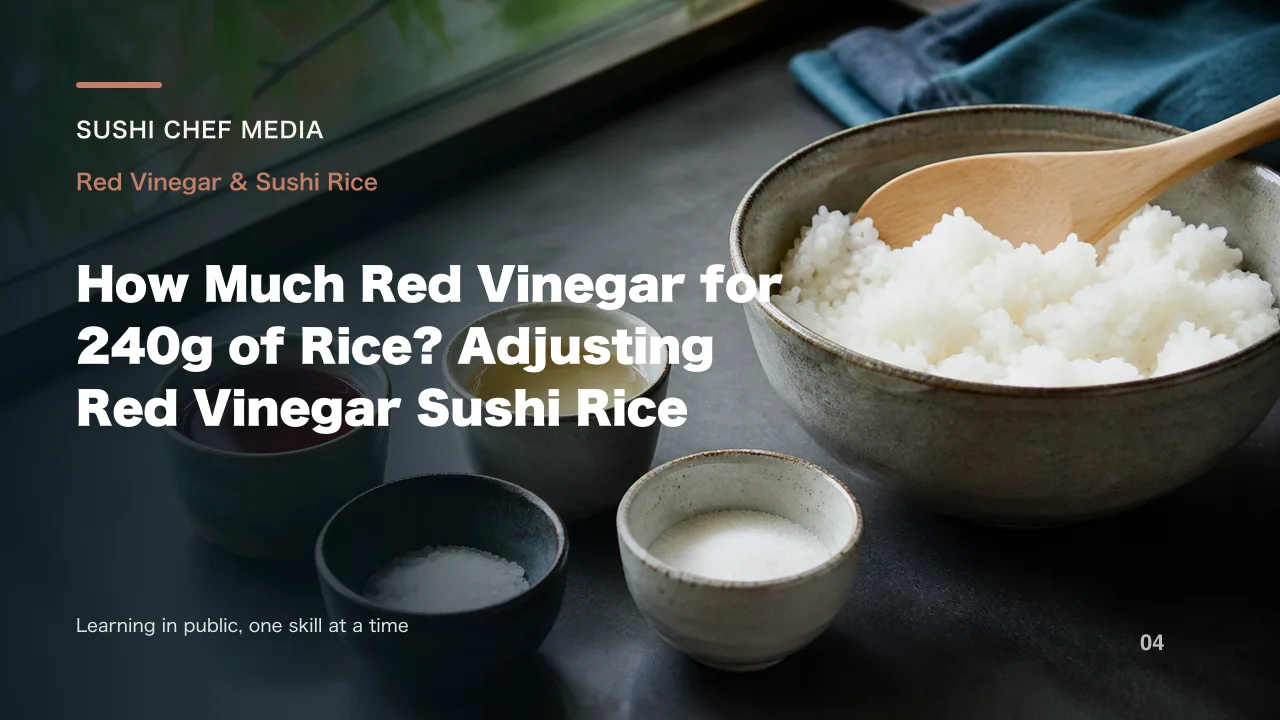
This article explains how to determine the amount of red vinegar to mix with 240g of freshly cooked rice, recommending 20–25ml as a guideline and describing the tasting process...
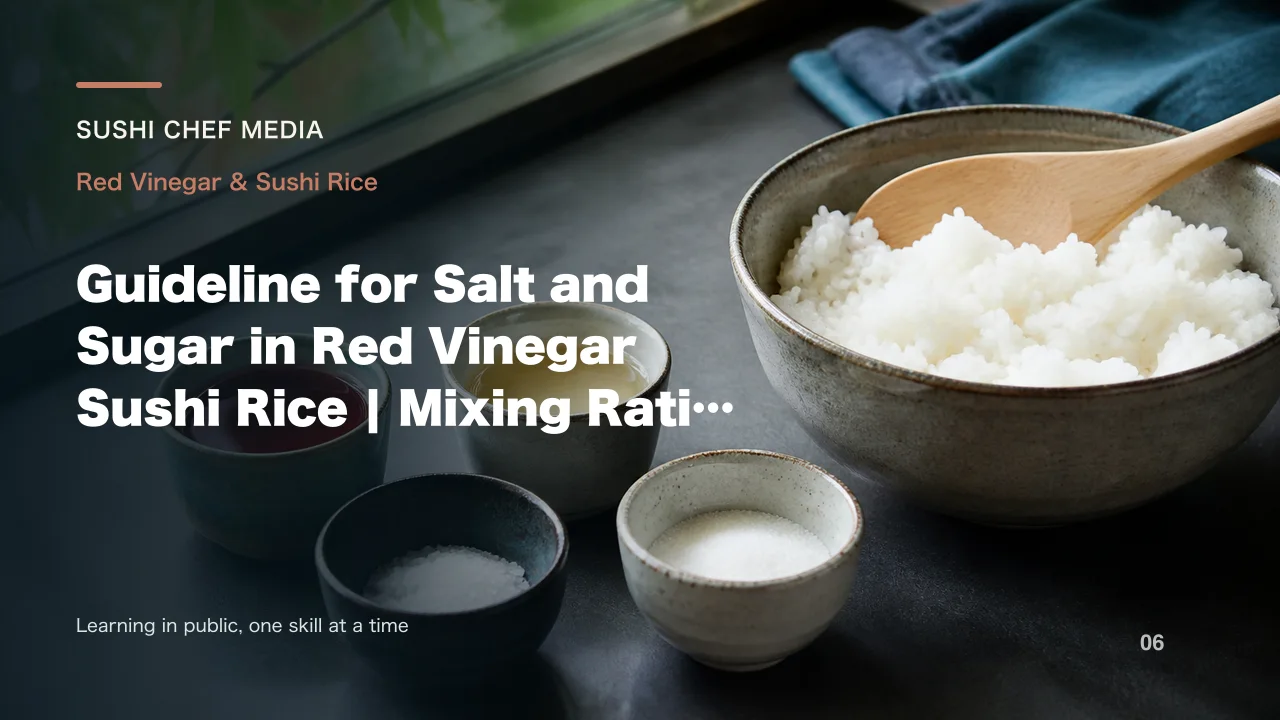
This article provides a guideline for mixing red vinegar (akazu), salt, and sugar with 240g of cooked rice, explains why to reduce sugar, and how to adjust by taste-testing.
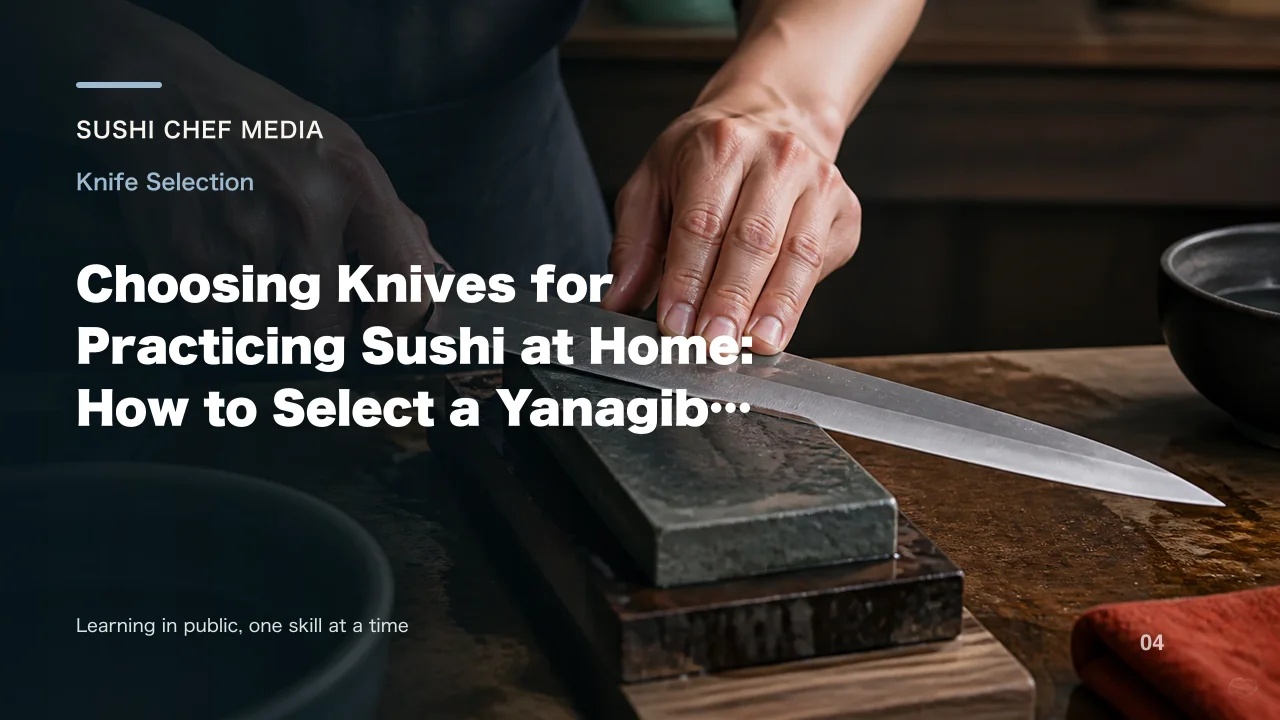
When practicing sushi at home, the Yanagiba knife is the first knife you should purchase. This article explains in detail how to choose a Yanagiba knife and important points to...

For those practicing sushi at home, a Yanagiba (willow blade) knife is an ideal first purchase. This article explains key points and cautions for beginners selecting a knife.
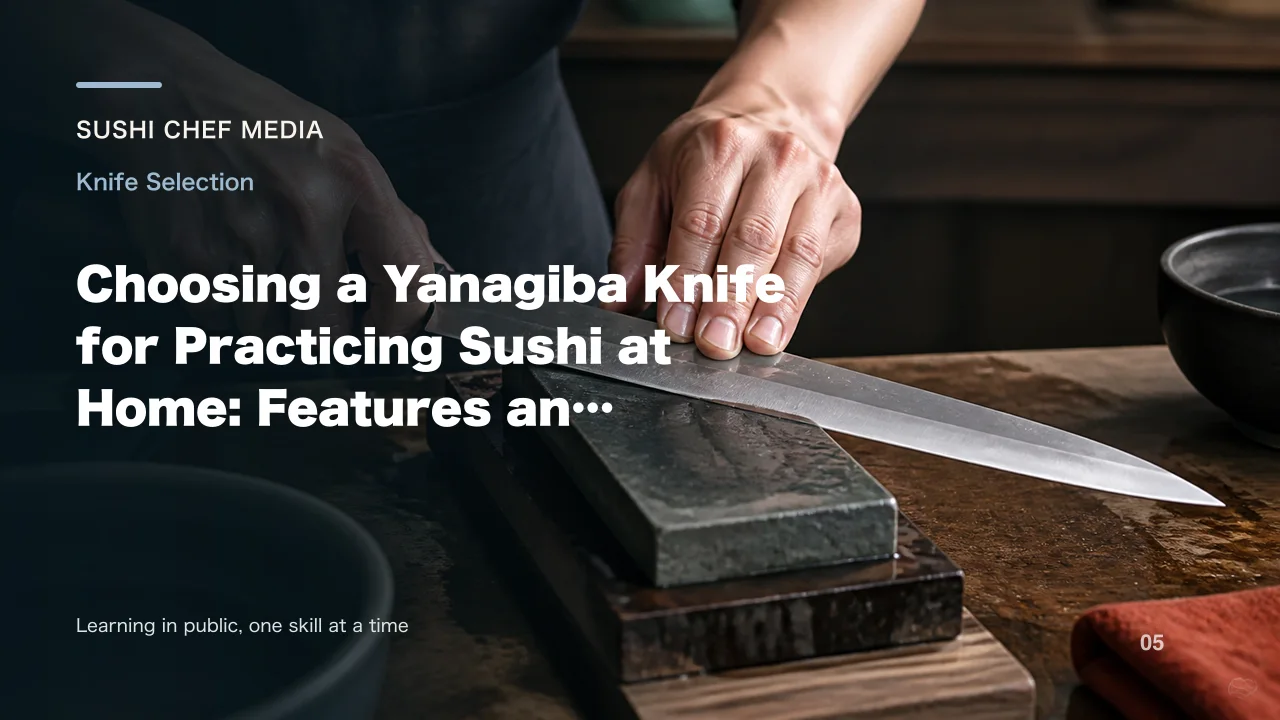
When practicing sushi making at home, the yanagiba knife is generally recommended as the first knife to purchase. This article explains in detail the features of the yanagiba kn...
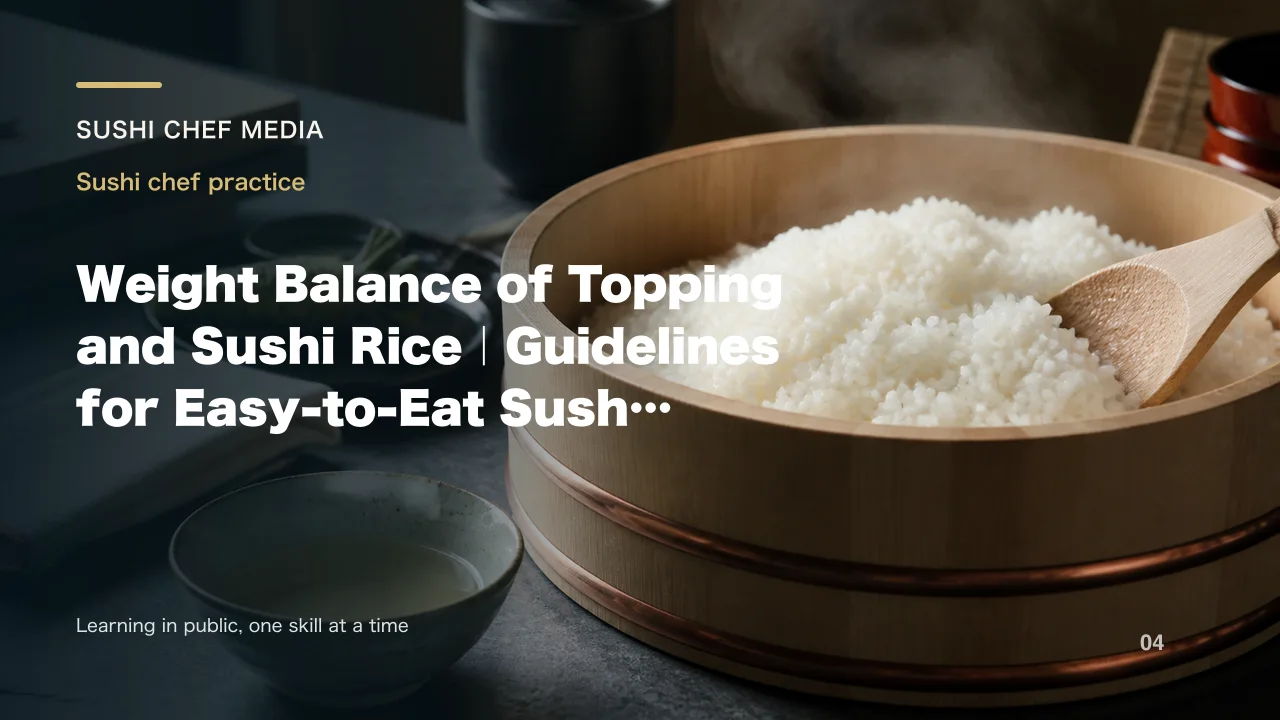
This article explains how to measure sushi toppings and rice under the same conditions to improve the size and mouthfeel of hand-formed sushi (nigiri).
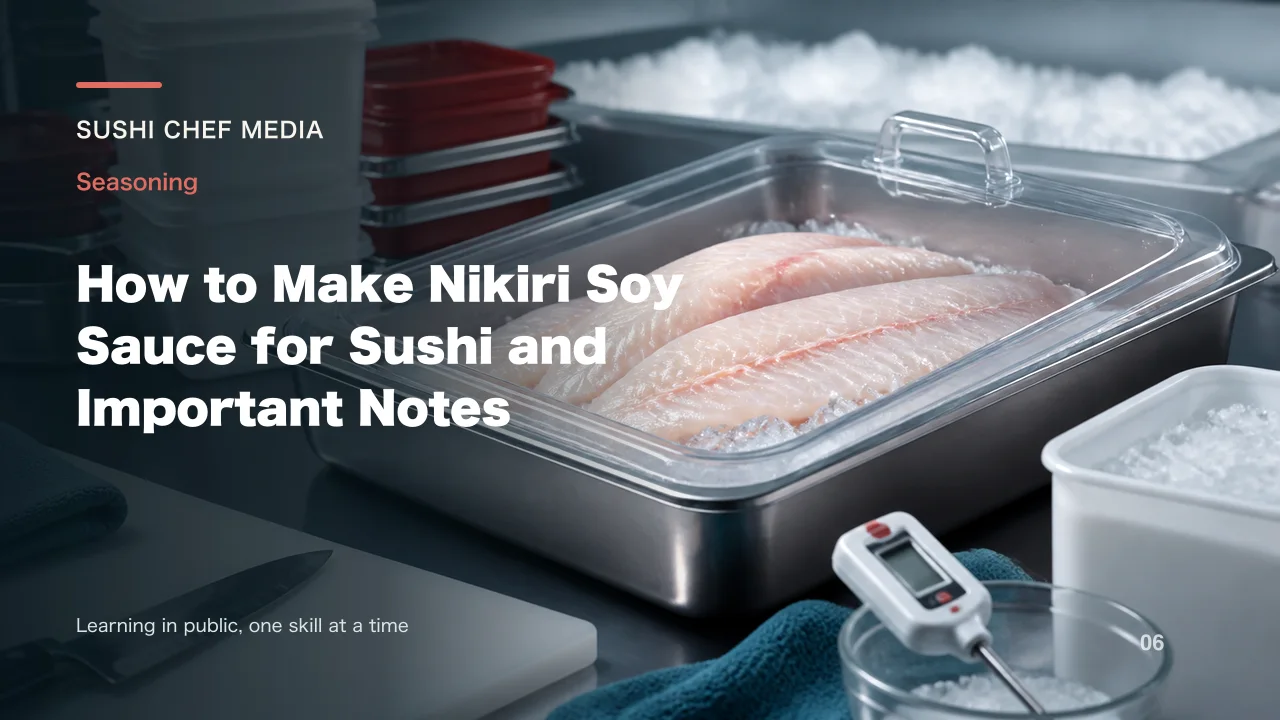
For aspiring sushi chefs, an explanation of how to make nikiri soy sauce at home and important points to note.
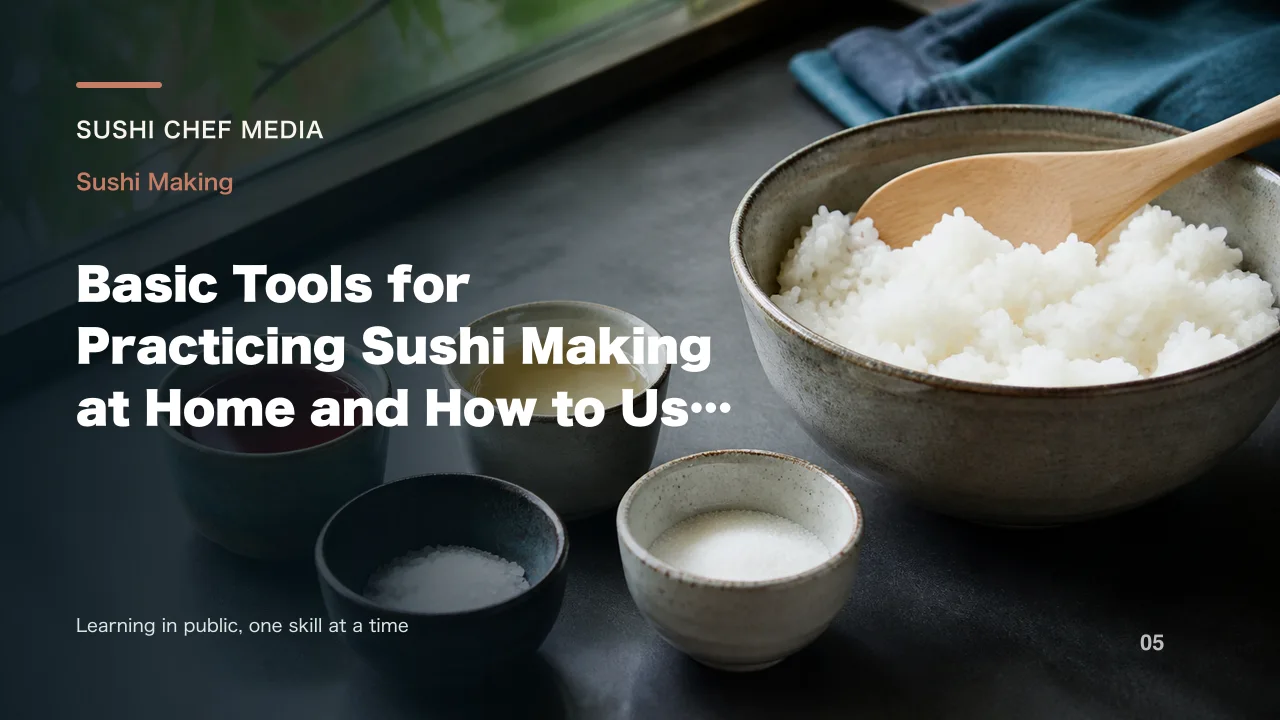
An explanation of the essential tools needed to practice sushi making at home, along with their correct usage and important precautions.
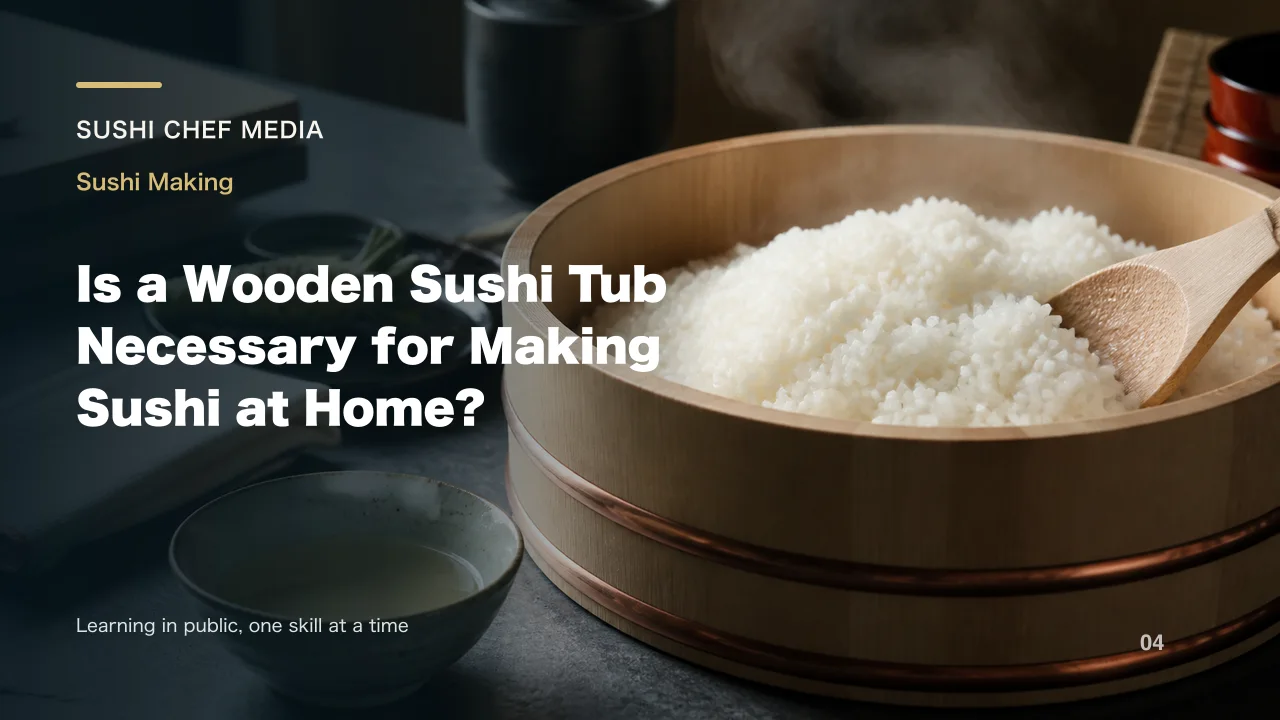
Examining how the use of a wooden sushi tub affects the process of making sushi at home.
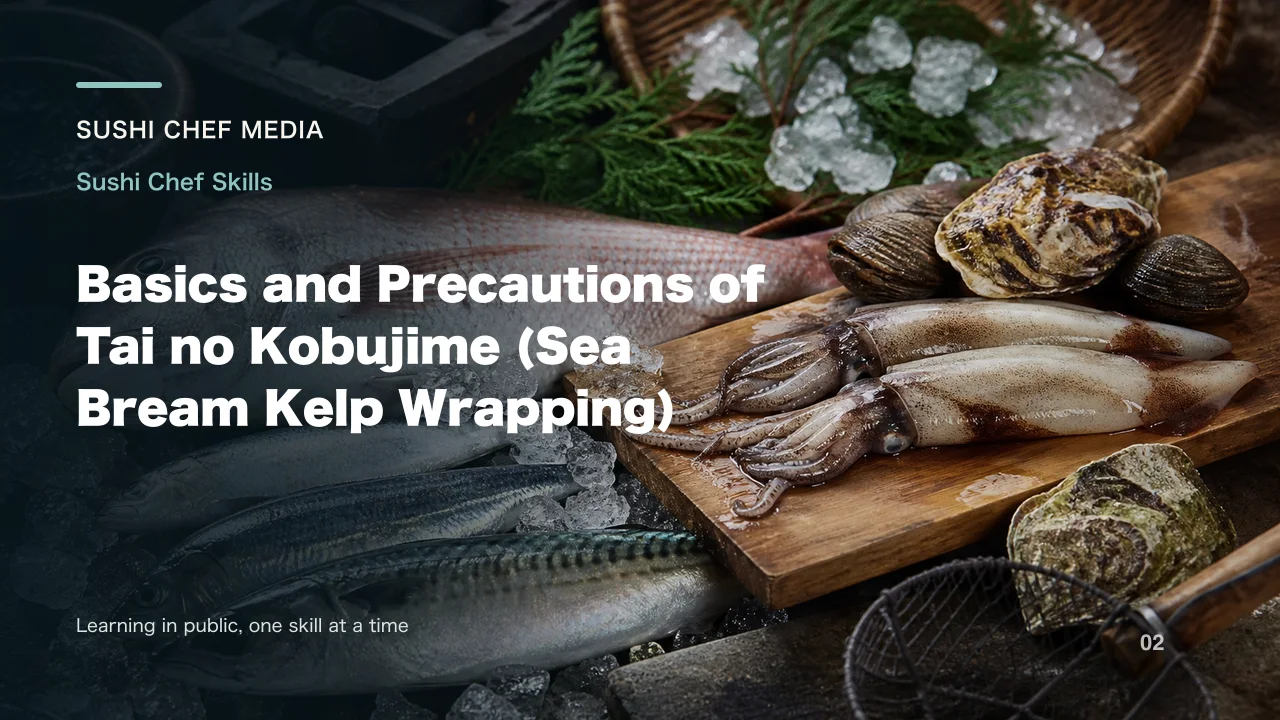
Tai no Kobujime is a traditional technique that enhances the flavor of sea bream by lightly salting, wiping off moisture, and wrapping the fish with kelp.
Explains the timing and precautions for removing kelp after pressing sea bream (tai) with kelp for three days.
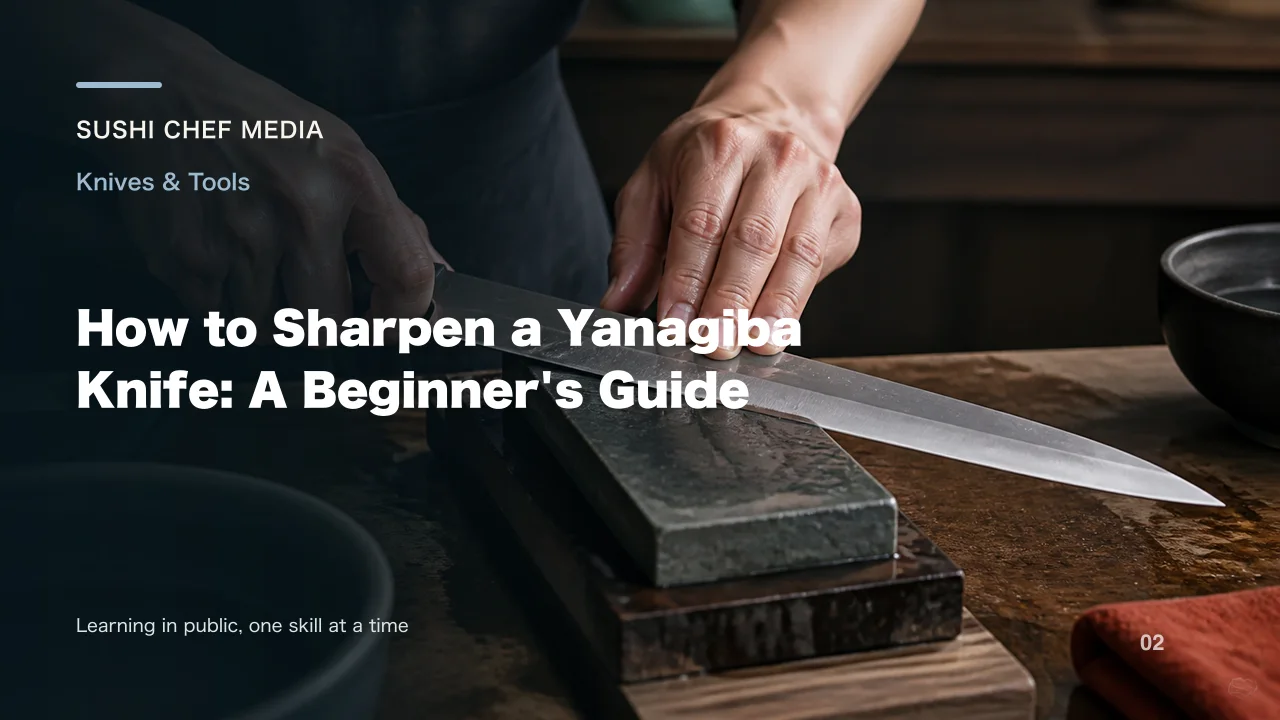
An easy-to-understand explanation of how to sharpen a Yanagiba knife for beginners.
An explanation of low-temperature management when storing True Horse Mackerel until the next morning and key points to decide whether it's safe for raw consumption after storage.
Anisakis is a parasitic worm that infects the internal organs and muscles of fish, and can cause food poisoning.

This article explains specific procedures and precautions to prevent food poisoning caused by Anisakis, a parasitic worm.
An explanation of the lethal effects of freezing treatment on Anisakis parasites, differences between household and commercial freezers, and the difficulty of visual detection.
Anisakis is a parasite found in many marine seafood species, and infection through raw consumption is a concern. This article examines the risk differences among fish species an...
The number of Anisakis parasites in sardines varies greatly depending on factors such as fish species, individual differences, origin, and season.
Anisakis is a parasite that infests seafood and can cause food poisoning when eaten raw. This article details the characteristics of Anisakis, infection routes, symptoms, and pr...
This article explains the safety considerations and precautions when using deboned hamo (pike conger) as sushi topping.
A beginner-friendly guide to making chirashi sushi—a colorful Japanese home dish—with easy steps for preparing vinegared rice and tips for attractive plating.
An explanation of whether freezing fish affects its taste, detailing the differences between quick freezing and typical home freezers.
A beginner-oriented guide to filleting fish and the three-fillet method (san-mai oroshi). Explains the steps and precautions from scaling, gutting, filleting, removing belly and...
Hamo, known as pike conger eel, is a beloved summer delicacy mainly in the Kansai region of Japan. Particularly in Kyoto, it is valued as a high-end ingredient. This article exp...
This article explains the steps and precautions for preserving Heda snapper using the kombu-jime method.
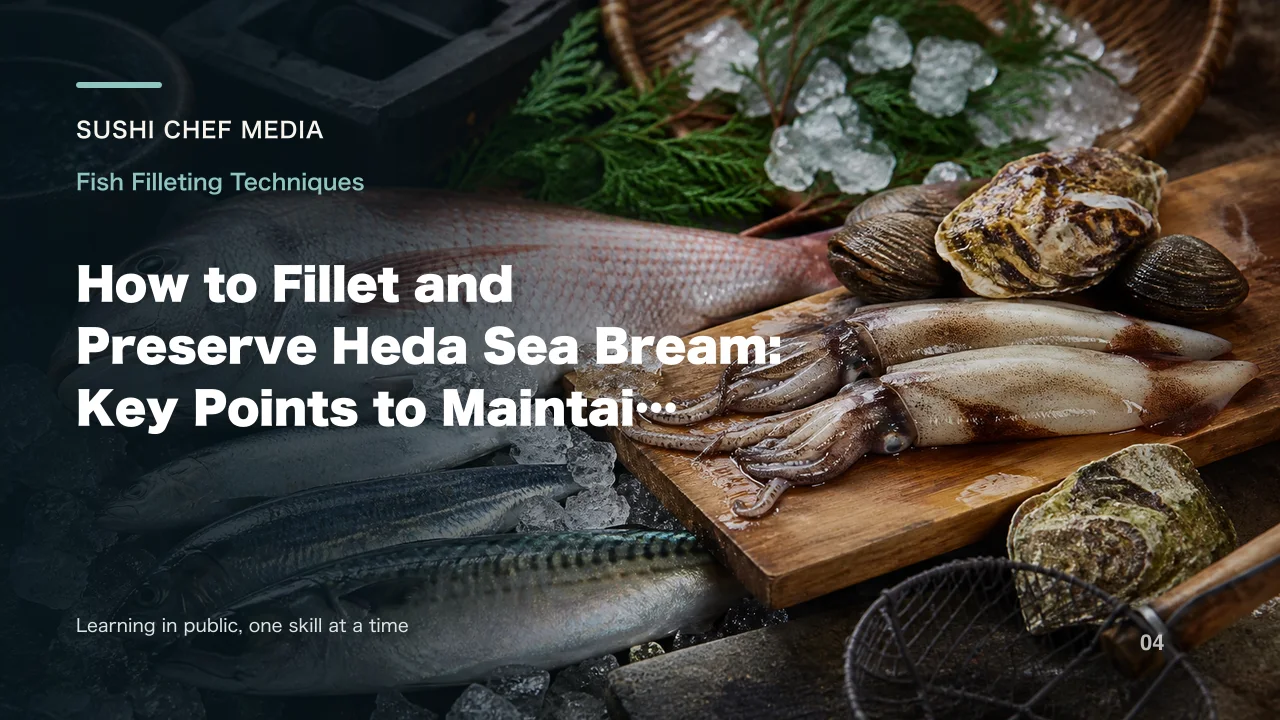
This article explains the steps and important points for filleting and preserving Heda sea bream to keep its freshness.
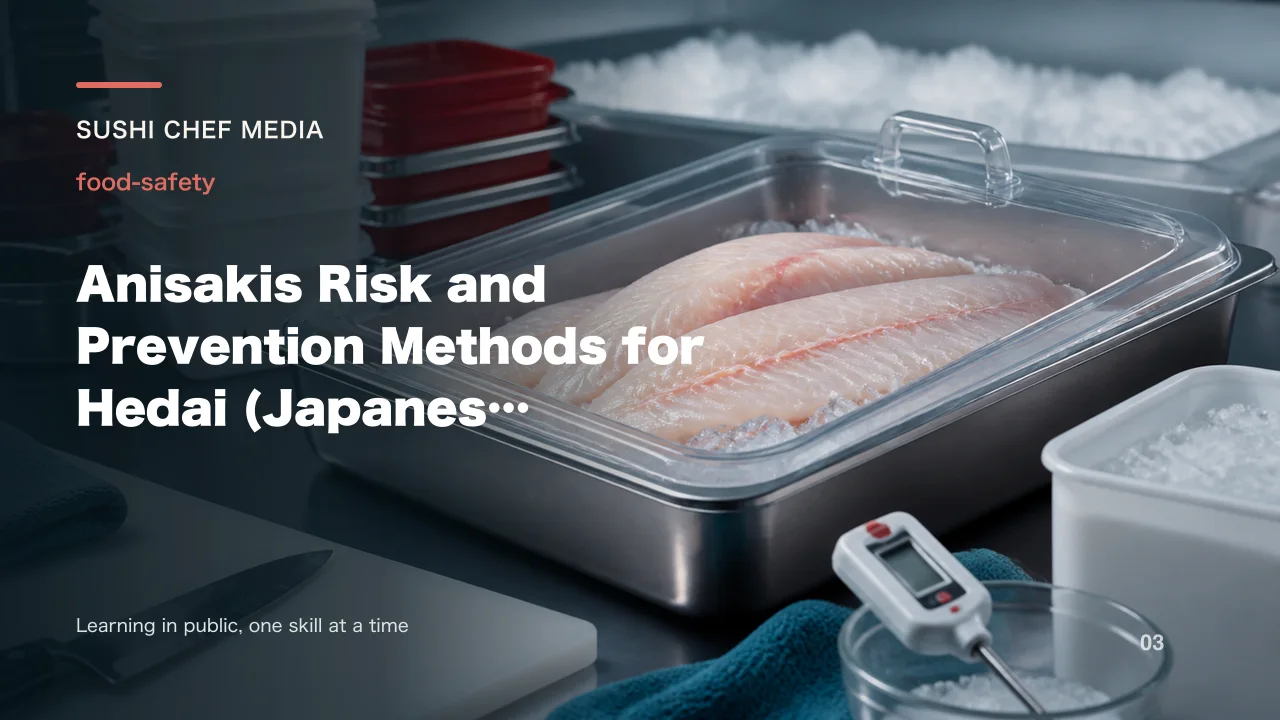
Although the risk of Anisakis parasite infestation in Hedai (also known as Japanese butterfish) is low compared to high-risk fish like mackerel or horse mackerel, it is not zero...
Learn how to make delicious dishes such as arajiru (fish head miso soup), shiojiru (clear fish soup), bone senbei (crispy fish bone crackers), and simmered dishes using the bone...
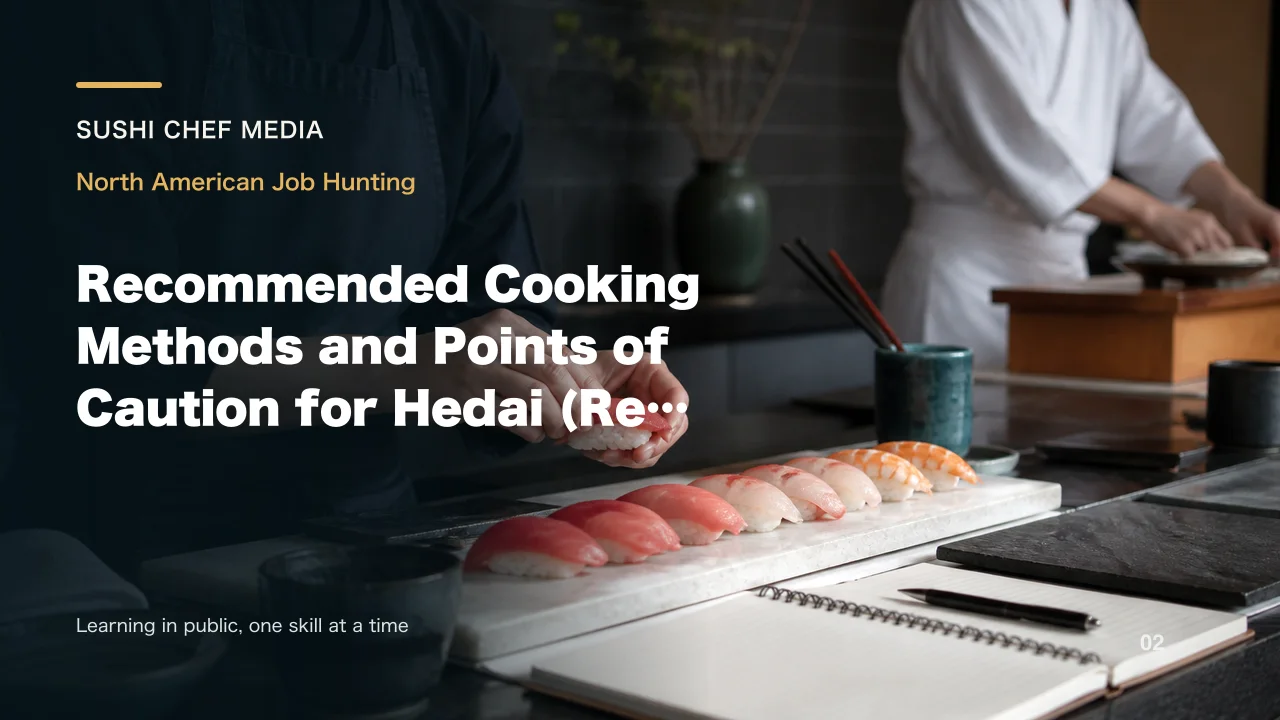
Hedai (also known as Red Sea Bream) is cherished for its delicate flavor and versatile cooking methods. Enjoy it as sashimi, nigiri sushi, kombu-jime (kelp curing), salt-grilled...
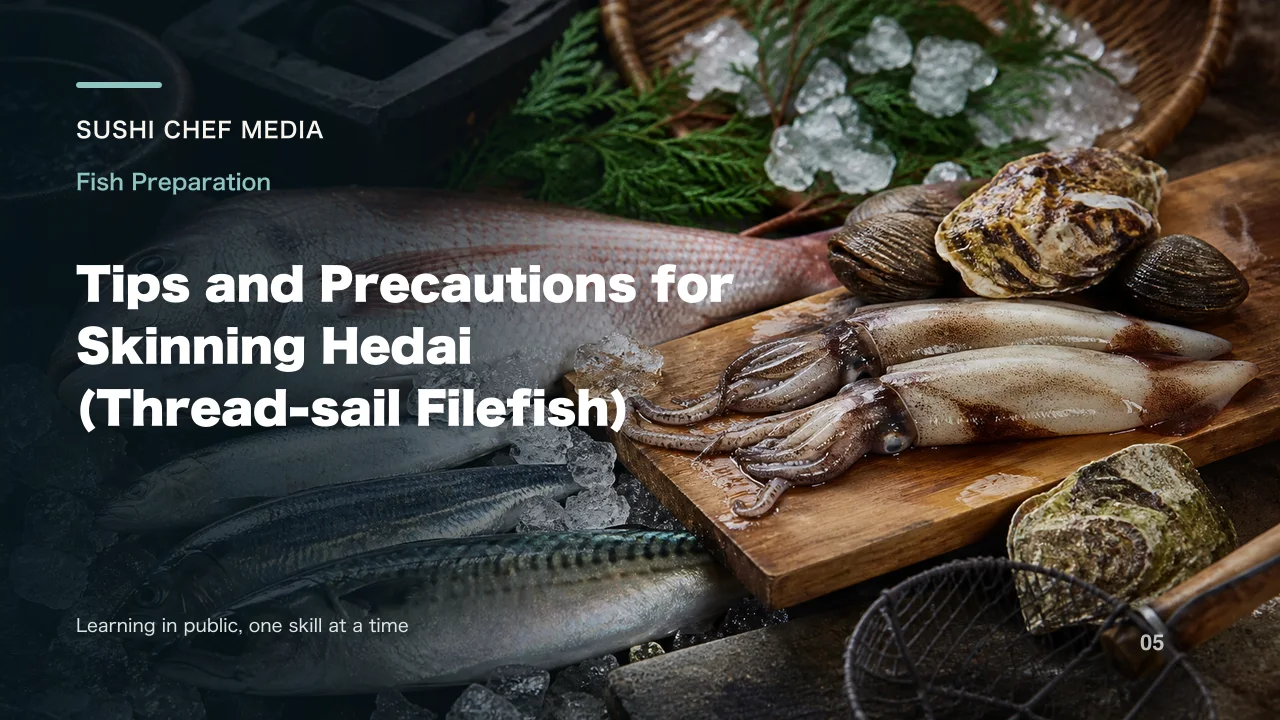
This article explains the steps and important points to skin Hedai fish cleanly without damaging the flesh.
An explanation of how to make shiokara, a salted fermented squid dish, using fresh squid innards (liver), and important points to keep in mind.
An explanation of the differences, procedures, precautions, and common pitfalls of kombu-jime and su-jime methods for preparing sardines.
Key points on cooling, refrigeration, and hygiene management when heating round herring (Urume Iwashi) and storing it until the next morning.
Vinegared sardines tend to become more sour and firmer as moisture is drawn out over time. This article examines texture changes at different marinating times to find the optima...
Explanation of the typical time guidelines and important precautions when vinegaring sardines (Iwashi).
This article explains how to handle fish intended for cooking when there is no indication of a 'frozen history' on the packaging, along with important precautions.
Salt aging Kanpachi (greater amberjack) can potentially enhance its preservation, but proper procedures and hygiene management are essential.
Detailed steps and precautions for enjoying Kensaki squid deliciously in sushi.

This article introduces how to purchase fresh whole fish in Komae City and its surrounding areas.

Understand the differences between premium and affordable kombu seaweed and learn how to select the right type for your culinary needs.

Leaving kelp wrapped on sushi toppings for one week is not recommended for home practice due to taste degradation and hygiene concerns.
Japanese sardines (Maiwashi) and horse mackerel (Aji) have important differences in storage methods. Especially, Maiwashi have soft flesh and spoil easily, requiring prompt proc...
Although tuna is considered to have a low risk of Anisakis parasite infestation, this article explains in detail the effects of frozen distribution on its safety.
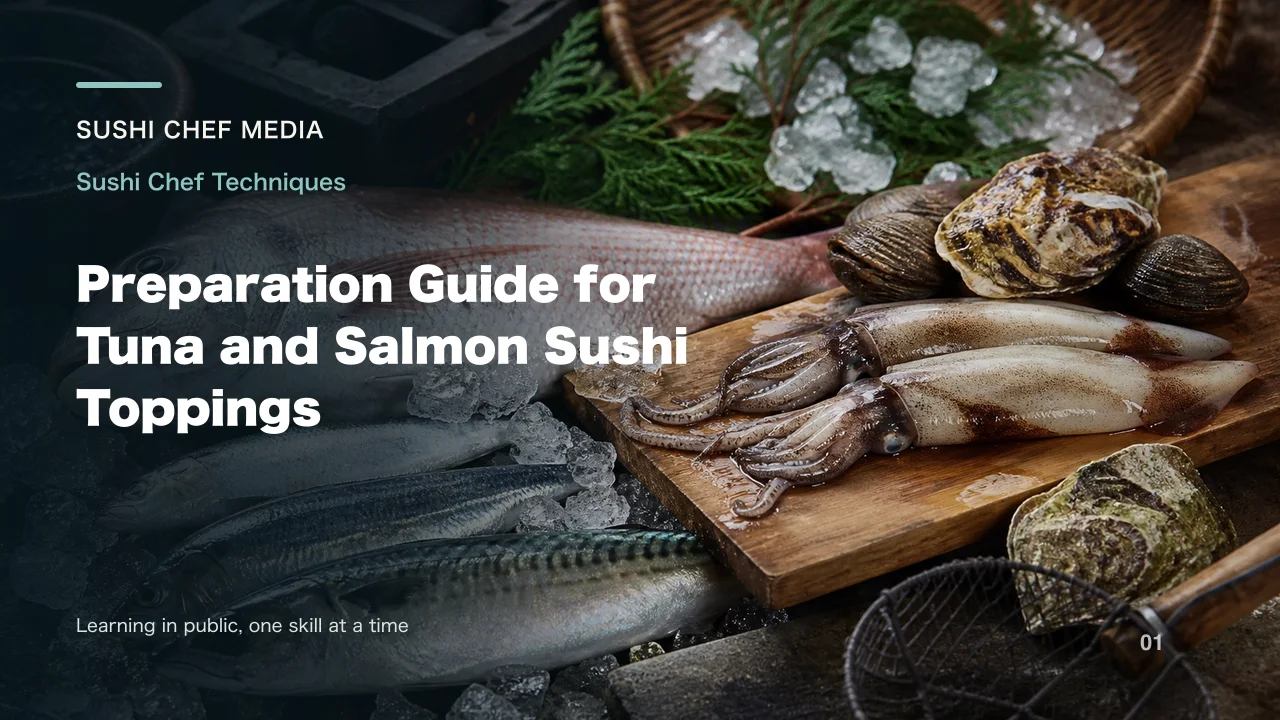
Detailed explanation of the procedures and important points for preparing tuna and salmon as sushi toppings.
Steps and precautions for salting the lean part of tuna to draw out moisture.
A detailed explanation of the basic steps to make maki sushi, important points to watch out for, common mistakes, and the differences between futomaki (thick rolls) and hosomaki...
Explains how to make a small amount of nikiri soy sauce and store it refrigerated, along with precautions for not setting a fixed shelf life.
The purpose of nikiri is to evaporate the alcohol content through heating, not to create flames.
This article explains how to adjust the concentration of nikiri soy sauce when it becomes watery, along with important precautions.
An exploration of the optimal timing for adding kelp to nikiri soy sauce, based on research findings and personal practice notes.

Detailed explanation of the procedures, precautions, common pitfalls, and unexpected points when buying whole fish at North American supermarkets.
An explanation of precautions for using farmed rainbow trout as sushi topping and flavoring techniques using wasabi, nikiri (sweetened soy sauce reduction), and citrus.

Mackerel spoils easily, so proper gutting and low-temperature management are crucial. This article examines the procedures and safety considerations for preparing vinegared mack...
Wrapping salted fish in paper helps remove excess moisture and increases the firmness of the flesh. This article explains the procedure and important points in detail.
Adding sugar to vinegared sardines can soften the acidity and create a mellow flavor. It's important to keep the sugar amount small so that sweetness does not dominate.
Organized the fundamental steps, points of caution, common mistakes, and surprising tips for cutting and plating sashimi (thinly sliced raw fish).
Spanish mackerel (Sawara) can be deliciously prepared in various ways such as curing with salt, searing, meunière, and butter soy sauce. This article organizes the steps and pre...
An explanation of the appropriate time and temperature for grilling 2cm thick slices of Spanish mackerel (Sawara) and dolphinfish (Shiira).
The appropriate weight for one portion of shari—the vinegared sushi rice—varies depending on the sushi chef's skill and regional customs, but generally falls within the 10 to 15...
Mahi-Mahi (called "Shiira" in Japanese) is a fish known for its mild, sweet white flesh, and can be enjoyed through various cooking methods. This article covers recommended ways...
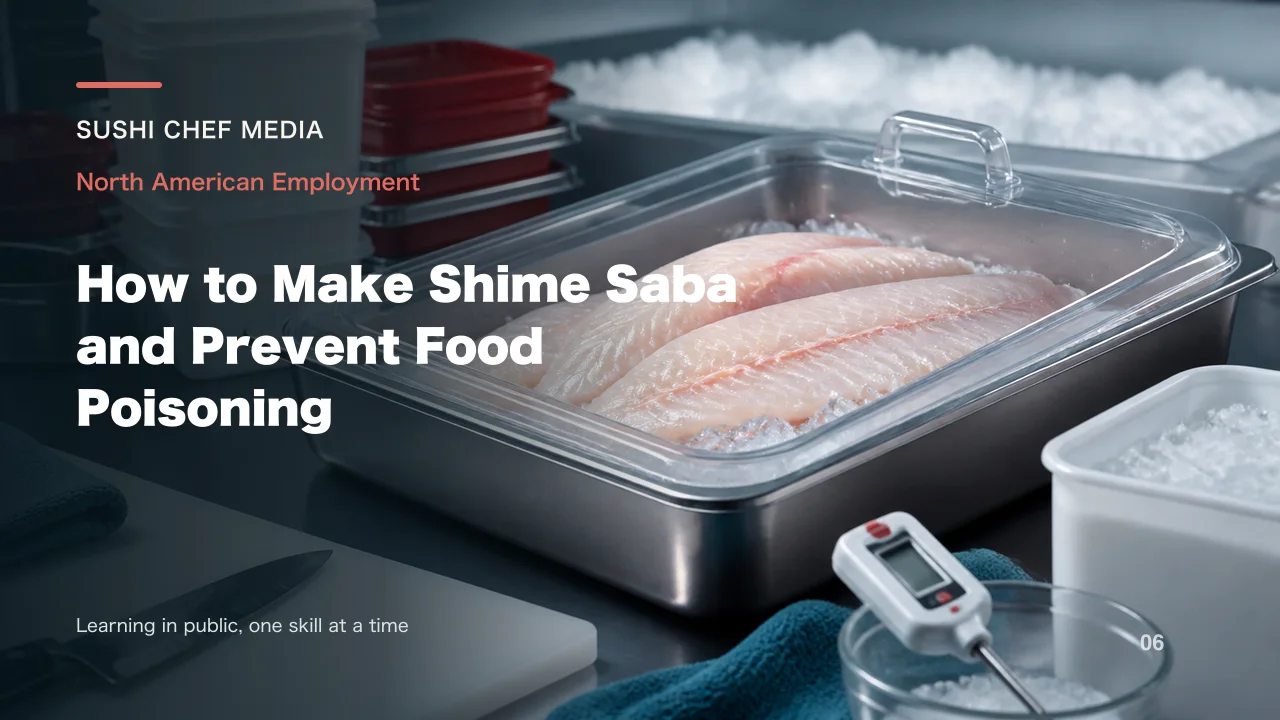
This article explains the processes of salting and vinegar-curing mackerel (shime saba), details storage methods, and thoroughly covers preventive measures against food poisonin...
Small horse mackerel (koaji) can be efficiently utilized through several cooking methods such as nanbanzuke (marinated fried fish), karaage (Japanese-style fried fish), and bone...
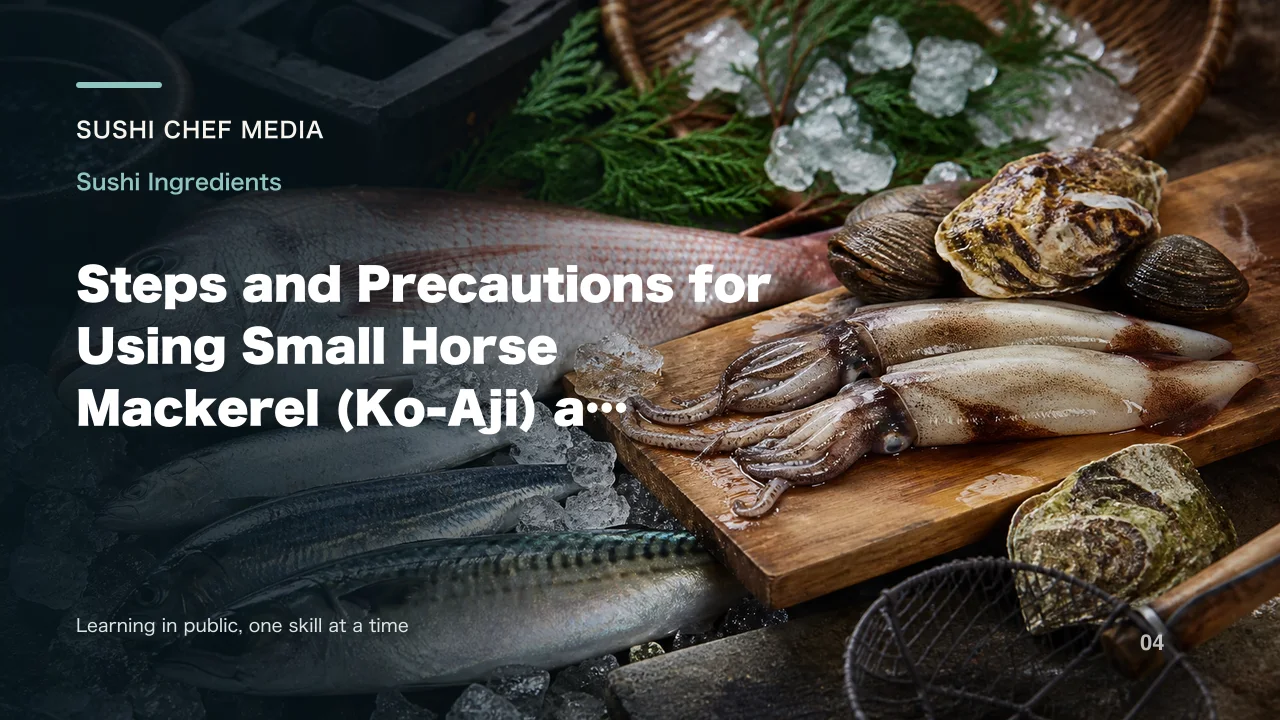
This article explains the procedures, precautions, common mistakes, and surprising tips when using small horse mackerel (known as ko-aji in Japanese) as sushi topping.

Key points on cooling, refrigeration, and hygiene management when storing leftover squid overnight after cooking.
Explanation of processing methods and precautions for deliciously enjoying Surumeika as sushi topping.
Examining whether using vinegar, salt, soy sauce, or wasabi can eliminate Anisakis parasites in seafood.
Organizing the safety measures and points to check that cannot be substituted by vinegar curing when refrigerating vinegar-cured sardines until the next morning.

This article introduces books for aspiring sushi chefs, covering everything from basic knowledge for beginners, fish identification, Edomae sushi techniques, theory, to perspect...
A detailed guide for those aiming to become sushi chefs from no experience, covering training content, age restrictions, and methods for working abroad.

This article introduces useful English customer service phrases for sushi restaurants abroad, divided by various scenes from entry to farewell.
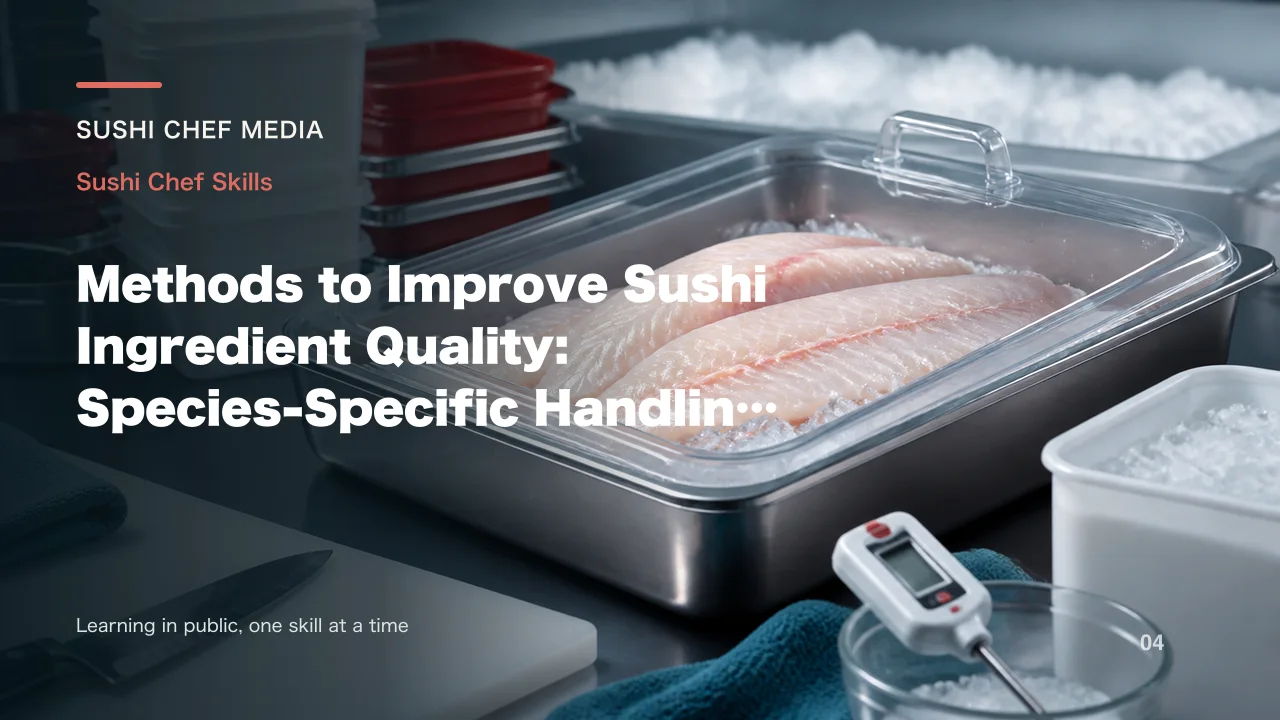
An explanation of species-specific handling methods and precautions to enhance the quality of sushi ingredients.
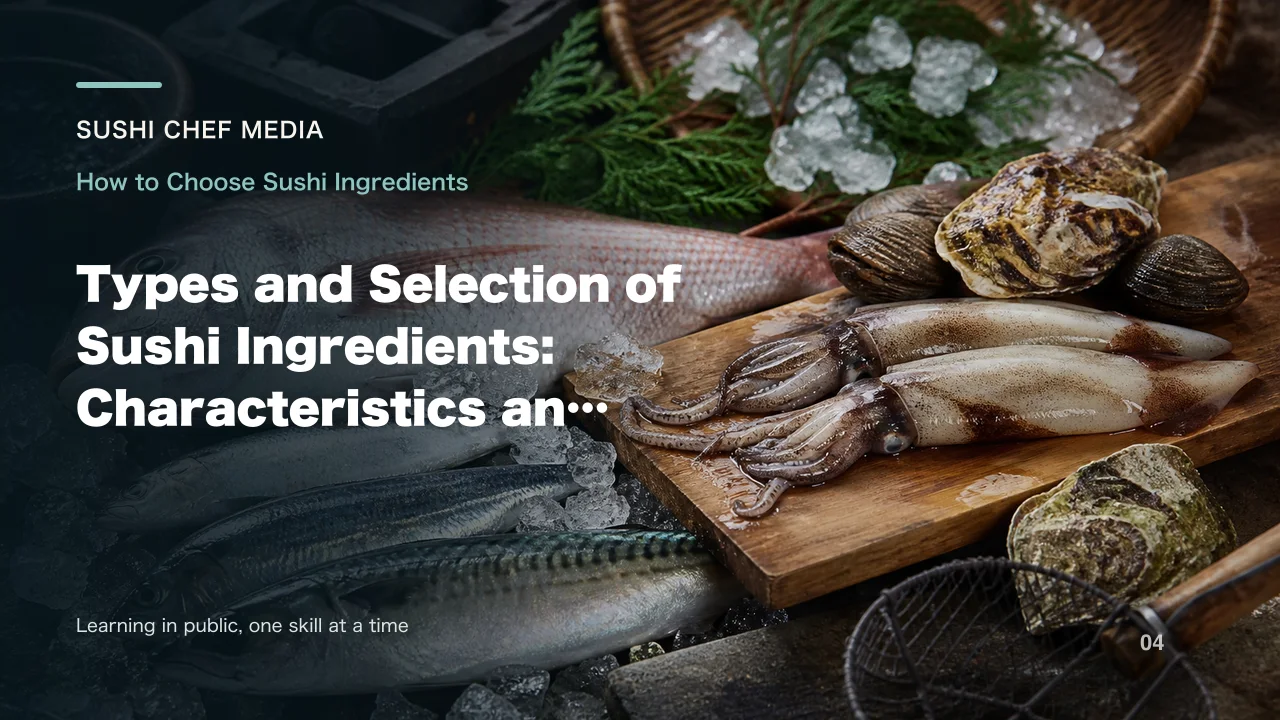
An explanation of the characteristics and selection methods for various sushi ingredients including red meat, white meat, shiny fish, shellfish, squid and octopus, and fish eggs.
Fatty Pacific sardine (Maiwashi) is suitable as sushi topping, but this article explains detailed preparation methods and important precautions.
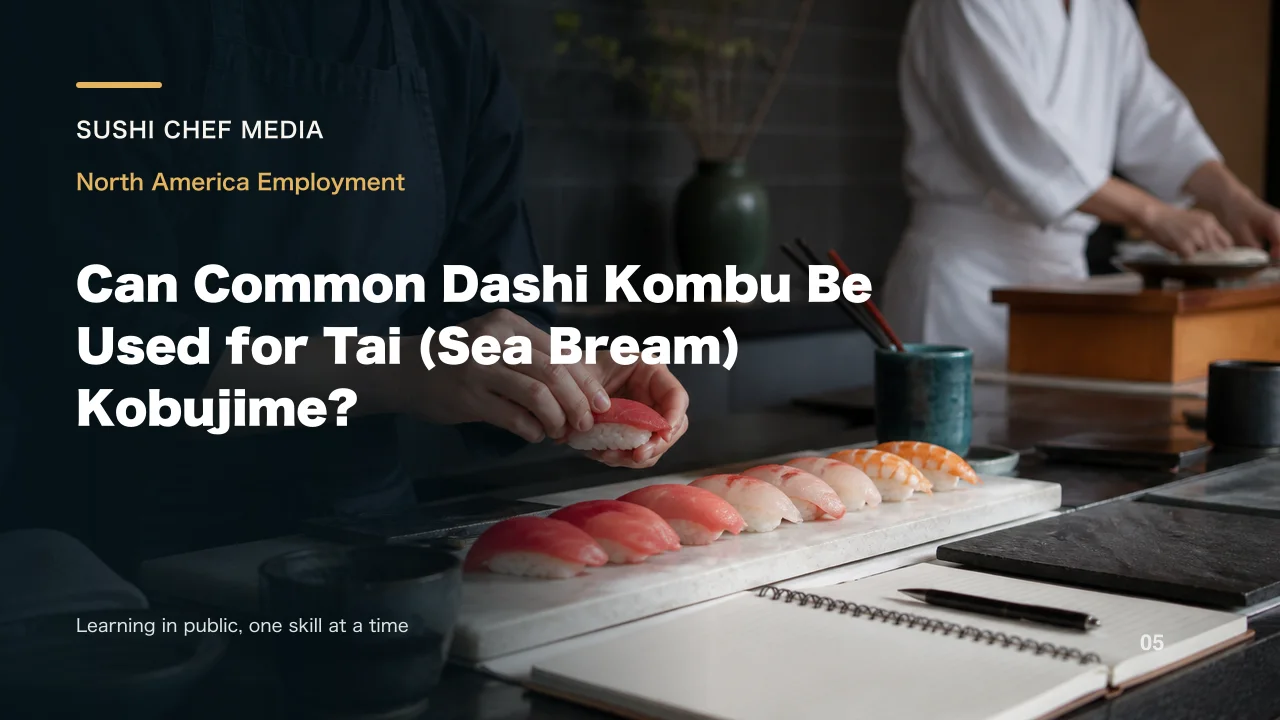
This article explains the precautions and procedure when using common dashi kombu for making kobujime with tai (sea bream).
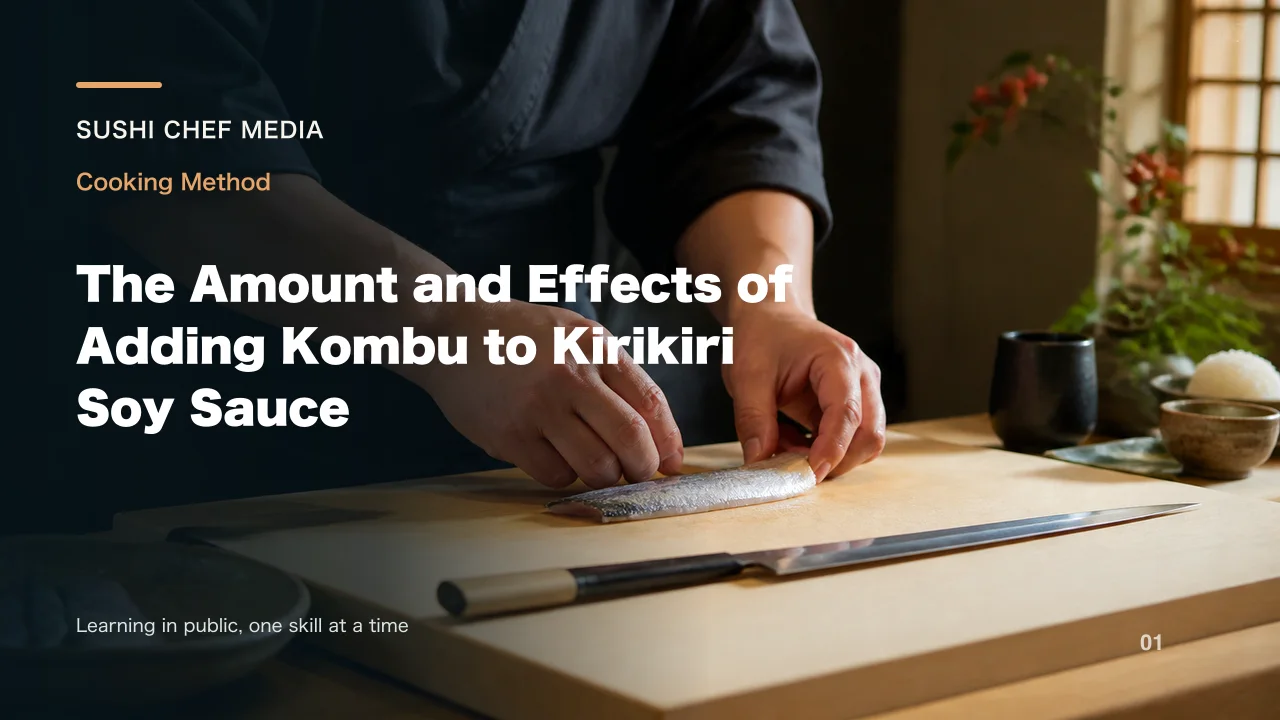
Adding kombu (kelp) to kirikiri soy sauce enhances its flavor and umami. It is recommended to start with about 8–10 grams of kombu and adjust to balance aroma and saltiness.
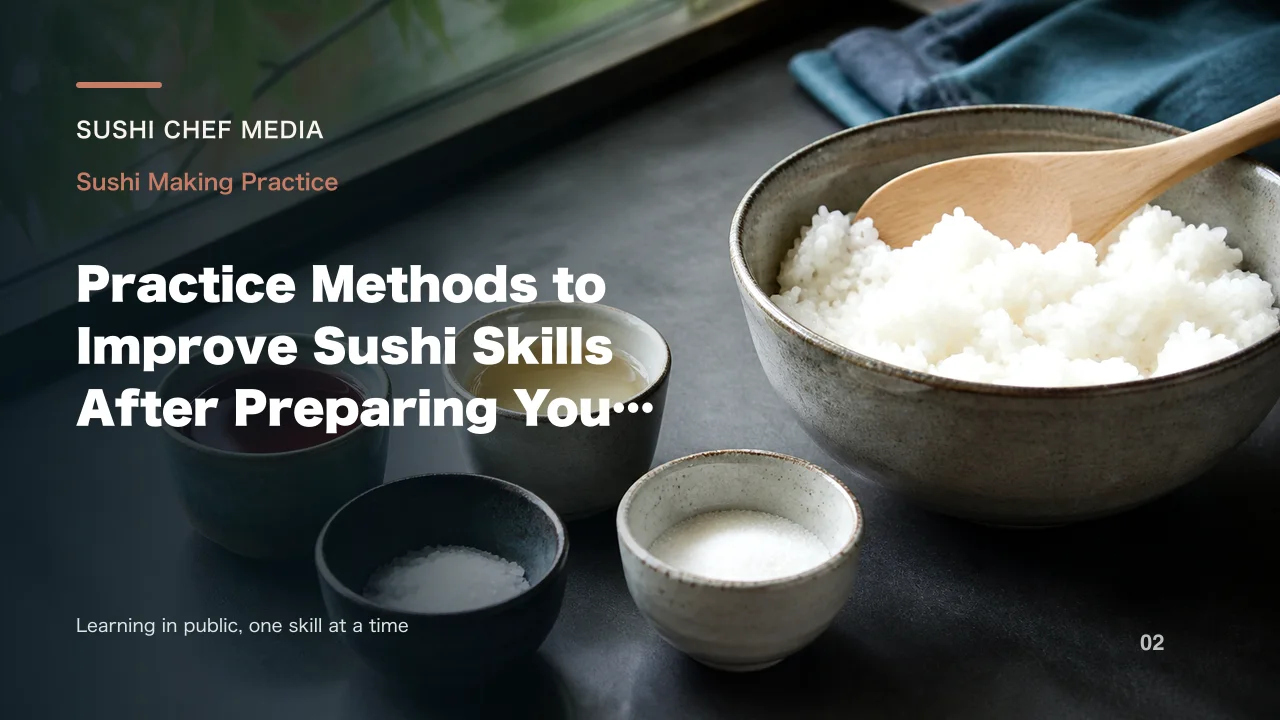
Explains practice methods and important points to improve your sushi-making skills after arranging your sushi-making tools.

A comparison of sushi schools in Tokyo for aspiring sushi chefs, covering duration, tuition, class volume, and overseas employment prospects. Includes why a 34-year-old beginner...

An explanation of whether it is feasible to age sea bream for one week in a household refrigerator and consume it raw, including important precautions.

An examination of whether aging sea bream for three days at home is appropriate, focusing on fish condition and hygiene management.
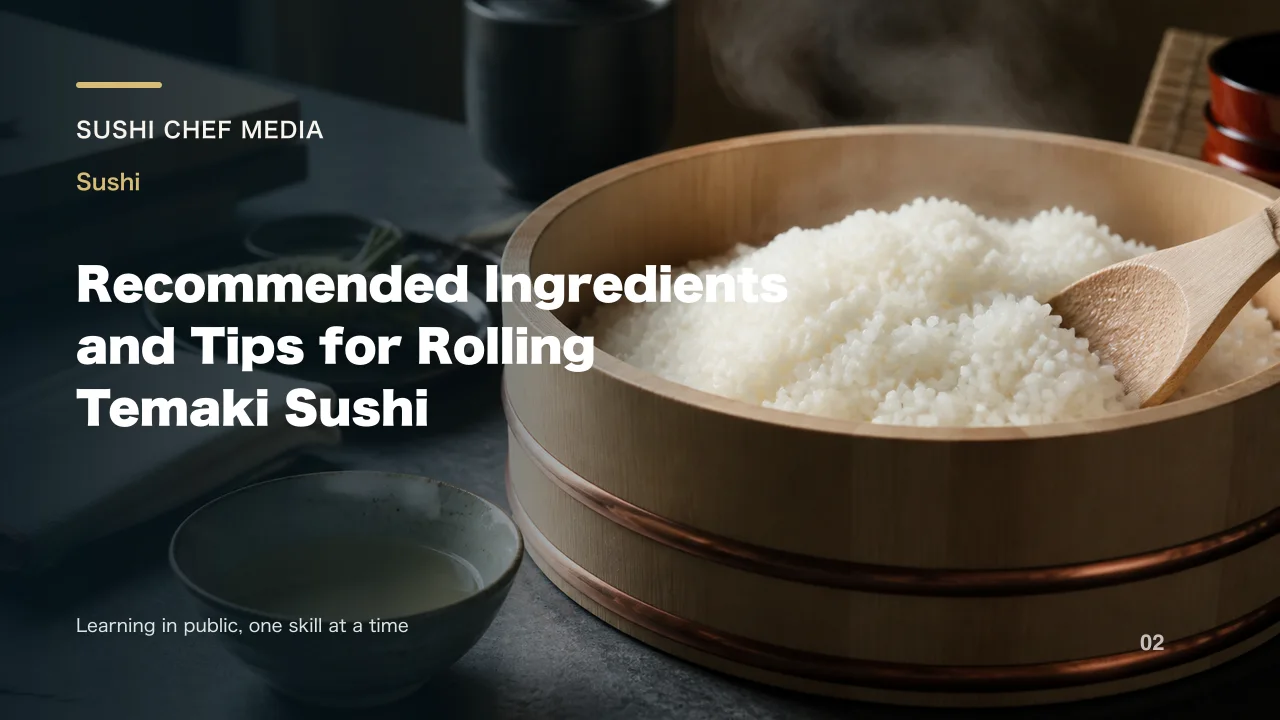
This article explains how to select ingredients and techniques for rolling temaki sushi (hand-rolled sushi). It covers a wide range of suggestions from classic fillings to kid-f...

An introduction to supermarkets and fresh fish shops in Tokyo where whole fish are easy to purchase. Includes store locations, access methods, business hours, and features.
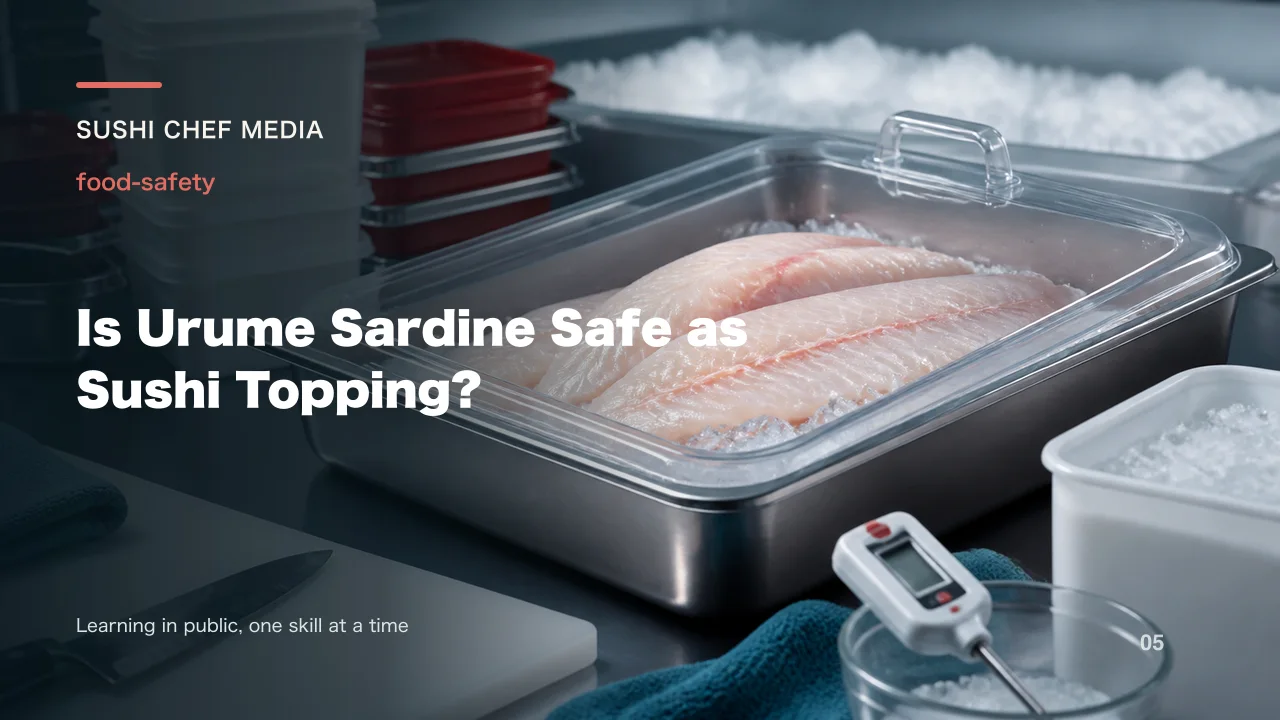
An explanation on the safety and precautions when using Urume Sardine as sushi topping.
An explanation of the differences between light soy sauce and reduced-sodium soy sauce, along with important points to consider when substituting one for the other.

This article explains key points for selecting commercial wasabi. For convenience, tube wasabi using real wasabi and requiring refrigeration is recommended.
A detailed explanation of the cooking methods for blue crab—including salt boiling, steaming, and miso soup—covering each method's procedures, precautions, and common mistakes t...
Introducing the ideal ratio and method for making seasoned vinegar (awasezu) using 300g of grain vinegar.

A 365-day public portfolio documenting the skills, discipline, and service English needed to work behind a sushi counter in North America.
Explaining the steps and precautions to safely and deliciously fillet Hiradai (Flathead Sea Bream).
A detailed guide on the steps and key points for making authentic sushi rice (shari) at home.
An explanation of the characteristics and usage distinctions between rice vinegar and grain vinegar.
This article explains how to select the appropriate vinegar strength and aroma according to the type of sushi topping (netā).
This article explains the causes of stickiness when making sushi rice (vinegared rice) using packaged cooked rice and methods to improve the texture.
An explanation of methods to acquire Sasanishiki rice for sushi use in North America and important points to consider.
An explanation on selecting red vinegar that imparts deep flavor and beautiful color to sushi rice (shari).
Explains how to adjust the water ratio according to the rice brand and rice cooker to achieve ideal sushi rice.
Boiling awasezu, a mixture of vinegar, sugar, and salt used in sushi rice seasoning, is generally not recommended. The common method is to dissolve sugar and salt by gently heat...
Explains how to select and use the ideal rice cooker when practicing sushi making alone.
A comparison of cooking sushi rice using a traditional donabe (clay pot) versus a modern rice cooker, including characteristics, procedures, key points, and common pitfalls to f...
An explanation of how to select rice for sushi and the preparation methods, including stickiness, ease of loosening grains, washing rice, water ratio, and cooking techniques.
The ratio of vinegar, sugar, and salt relative to rice quantity can be adjusted to achieve your preferred flavor in sushi rice.
An explanation of the causes behind the problem of sushi rice (shari) sticking to the hands that sushi chefs face, along with effective countermeasures.
This article explains methods to improve the vinegar aroma when it is weak in sushi rice.
When making sushi using commercial vinegar, rice vinegar and pure rice vinegar (junmai-su) are generally recommended. Grain vinegar can also be used, but there are differences i...
An explanation of the basic ingredients and preparation method for awasezu, the mixed vinegar that enhances the deliciousness of sushi.
This article explains how to manage each ingredient of sushi rice (shari) by weight in grams without using measuring spoons.
Explaining the appropriate steps and important precautions when mixing vinegar, sugar, and salt for sushi rice seasoning.