
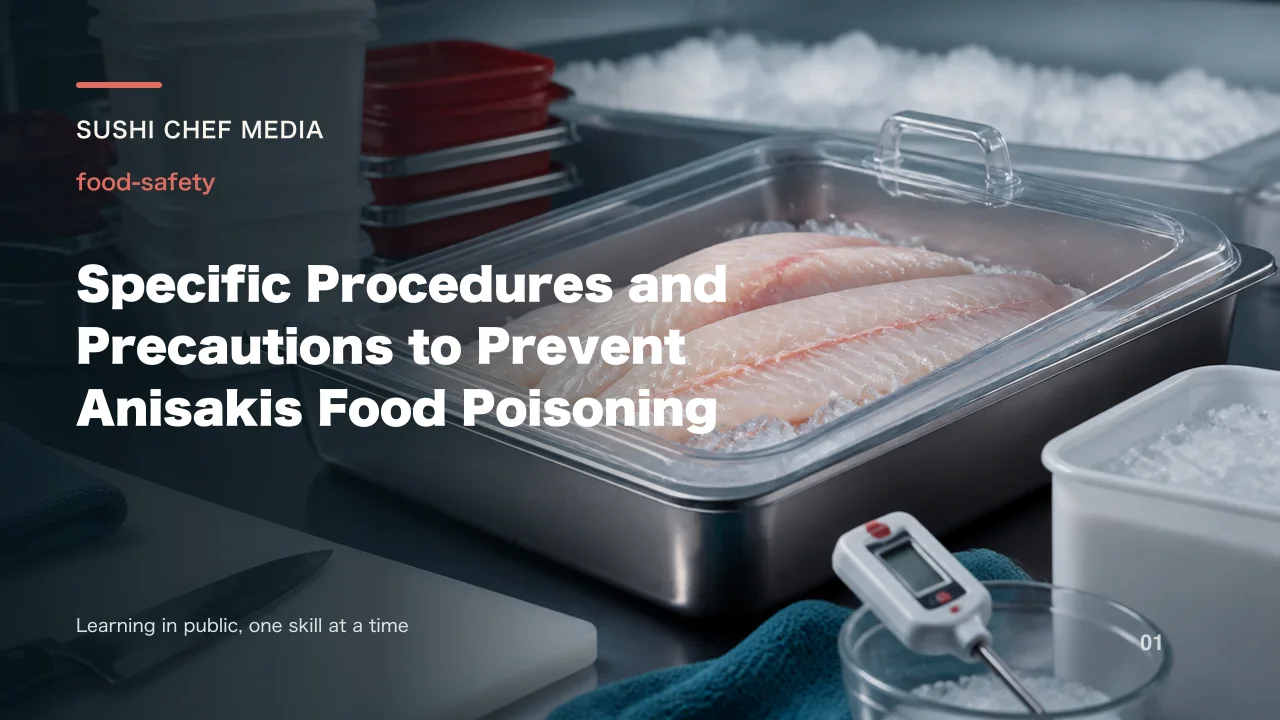
Anisakis food poisoning occurs when larvae of the Anisakis parasite, which infest seafood, are ingested raw or undercooked. Major symptoms include severe pain around the pit of the stomach, nausea, and vomiting. If you experience these symptoms, seek medical attention promptly.
-
Select fresh fish and promptly remove the internal organs When purchasing fish, choose fresh specimens and quickly remove the internal organs. Anisakis larvae are known to move from the internal organs into the muscle after the fish dies.
-
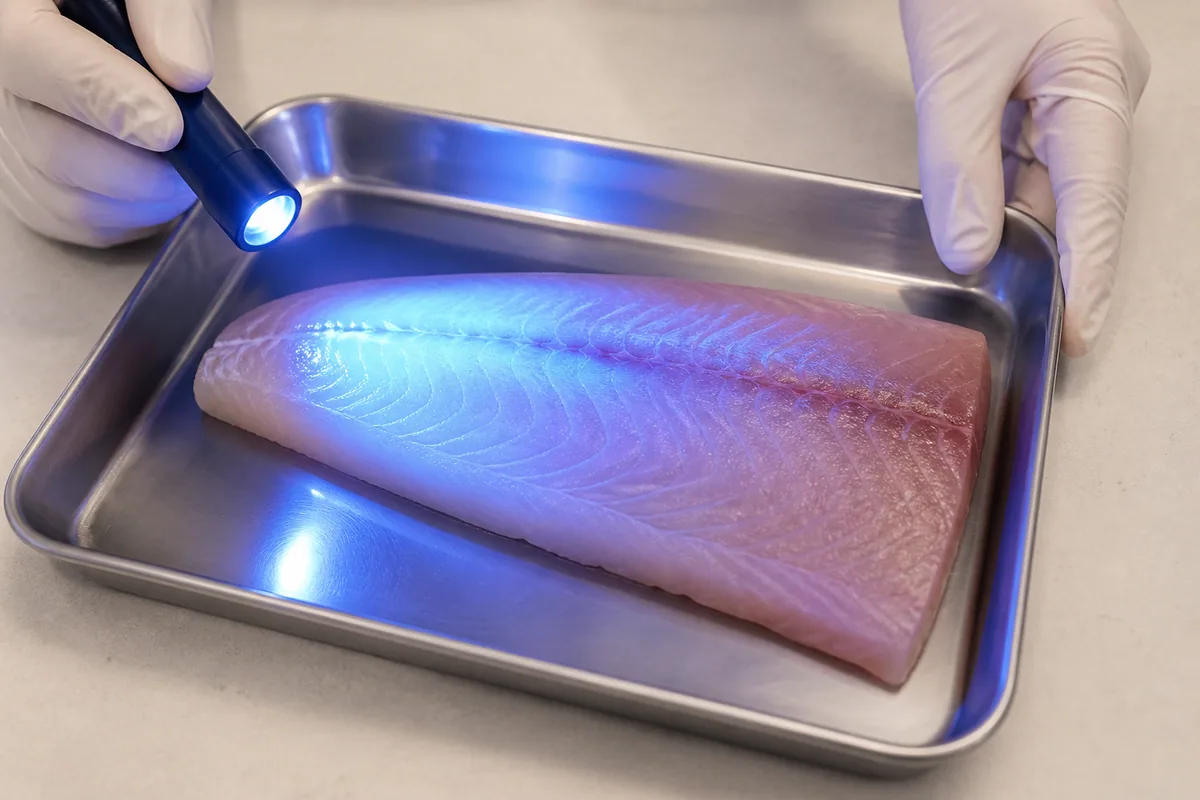
Visually inspect and remove Anisakis larvae Carefully examine the fish flesh and remove any white, thread-like Anisakis larvae found.
-
Kill Anisakis larvae through cooking or freezing
- Cooking: Thoroughly heat the fish to the center to kill the larvae.
- Freezing: Freeze the fish at -20°C (-4°F) or lower for at least 24 hours to eliminate the larvae.
Precautions
- Common seasonings such as vinegar, soy sauce, wasabi, or salt do not kill Anisakis larvae.
- Avoid consuming the internal organs raw.
- If symptoms of anisakiasis occur, seek medical care immediately.
Next Steps to Verify
- Learn how to determine the freshness of fish.
- Practice proper procedures for removing fish internal organs.
- Confirm the appropriate temperatures and durations for cooking and freezing treatments to kill Anisakis larvae.