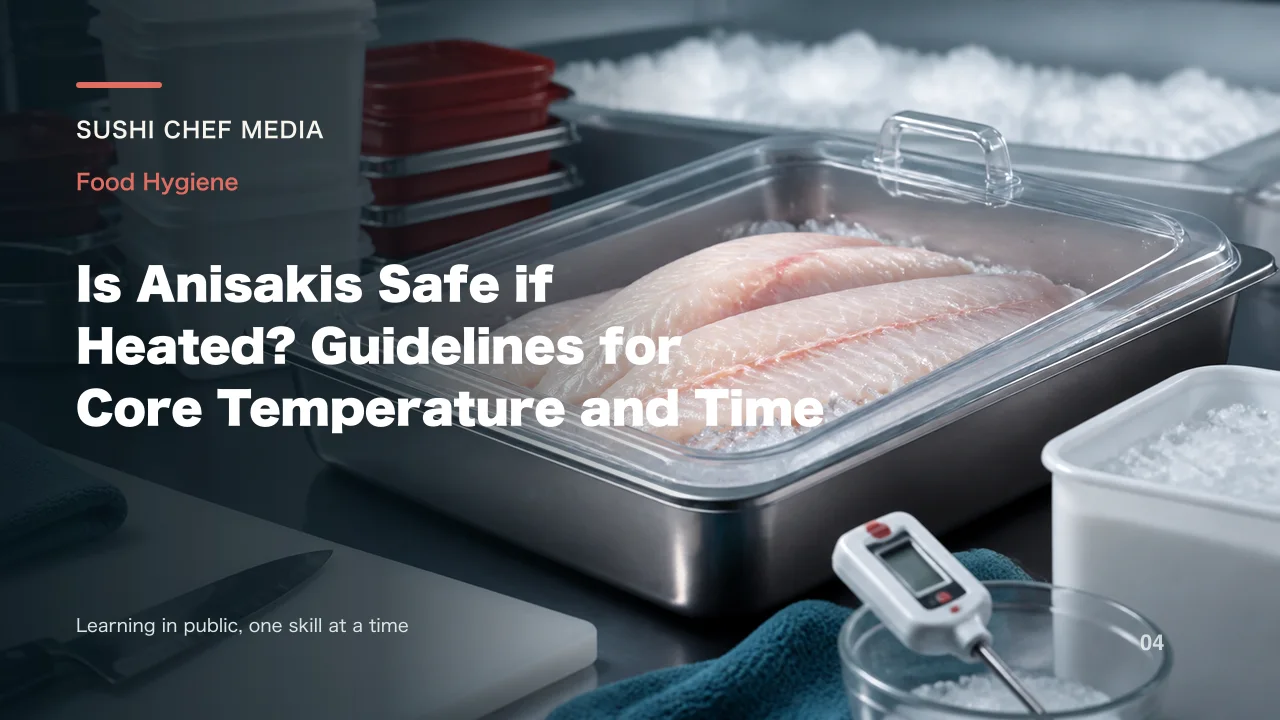
Anisakis parasites can be killed by sufficiently heating the fish all the way to its core.
According to guidelines from the Ministry of Health, Labour and Welfare, the core temperature should reach 70°C or higher, or alternatively 60°C for at least 1 minute. Even if the surface is hot, it cannot be considered safe unless the core temperature meets these conditions.
Points to Keep in Mind at Home
The thickest parts of the fish and areas near the bones are harder to cook thoroughly, so it is important not to judge safety just by cooking time.
Regardless of cooking method—grilling, boiling, frying, etc.—ensure the heat reaches the core of the thickest part. Using a core thermometer makes this easier to verify.
Vinegar and Salt Cannot Replace Heating
Treatments like vinegar-marination (known as su-zime in Japan, which is marinating in vinegar), salting, soy sauce, or wasabi are for flavoring. At typical concentrations and times used in cooking, they do not effectively prevent Anisakis infection.
Do not assume sushi prepared with vinegar marination is safe to eat raw from an Anisakis perspective.
Handling in Sushi Practice
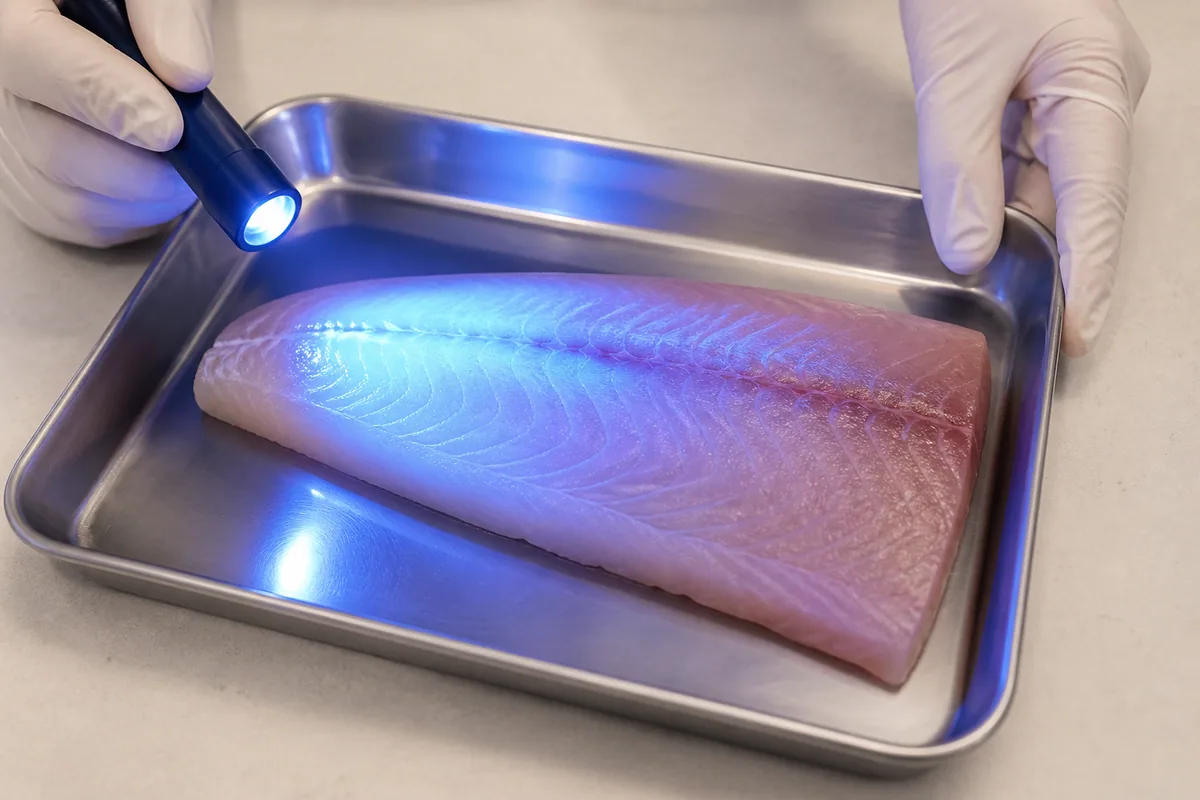
Even fish sold as safe for raw consumption vary in risk depending on species and distribution conditions. Fish intended for cooking should not be used in sushi.
If you have doubts about the safety of raw fish, switching to cooked dishes is the safest choice. If you experience severe abdominal pain or other symptoms after eating, do not hesitate to seek medical attention rather than self-manage.
Summary
When heating to prevent Anisakis infection, use the guideline of 70°C or higher at the core, or 60°C for at least one minute.
Heating times and temperatures should be considered separately from labels indicating suitability for raw consumption or cold chain management—do not rely on just one factor to determine safety.
Reference Information
This article is subject to a pre-publication safety review. Because cooking effectiveness varies by fish species, thickness, and heating equipment, in the end please prioritize guidance from the Ministry of Health, Labour and Welfare and product labeling.