

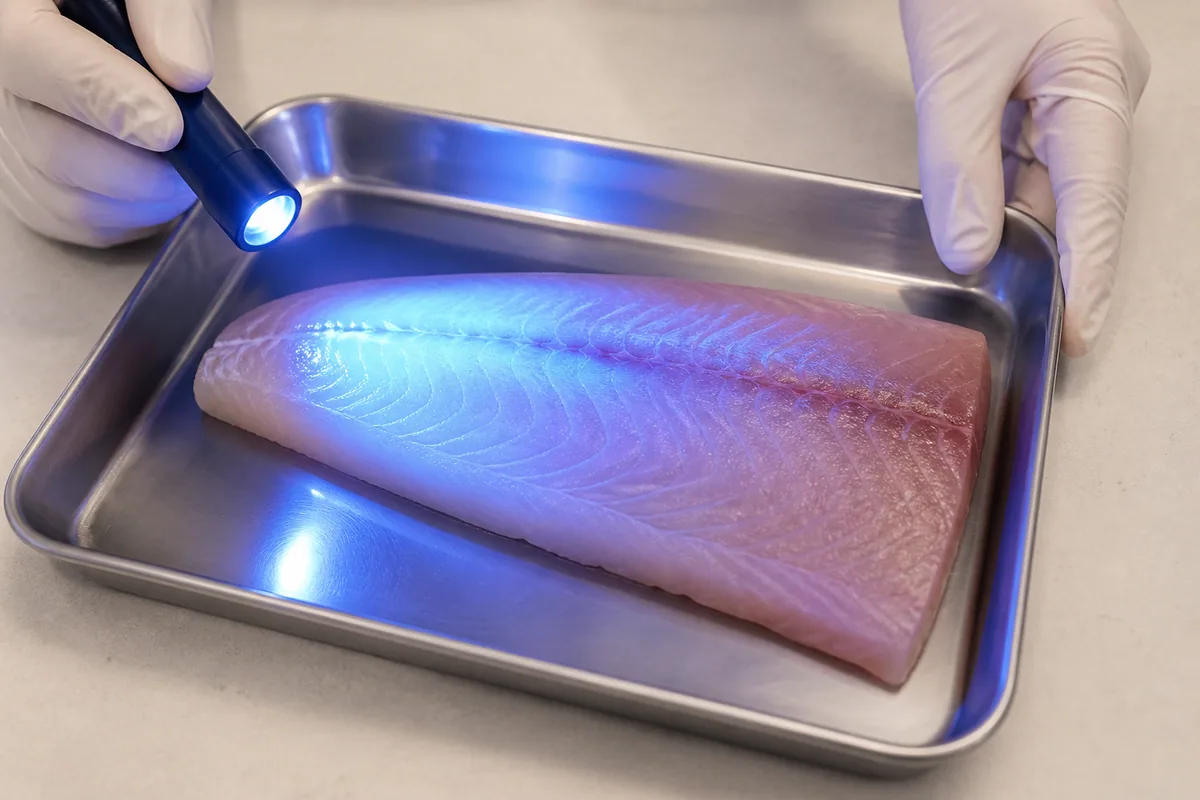
Anisakis is a parasitic worm that infests seafood such as mackerel, horse mackerel, Pacific saury, skipjack tuna, sardines, salmon, flatfish, tuna, and squid. The larvae are about 2 to 3 cm long and 0.5 to 1 mm wide, appearing like white threads. After the fish dies, the larvae may migrate from the internal organs into the muscles.
Symptoms of Food Poisoning Caused by Anisakis
Eating raw seafood contaminated with Anisakis larvae can cause the larvae to penetrate the stomach or intestinal walls, leading to food poisoning. The main reported symptoms include:
-
Acute Gastric Anisakiasis: Intense upper abdominal (epigastric) pain, nausea, and vomiting occur within several hours to around a dozen hours after eating.
-
Acute Intestinal Anisakiasis: Severe lower abdominal pain appears from around a dozen hours to several days post ingestion.
Prevention Methods for Food Poisoning Caused by Anisakis
Recommended methods to prevent Anisakis-related food poisoning include:
-
Select fresh fish and promptly remove the internal organs: It is known that the larvae migrate from the internal organs to the muscle tissue after the fish dies.
-
Cook thoroughly: Heating to an internal temperature of 60°C (140°F) for more than one minute or instantaneously heating to above 70°C (158°F) kills Anisakis larvae.
-
Freeze properly: Freezing at -20°C (-4°F) or lower for 24 hours or longer also kills Anisakis larvae.
Summary
Anisakis is a parasite found in seafood that can cause food poisoning through consumption of raw fish. Symptoms include intense epigastric pain, nausea, vomiting, and lower abdominal pain. Preventive measures involve selecting fresh fish with immediate removal of internal organs, cooking thoroughly, and proper freezing. Awareness of Anisakis risks and appropriate safety precautions are essential when consuming raw seafood.