
Anisakis is a nematode parasite found in seafood, appearing as white thread-like larvae about 2–3 cm long and 0.5–1 mm wide. These larvae infest seafood such as mackerel, horse mackerel, Pacific saury, sardine, salmon, squid, and others.
Anisakis larvae can be confirmed by visual inspection, though complete removal is considered difficult. The Ministry of Health, Labour and Welfare recommends selecting fresh fish at purchase, promptly removing the internal organs, and visually removing any Anisakis larvae.
Purchasing Blue Light to Create Inspection Environment
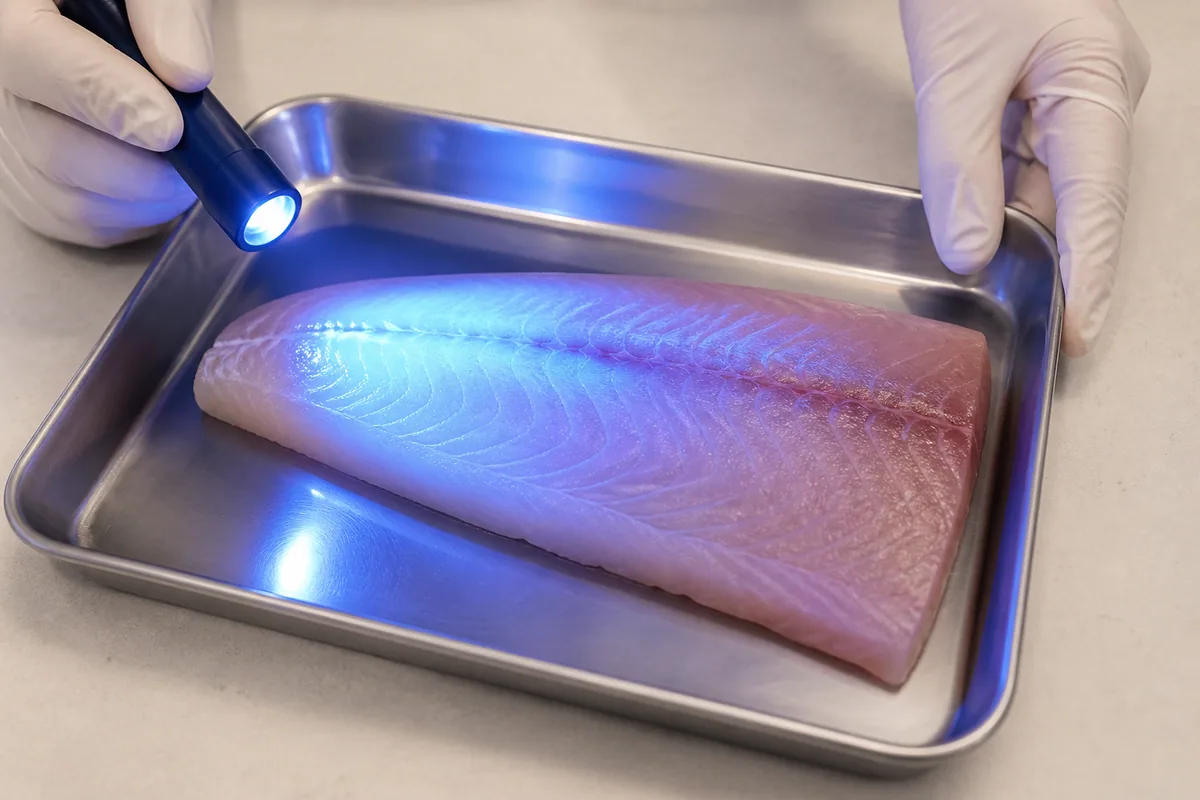
To detect Anisakis, I purchased a 365nm blacklight. It is used as an aid to inspect the surface of the fish and around the internal organs. However, relying solely on this does not guarantee the absence of Anisakis.
Research reports also state that ultraviolet blacklight is a supplementary detection method and cannot detect all larvae. Lack of fluorescence does not prove safety; therefore, freezing or heating should be chosen as needed.
Processing by Freezing and Heating
Because visual removal is not complete, freezing and heating treatments are effective. Freezing at -20°C for more than 24 hours and heating above 70°C instantly are recommended.
Cautions
- Common seasonings such as vinegar, salt, soy sauce, and wasabi do not kill Anisakis larvae.
Summary
Anisakis larvae can be visually removed but complete elimination is difficult. Freezing or heating treatments are recommended. Avoiding raw consumption or performing adequate processing reduces the risk of Anisakis-related food poisoning.