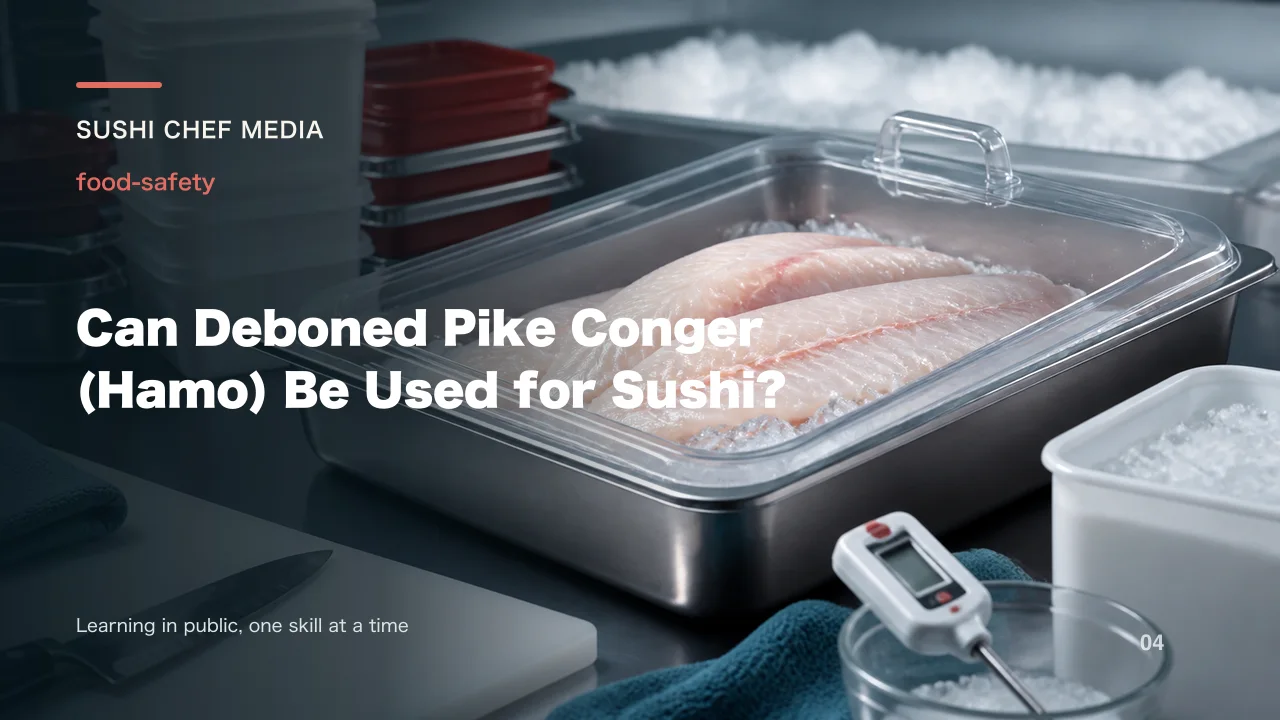
Deboned pike conger (hamo) looks beautiful and can be an attractive sushi topping. However, eating hamo raw when it is not distributed specifically for raw consumption can increase the risk of parasites and bacteria. Therefore, when using hamo as sushi topping, the following points should be carefully observed.
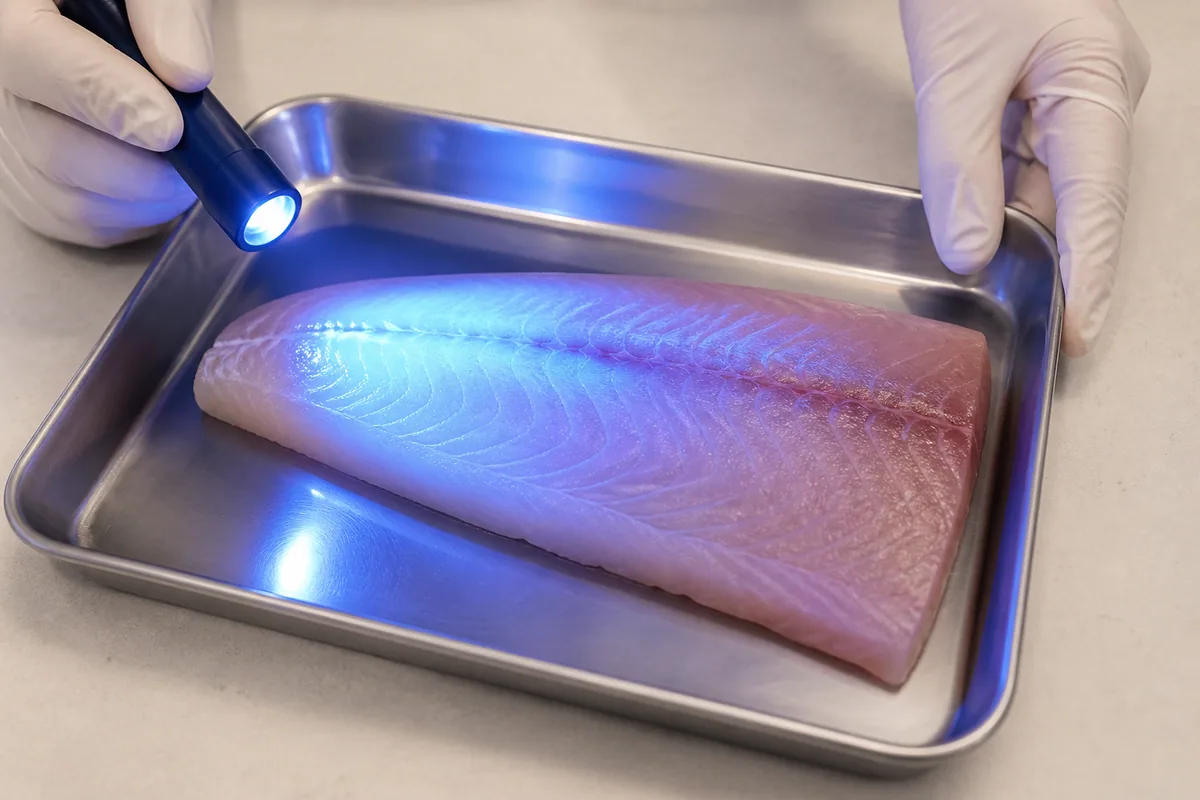
2. Handling Hamo and Hygiene Management
When handling hamo, it is important to maintain the cleanliness of hands and utensils. Eating hamo raw when it is not intended for raw consumption increases the risk of parasites and bacteria, so cooking is recommended.
3. Cooking Methods
When cooking hamo, ensure it is thoroughly cooked through. Methods like grilling, boiling, or frying should be applied to cook the interior completely.
4. Precautions When Using Hamo Distributed for Raw Consumption
Even when using hamo distributed for raw consumption, confirm that hygiene management is thoroughly maintained and handle it with great care.
Summary
When using deboned hamo as sushi topping, select varieties distributed for raw consumption and ensure rigorous hygiene management. Nonetheless, hamo is generally recommended to be cooked, and those not for raw use should be cooked before consumption.
Next Steps
When handling hamo, maintain strict hygiene and ensure appropriate cooking.