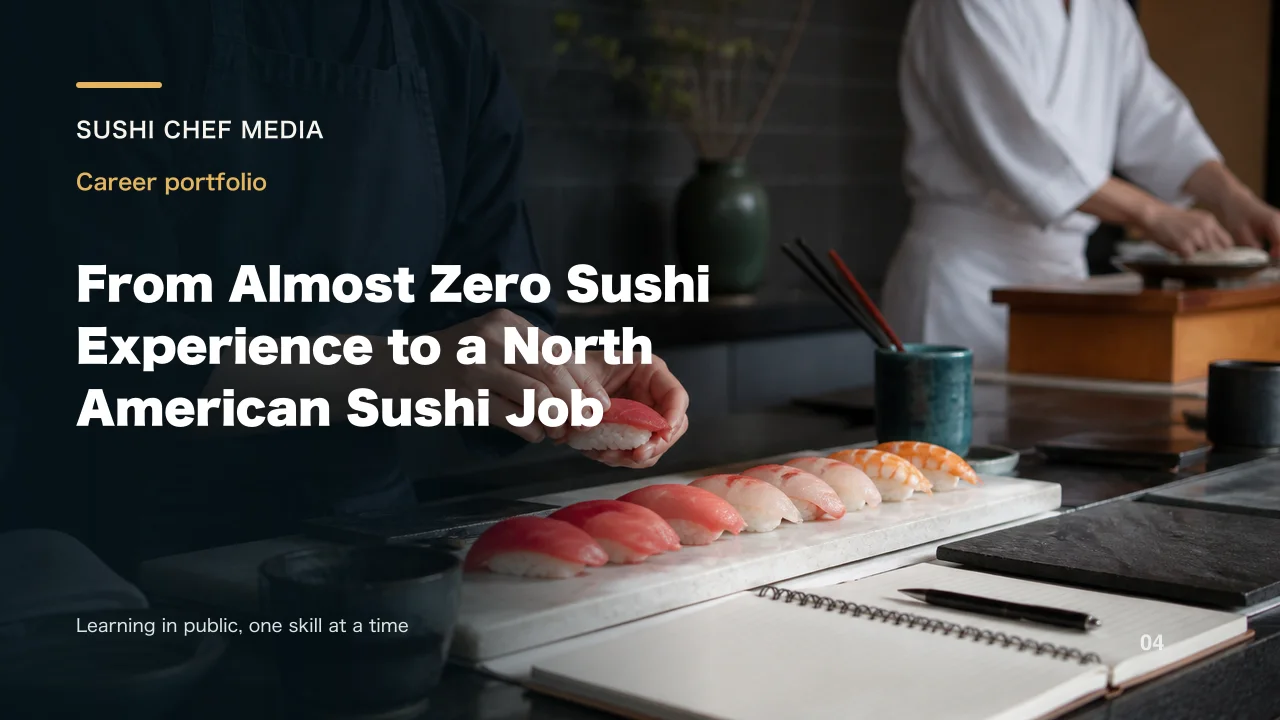
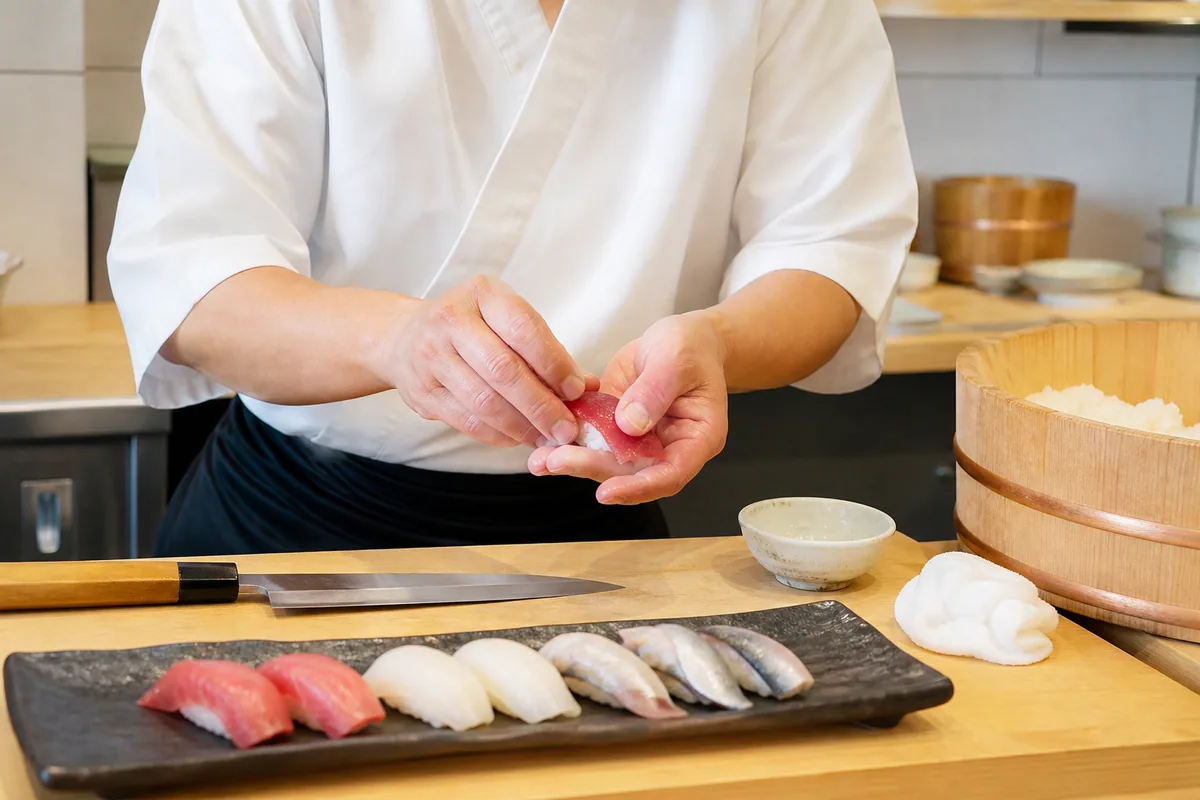
I am 34 years old and starting almost from zero as a professional sushi chef.
My goal is clear: within 365 days, I want to be ready to work in a North American sushi restaurant.
This is not a finished-chef website. It is a public record of the work required to become one: what I practiced, what failed, what changed, and what I can explain in English.
My starting point
I studied engineering at Tohoku University and have worked in food service, including three years at a yakitori restaurant and five years in a sushi delivery operation.
That background gives me experience with a professional kitchen, speed, cleaning, and customer expectations. It does not mean I already have the knife control, fish preparation, sushi repetition, or counter service skills expected from a sushi chef.
The gap is the point of this portfolio. I will show the difference between experience I already have and skills I still need to earn.
What I will measure
- Knife work: clean cuts, consistency, and control
- Fish preparation: yield, waste, texture, and handling
- Sushi rice: weight, temperature, seasoning, and repeatability
- Service: speed, preparation order, and communication
- Safety: storage, cross-contamination control, and disciplined cleanup
- English: explaining ingredients, techniques, and customer-facing decisions
The useful record is not only a successful plate. It is a dated practice note with measurements, a clear failure, and a specific adjustment for next time.
Research and practice stay separate
Some topics require research before practice, especially food safety, storage, and regional workplace requirements.
Those notes will include sources and dates. Personal practice will be labeled separately as in progress or completed. I will not present a method I have only read about as personal experience.
What a hiring manager can find here
This site is designed to make progress easy to evaluate:
- Japanese notes explain the learning process in detail.
- English pages explain the goal, current level, and practical evidence.
- Practice logs will show the numbers behind improvement.
- Short-form content will document hands-on work without hiding the early mistakes.
The destination is a sushi job in North America. The portfolio is the evidence that I am doing the work to become ready for it.