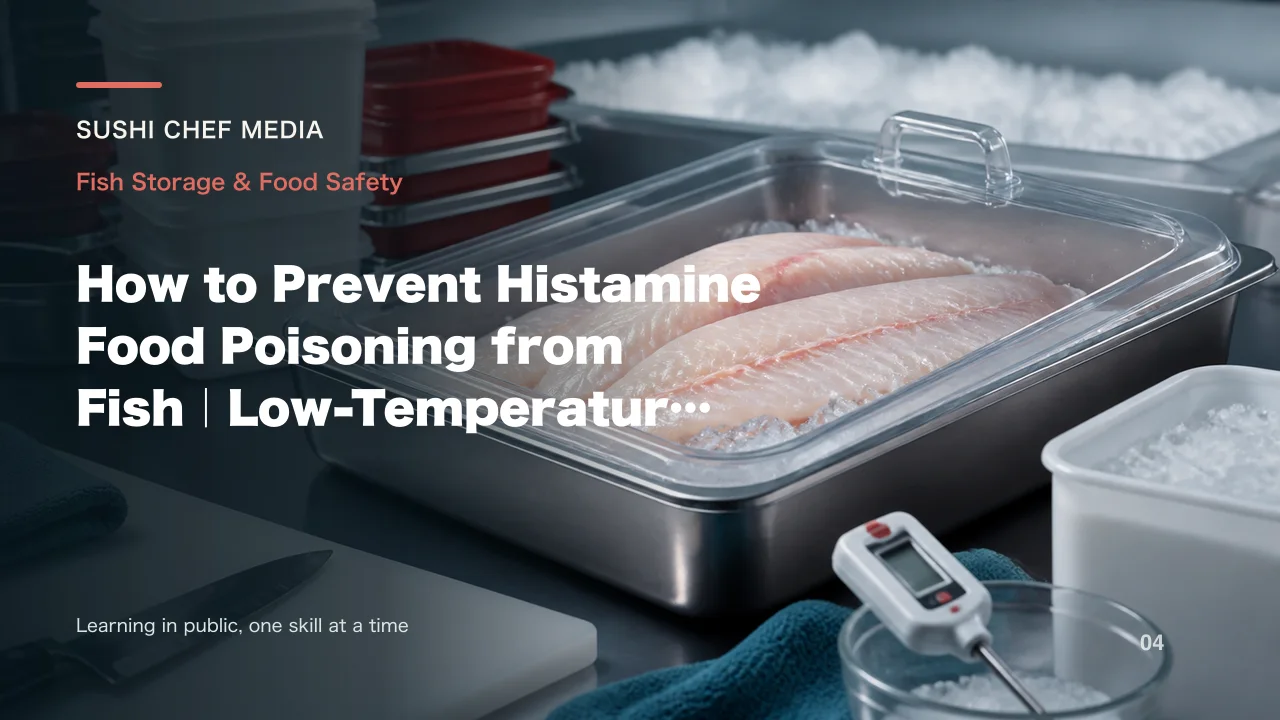
The countermeasure against histamine in fish is considered in this order: buy, chill immediately, preprocess quickly, and eat within expiration date.
Especially for tuna, bonito, mackerel, sardine, horse mackerel, etc., it is important not to leave them at room temperature.
Don’t raise temperature from the moment of purchase
Buy fresh fish last, and bring it home in a bag with cooling materials. After returning home, do not leave it on the kitchen counter; promptly transfer it to the refrigerator.
The refrigerator temperature is not constant. Use areas or the chilled compartment with less temperature fluctuation rather than the door side.
Preprocess whole fish as soon as possible
When storing whole fish, remove the gills and internal organs as soon as possible. Wipe moisture off with clean paper, put fish into a container, and refrigerate.
However, preprocessing does not extend the expiration date. Prioritize the selling date label and elapsed time after purchase.
Thawing and storage
Do not leave frozen fish at room temperature for a long time; thaw inside the refrigerator. After thawing, do not store again for a long time; use up promptly.
Even under refrigeration, histamine can increase when stored for extended periods, so do not assume “refrigerated means safe.”
Summary
Histamine cannot be decomposed by heating, so preventing its formation from the start is most important. Manage temperature and time carefully, and if there is the slightest doubt about a fish, choose not to eat it.