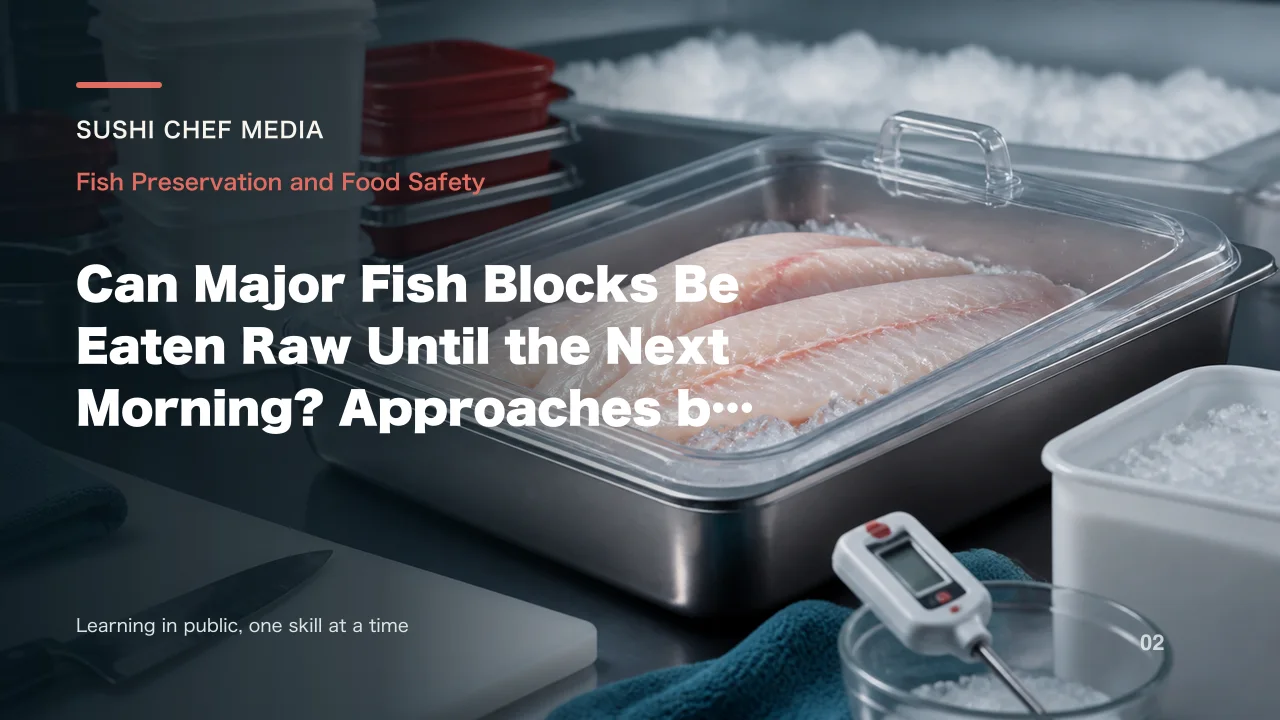
Whether fish blocks can be safely eaten raw until the next morning cannot be determined by fish species alone.
It requires that the fish is sold labeled for raw consumption, the expiration date on the label is not passed, and that it is managed at a low temperature immediately after purchase. If any of these conditions are not met, cooking instead of eating raw should be chosen.
Ease of Handling by Fish Type Is Just a Guideline
When comparing storage ease at home, tuna, red sea bream (madai), striped beakfish (hedai), flounder, greater amberjack (kanpachi), and salmon are relatively easy to monitor for freshness.
Yellowtail (buri), bonito (katsuo), horse mackerel (aji), Spanish mackerel (sawara), and squid may sometimes be handled until the next morning depending on conditions, but their freshness at purchase and storage history greatly affect safety.
Sardines (iwashi) and mackerel (saba) spoil quickly and are prone to producing histamine, which can cause food poisoning, so it’s safer not to decide on next-morning raw consumption solely by fish species.
Basics of Preservation
After purchasing, go straight home without stops and bring the fish using ice packs. At home, store it refrigerated in a container and replace the kitchen paper if drip occurs.
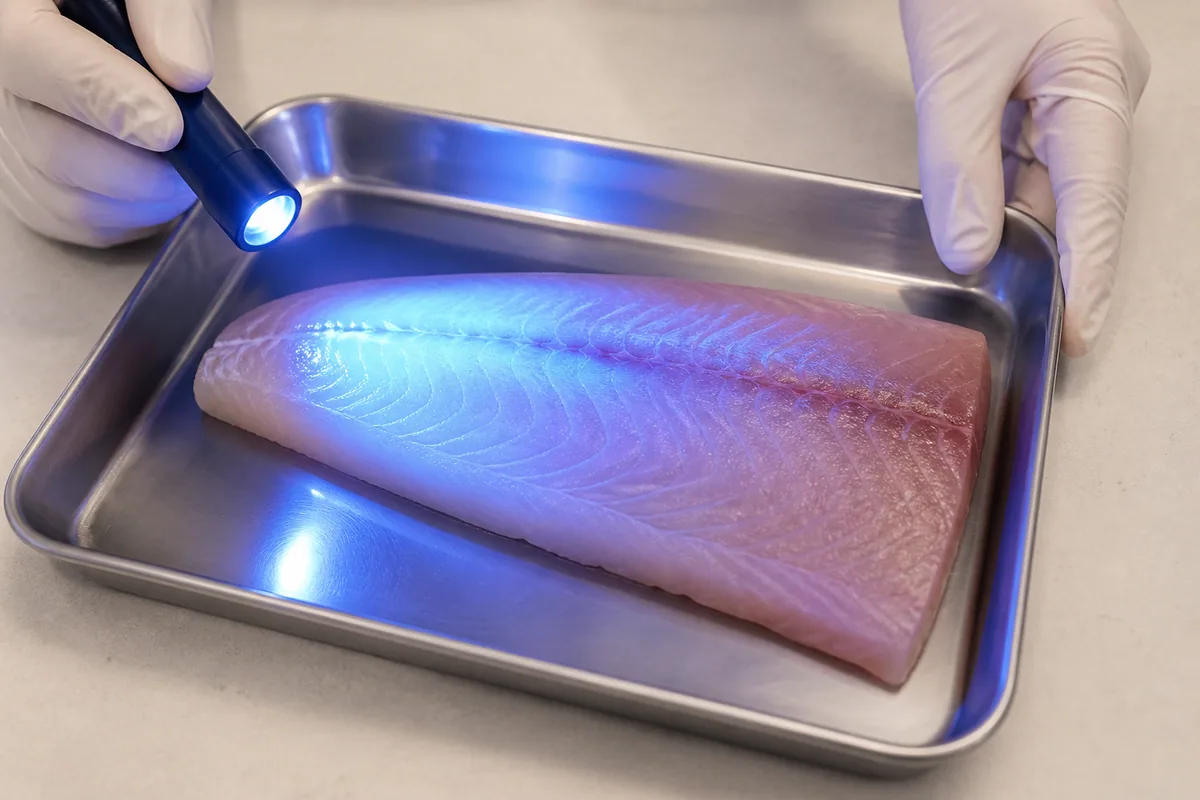
No strange smell or appearance does not guarantee safety. Priority should be given to the expiration date, label indications “for raw consumption” or “for cooking,” and transportation time home.
Summary
The “List of Fish Okay Until the Next Morning” is only a guideline for handling difficulty. If you cannot confirm the three essentials — raw consumption label, expiration date, and low-temperature management — it is necessary to decide against making sashimi or sushi from that fish.