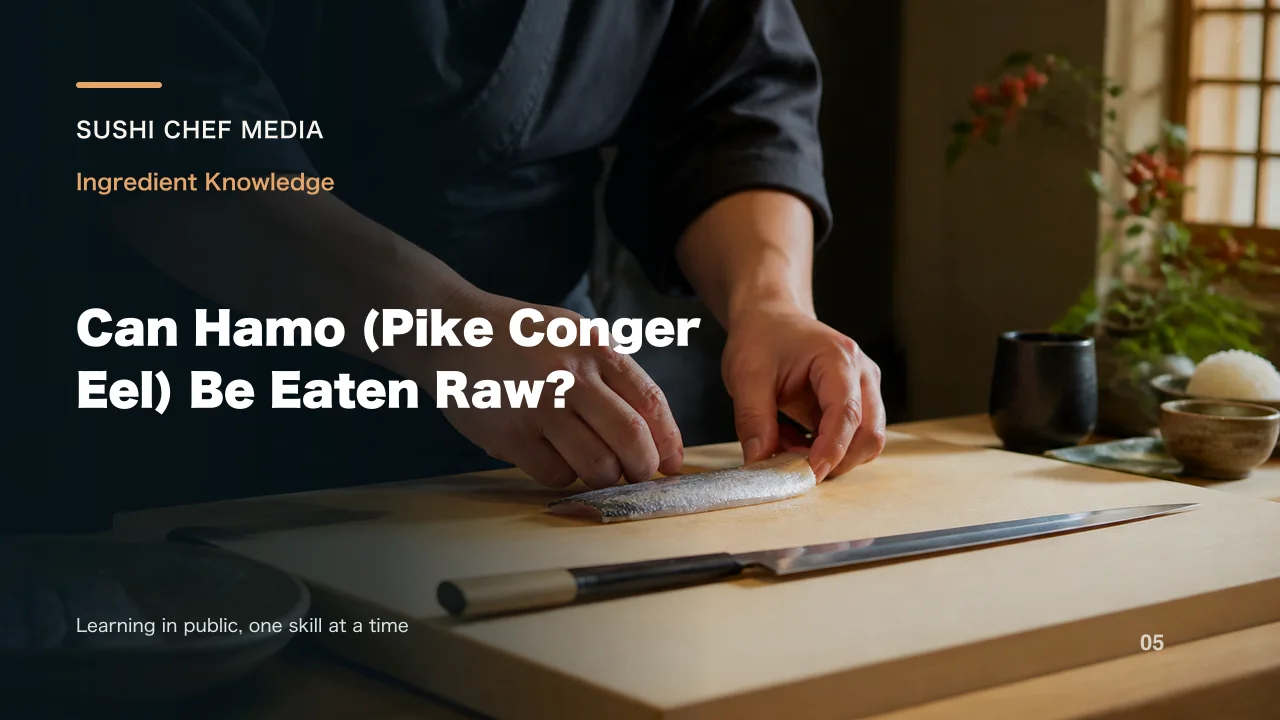
It is not recommended to prepare hamo raw at home as sushi. Hamo has many fine bones and requires the technique of “honegiri” (bone slicing), a precise knife skill. Considering also the safety and hygiene management needed for raw consumption, it is more practical to first handle hamo as a cooked dish.
Why Honegiri (Bone Slicing) Is Difficult for Hamo
Hamo contains many tiny bones, and honegiri involves making fine cuts with a knife without crushing the flesh. If the spacing and depth of these cuts are not consistent, bones remain when eating.
If Trying at Home, Start with Yubiki (Parboiling)
Use hamo that has already been honegiri processed and begin with lightly cooked dishes like yubiki (parboiling) or otoshi (quickly blanching and cooling). Make sure the heat penetrates adequately and the center is fully cooked.
When to Avoid Raw Consumption
Do not use hamo as sushi if you cannot confirm whether it is labeled for raw consumption, verify hygienic handling by suppliers, or maintain proper cold storage from purchase to preparation. Vinegar or condiments enhance flavor but do not substitute for cooking or hygiene controls.
Points to Confirm Next
- Is the product already honegiri processed?
- Is it labeled for cooking or raw consumption?
- Was it kept at low temperature from purchase until preparation?
- How does the flesh and bones appear after cooking?