Summary First
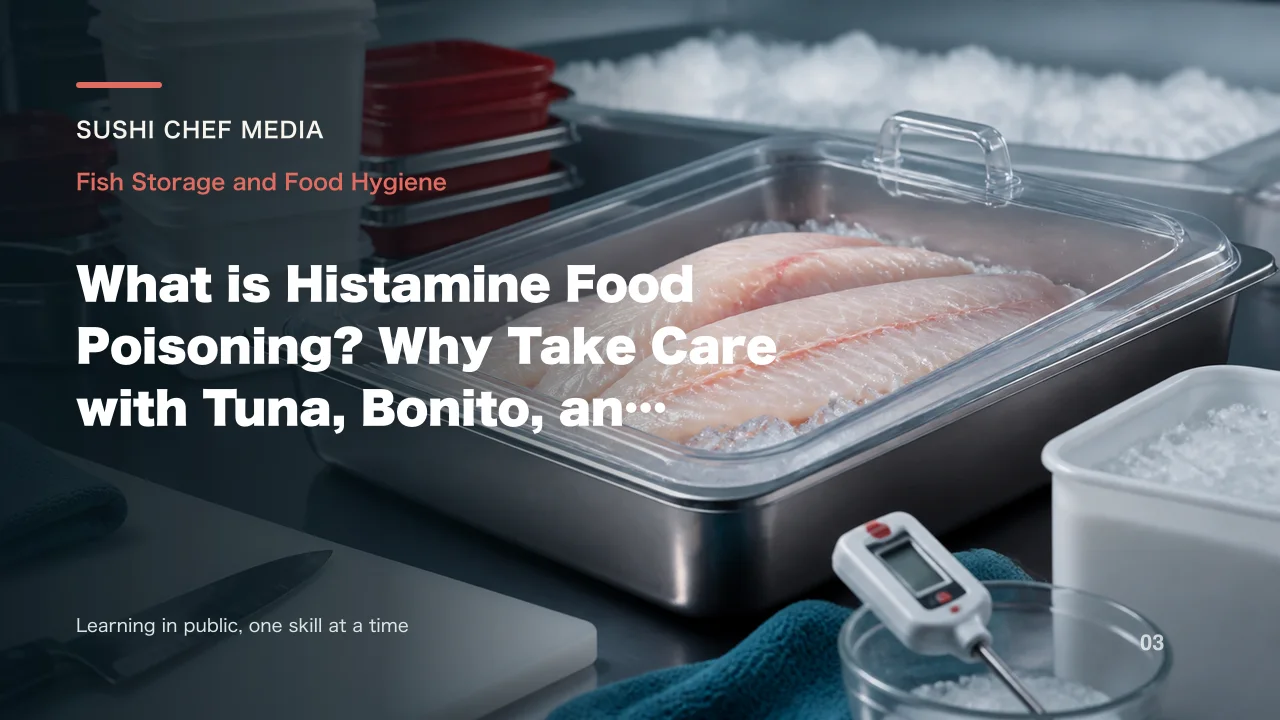
Histamine food poisoning is an allergy-like food poisoning that occurs when you eat fish containing a high concentration of histamine, which is formed by the action of bacteria converting the fish’s histidine amino acid.
The main countermeasure is not to try to eliminate histamine once it has formed, but to manage the fish at low temperatures from the very beginning to prevent its formation.
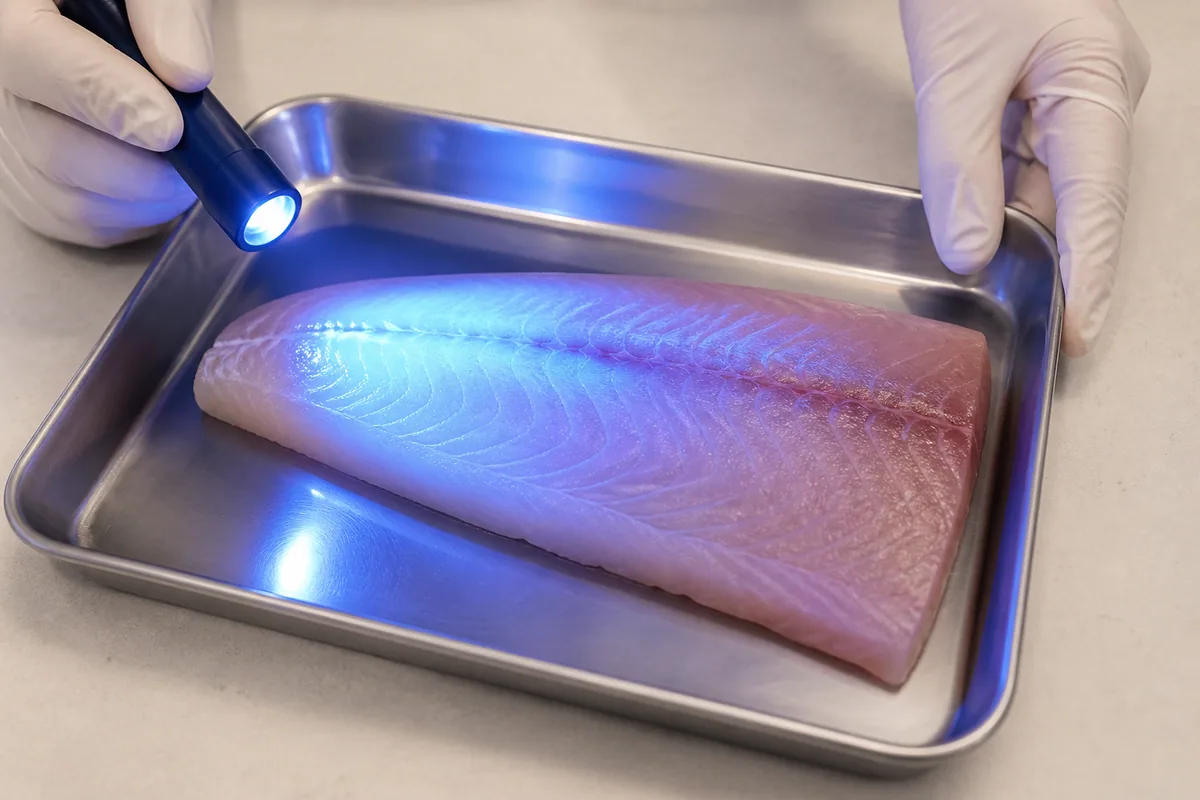
The Ministry of Health, Labour and Welfare lists red-fleshed fish rich in histidine such as tuna, swordfish, bonito, mackerel, sardine, saury, yellowtail, and horse mackerel as the primary culprit foods.
However, the risk of food poisoning is not decided by the fish species alone. Temperature management from catch through purchase is crucial.
Symptoms
Symptoms such as facial flushing, hives, headache, and fever may appear within a few minutes to a relatively short time after eating.
If you feel an unusual irritation on your lips or tip of your tongue, stop eating immediately and discard the fish. If symptoms are severe or you are worried, consult a medical institution.
Difference from Anisakis
Anisakis is a parasite, whereas histamine is a substance produced by bacterial activity. Their causes and preventive approaches differ.
Especially histamine, once formed, generally does not decompose through normal heating.
Summary
Histamine food poisoning is difficult because freshness cannot be judged by appearance alone. The basic approach is to refrigerate immediately after purchase, avoid leaving at room temperature, and use within the expiration period.