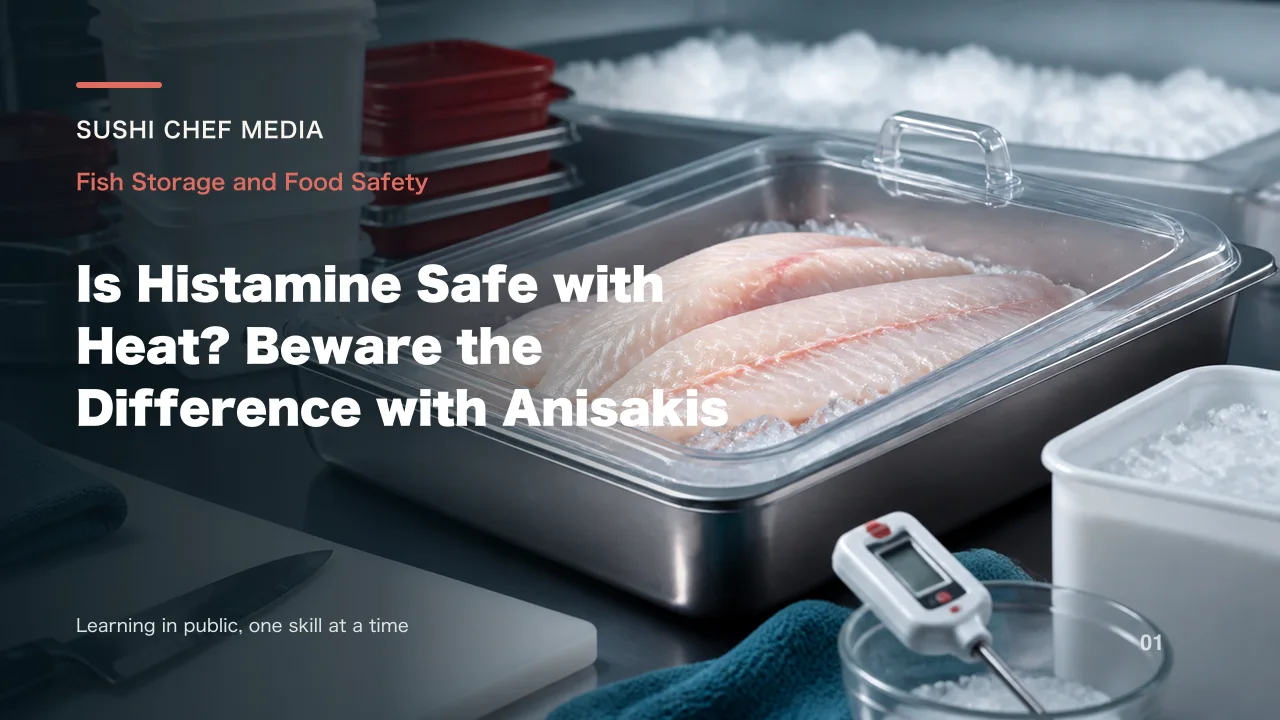
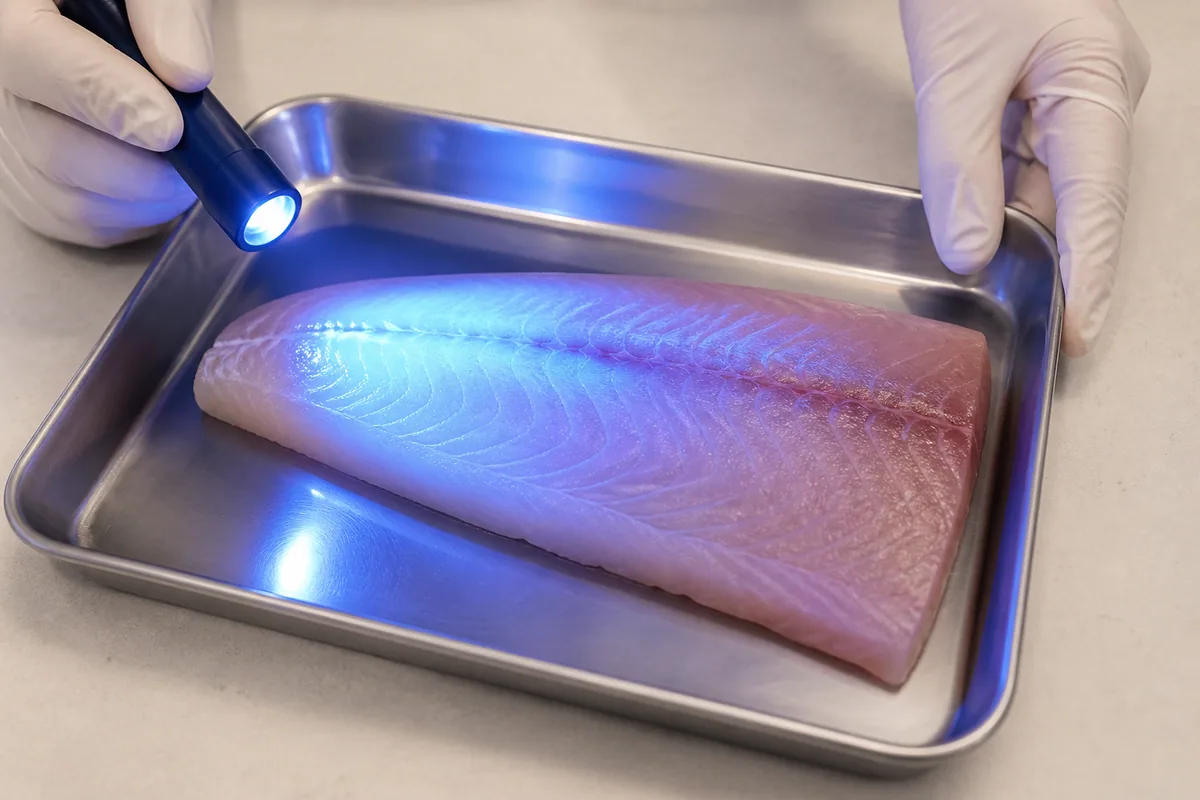
Histamine, once formed, is not broken down by normal cooking heat.
Unlike anisakis parasites, you cannot assume that “slightly old fish are safe if cooked.” If you suspect the fish has lost freshness, you should choose not to eat it just because it is cooked.
Difference from Anisakis
Anisakis parasites can be killed by thorough heating to the core under conditions specified by Japan’s Ministry of Health, Labour and Welfare. Histamine, however, is a substance produced and accumulated inside the fish flesh and cannot be eliminated by cooking.
Even though both cause “fish-related food poisoning,” the countermeasures differ and should not be combined into one approach.
Why Heat Doesn’t Work
Histamine is heat-stable. While cooking can reduce bacteria in fish, ordinary home heating cannot remove histamine already accumulated in the fish meat.
Signs of Suspicious Fish
If you feel an unusual tingling or irritation on your lips or tongue when eating, stop eating immediately. Sometimes you cannot judge safety by smell or appearance alone.
If symptoms such as facial redness, hives, or headache develop, consult a medical institution according to the severity of symptoms.
Summary
The key to histamine prevention is not cooking but keeping the fish properly chilled from the start to prevent histamine formation. Refrigerate immediately after purchase and avoid leaving fish at room temperature or storing it for long periods.