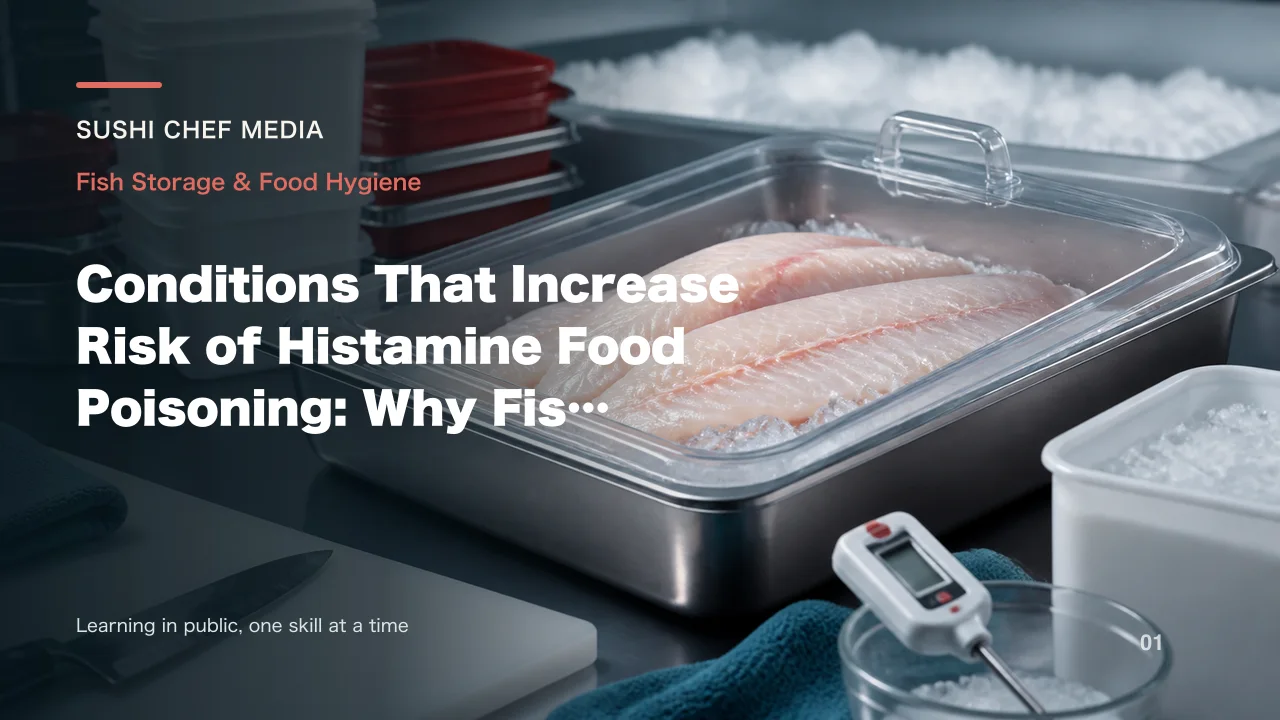
Histamine food poisoning is more likely to occur when fish is left at lukewarm temperatures for extended periods.
Specifically, be careful in situations such as prolonged time between purchase and refrigeration, slow thawing at room temperature, refrigerators set at high temperatures, and long-term storage.
Situations With Increased Risk
Leaving Fish at Room Temperature After Purchase
If you detour after buying fish or leave it on the kitchen counter while doing other tasks, its temperature rises. Use coolants and refrigerate or freeze immediately upon returning home.
Thawing at Lukewarm Temperature
When frozen fish is left at room temperature for a long time, its surface temperature rises. Choose methods that maintain low temperatures, such as thawing inside the refrigerator.
Long-Term Storage With Innards and Gills Attached
Histamine-producing bacteria exist in gills and digestive tracts as well. When storing whole fish, process it as soon as possible after purchase and avoid leaving it at room temperature.
Avoid Long-Term Storage Even in the Refrigerator
Refrigeration does not guarantee indefinite safety. According to the Ministry of Health, Labour and Welfare, even when managed at low temperatures like 10°C, histamine levels can increase during prolonged storage.
Follow labeled expiration dates and use fish promptly.
Summary
Prevention of histamine poisoning focuses not on “heating spoiled fish,” but on keeping temperatures low from purchase until consumption. Avoid leaving fish at room temperature, thawing it slowly at lukewarm temperatures, and long-term storage.