Summary
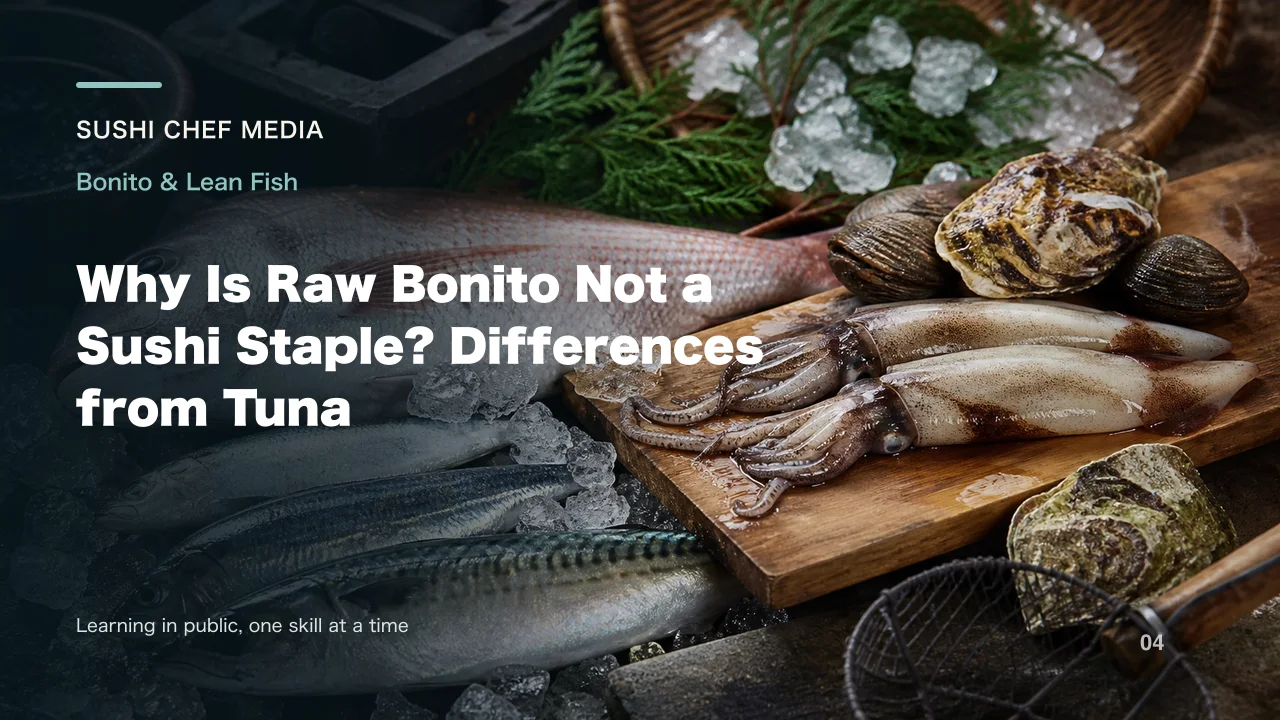
Bonito is not a fish unsuitable for sushi. However, compared to tuna, it tends to have a stronger bloodline aroma, softer flesh, more moisture, and faster freshness degradation, which makes straightforward raw nigiri sushi less universally liked.
As a result, bonito pairs better with some “extra work,” such as torch searing (aburi), short marinating, or the addition of condiments.
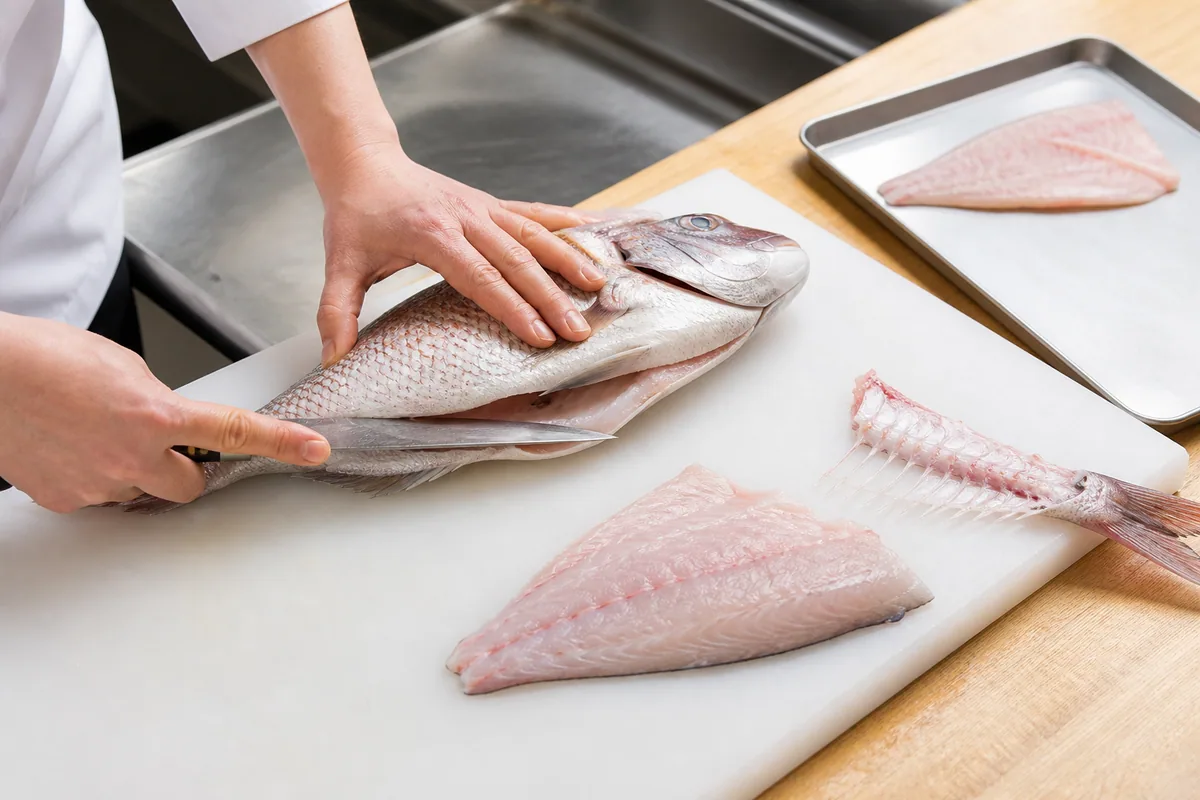
Bonito has a robust flavor typical of lean red-flesh fish. If the bloodline (the dark red section near the spine, known for its stronger smell) is not properly treated, it can impart metallic or fishy odors.
Unlike tuna, which can often be served sliced directly, bonito benefits from bloodline trimming, moisture wiping, and the use of condiments or sweet soy reduction (nikiri) to harmonize its aroma and make the sushi more cohesive.
Flesh Texture and Freshness Changes Are Key
Bonito’s flesh is soft and relatively moist, making it very sensitive to temperature and time. After purchase, it should never be left at room temperature; instead, it must be handled at low temperatures prioritizing indicated consumption dates.
This does not mean bonito is dangerous; rather, it means that only bonito sold for raw consumption, handled properly and used quickly, is safe and optimal.
Deciding the Direction When Making Sushi
For example, spring’s early bonito pairs well with garnishes like ginger or green onions, while autumn’s returning bonito is better suited for torch searing or wasabi, depending on fat content and aroma.
Starting with thinner slices and experimenting with small amounts combined with different seasonings, nikiri, or aburi treatments can reveal individual fish differences more clearly.
Conclusion
Bonito is not less common in sushi because it’s unsuitable, but because its aroma, moisture, and flesh differ from tuna, so preparation greatly impacts the final result.
Instead of simply slicing and topping, adding a finishing touch tailored to the fish’s characteristics emphasizes bonito’s appeal.