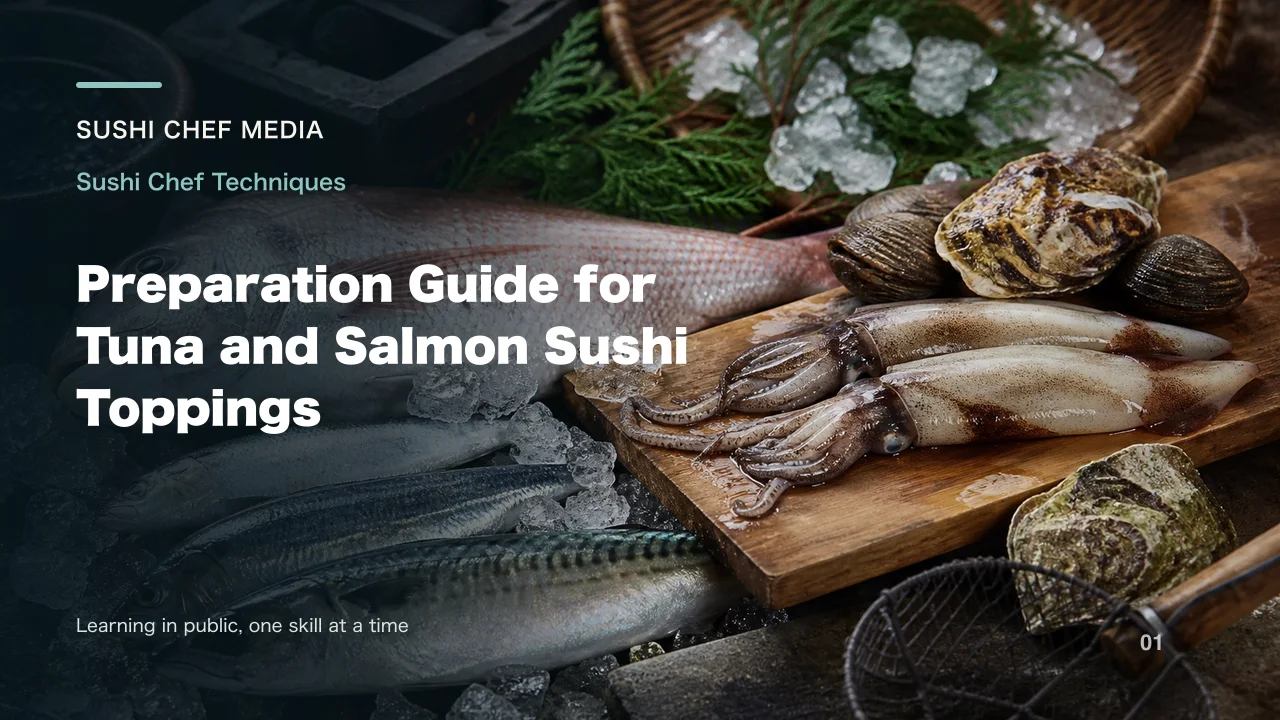
Tuna and salmon are highly popular fish used as sushi toppings. Below is a summary of the procedures and precautions to prepare them deliciously.
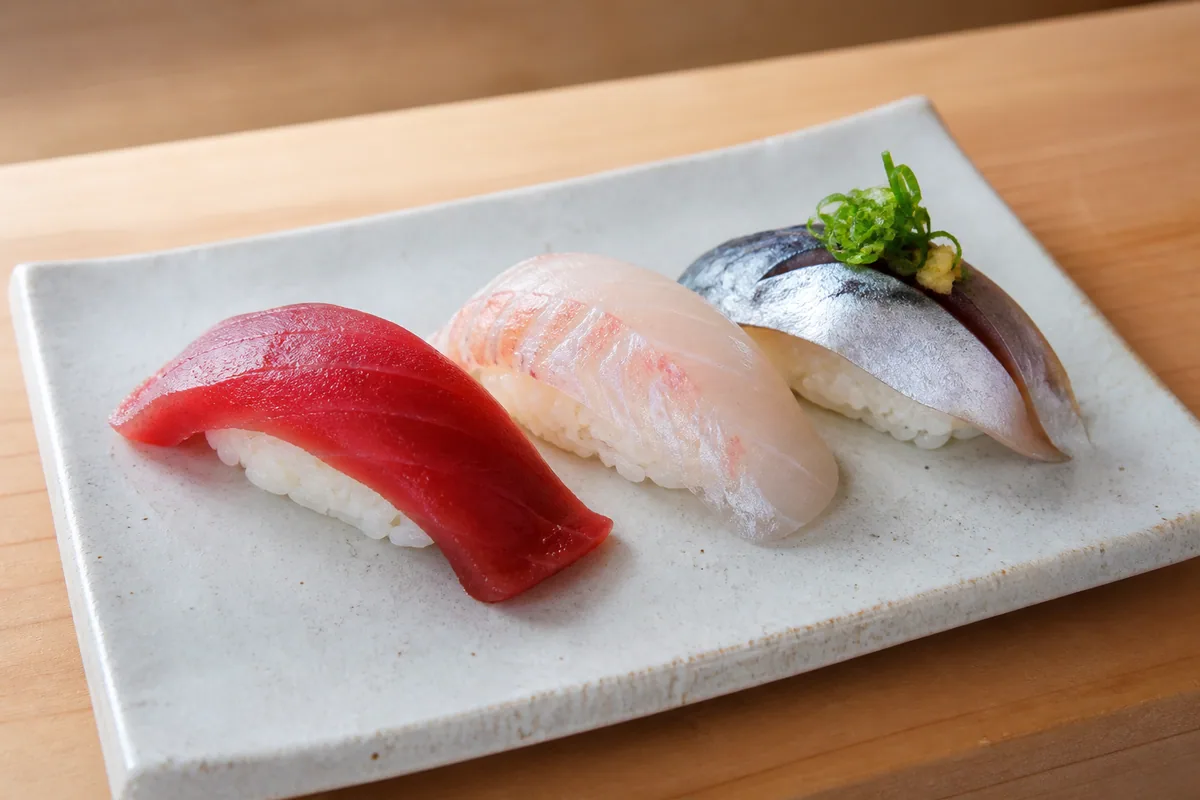
Tuna is characterized by its muscular texture and red meat. The grain (muscle fiber direction) is well-defined, and it contains a moderate amount of fat.
Salmon is rich in fat, has comparatively fewer muscle fibers, and features a soft texture.
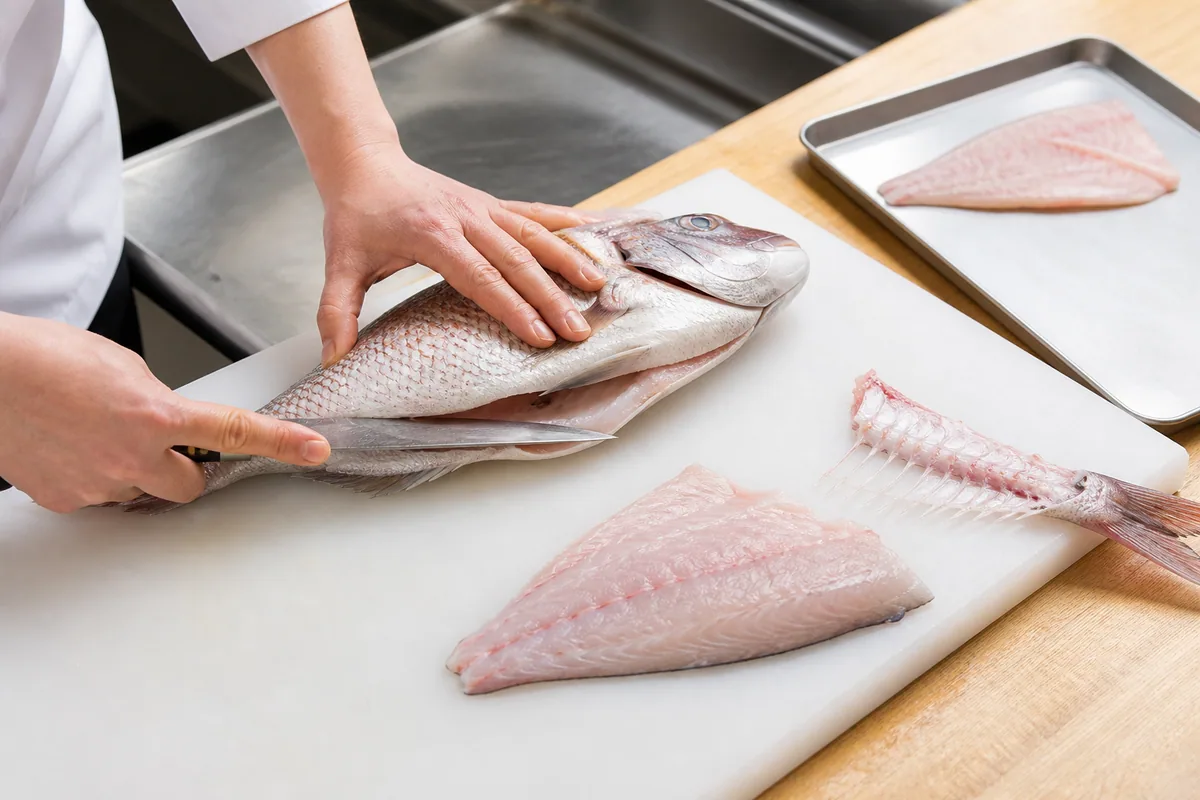
Tuna should be sliced thinly following the direction of the muscle fibers to enhance texture. Laying the knife flat and pulling it while slicing results in a clean cross-section.
Salmon contains abundant fat, so holding the knife more vertically while cutting prevents the fat from melting out. Thin slices allow you to enjoy a melt-in-the-mouth sensation.
Differences in Marinating and Searing Techniques
Marinating involves briefly soaking the fish in a marinade made of soy sauce, mirin, sake, and others. Marinating tuna enhances its umami, while marinating salmon causes the fat to melt slightly, enriching its flavor.
Searing uses a torch or similar tool to lightly grill the surface. Searing tuna adds a fragrant aroma, and salmon’s fat melts slightly, resulting in a mellow taste.
Importance of Raw Consumption Labeling
Fish designated for raw consumption undergo special treatment to reduce risks from parasites and bacteria. It is recommended not to consume fish without such labeling as sashimi or sushi. For details, please refer to the official information from the Ministry of Health, Labour and Welfare.
Precautions Regarding Parasites and Hygiene
Even with fish meant for raw consumption, poor hygiene management can lead to food poisoning risks. Please pay attention to the following:
-
Thorough hygiene management: Maintain the cleanliness of cooking utensils and hands to prevent cross-contamination.
-
Proper refrigerator temperature control: Store fish at 0–5°C to preserve freshness.
Pre-Publication Checks
-
Ensure thorough hygiene management: Verify the cleanliness of utensils and hands, and take measures to avoid cross-contamination.
-
Confirm refrigerator temperature control: Make sure the fish storage temperature is between 0 and 5°C and that proper management for freshness is in place.
Summary
When preparing tuna and salmon as sushi toppings, it is essential to understand each fish’s characteristics and use appropriate slicing, marinating, and searing techniques. Additionally, pay close attention to raw consumption labeling and hygiene management to provide safe and delicious sushi.
Reference Articles and Related Links
Next, learn about storage methods for tuna and salmon and tips to maintain their freshness.