

Cutting and plating sashimi significantly affect its visual appeal and texture. Below is a summary of the basic steps and important points to keep in mind.
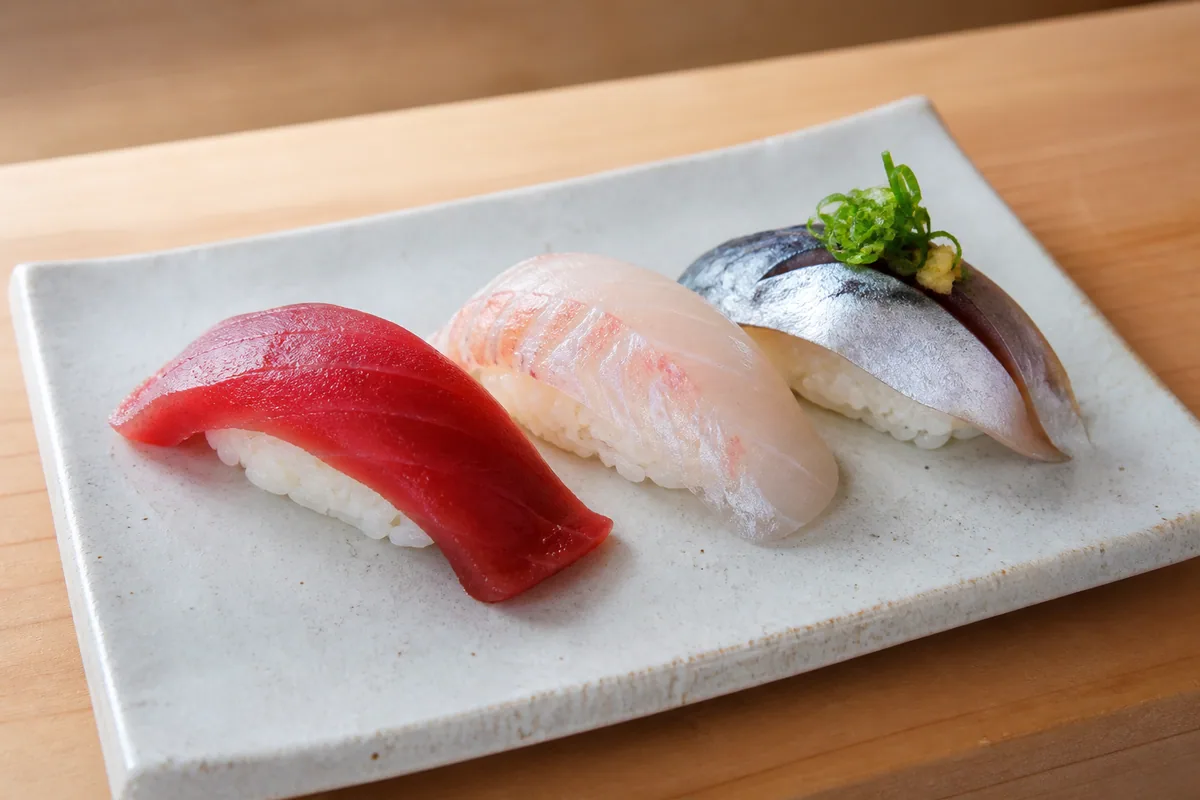
Check the fish’s grain direction (the orientation of its muscle fibers) and slice perpendicular to it. Pulling the knife at a right angle to the grain improves the texture.
Deciding Sashimi Thickness
The thickness varies depending on the type and part of the fish. Generally, red-fleshed fish are sliced about 2–3 mm thick, while white-fleshed fish are sliced thinner at approximately 1–2 mm.
Cutting to Give the Fish Defined Edges
Giving the fish clear edges enhances its appearance. You can achieve this by inserting the knife at a diagonal angle.
Tips for Home Plating
When plating at home, adding colorful vegetables and condiments makes the presentation more attractive. Also, ensuring the serving plate is spotless contributes to the overall appeal.
Points of Caution
- Fish intended for raw consumption must test negative for intestinal bacteria.
- Such fish should be processed in hygienic areas separated from other equipment, using dedicated utensils.
Summary
The way sashimi is cut and plated greatly influences both its appearance and texture. Master these basic steps and precautions to enjoy delicious sashimi even at home.