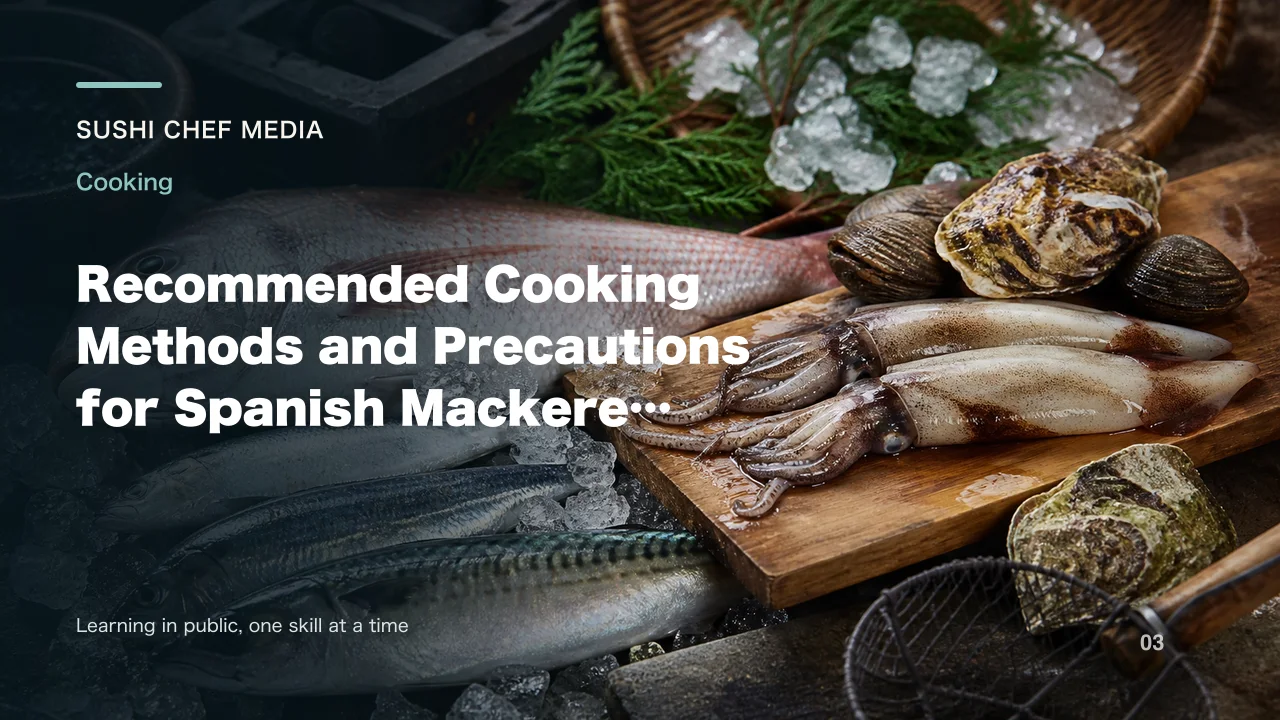
Spanish mackerel (Sawara) can be deliciously prepared using a variety of cooking methods such as salt curing, searing, meunière, and butter soy sauce. This article organizes the procedures and precautions for each method, offering tips on common mistakes and some unexpected insights.
Meunière
Procedure
- Season the Spanish mackerel fillets with salt and pepper, then lightly dust with flour.
- Heat butter in a frying pan and cook the fish.
Precautions
- The flesh is delicate, so be careful not to overcook.
- Overcooking can cause the flesh to fall apart.
Common Pitfalls
- Overcooking can lead to the flesh crumbling.
Butter Soy Sauce
Procedure
- Cook the Spanish mackerel as you would for meunière.
- After cooking, add butter and soy sauce and coat the fish thoroughly.
Precautions
- Adjust the ratio of butter and soy sauce according to your taste.
- Handle gently to prevent the flesh from falling apart, and avoid overcooking.
Common Pitfalls
- Overcooking can cause the flesh to break apart.
Anisakis Parasite Precautions
Spanish mackerel may host Anisakis parasites, so the following precautions are recommended when consuming raw:
- Freezing: Keep at -20°C (-4°F) for at least 24 hours
- Cooking: Ensure a core temperature of 60°C (140°F) for at least 1 minute
Precautions
- Insufficient freezing or cooking may allow Anisakis to survive.
Common Pitfalls
- Failing to freeze or cook adequately can result in live Anisakis parasites.
Summary
Spanish mackerel is a versatile fish that can be enjoyed by various cooking methods, but its soft flesh is prone to breaking, requiring careful handling. Additionally, appropriate processing is crucial to avoid the risk of Anisakis when eating raw. Please refer to the procedures and precautions of each cooking method to safely and deliciously enjoy dishes made with Spanish mackerel.
Next, let’s learn about storage methods and other cooking techniques for Spanish mackerel.