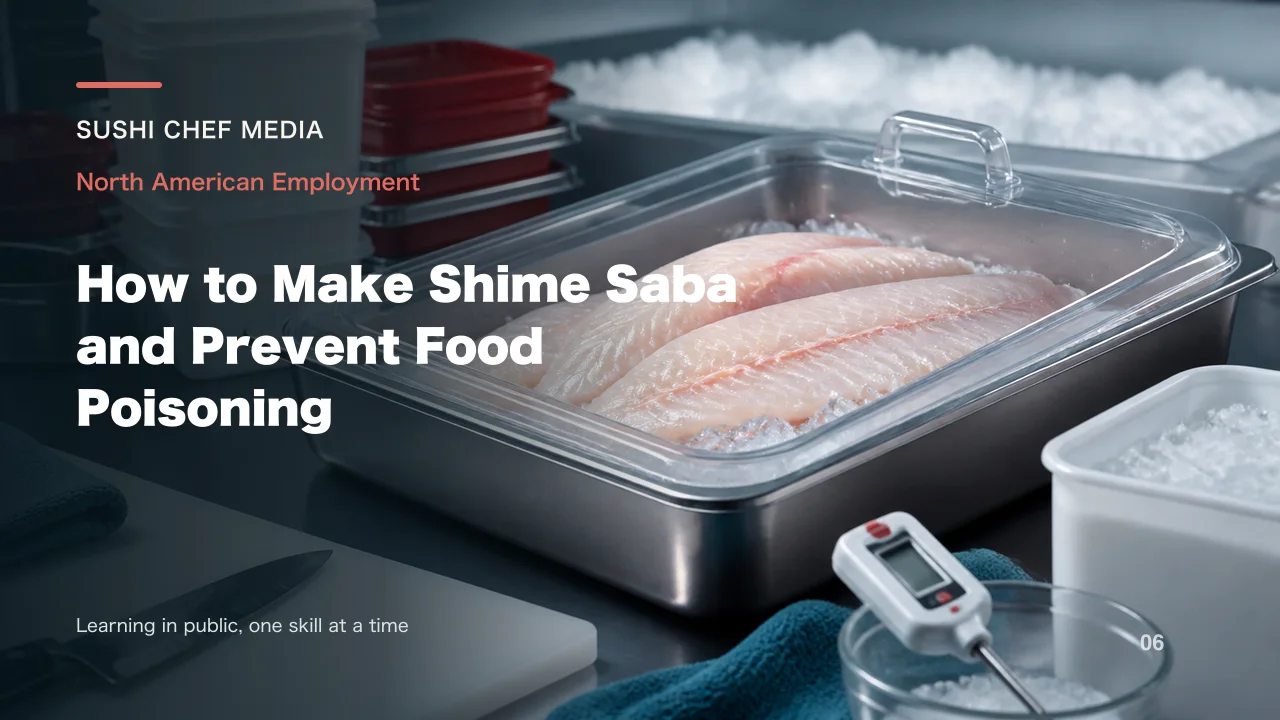
Shime saba is a traditional sushi topping made by curing mackerel with salt and vinegar. To achieve a delicious result, following proper procedures and maintaining hygiene is essential. Below are detailed methods for salting and vinegar-curing, storage precautions, and measures to prevent food poisoning.
-
Prepping the mackerel:
- Thoroughly wash the mackerel under running water and remove the internal organs.
- Cleanly rinse away the bloodline (blood-rich tissues).
-
Applying salt:
- Evenly coat the surface of the mackerel with salt.
- Adjust the amount of salt according to the size of the fish.
-
Resting in the refrigerator:
- Place the salted mackerel in the refrigerator and let it rest for several hours to overnight.
-
Rinsing and drying:
- Rinse off the salt thoroughly and pat the surface dry.
-
Slicing thinly:
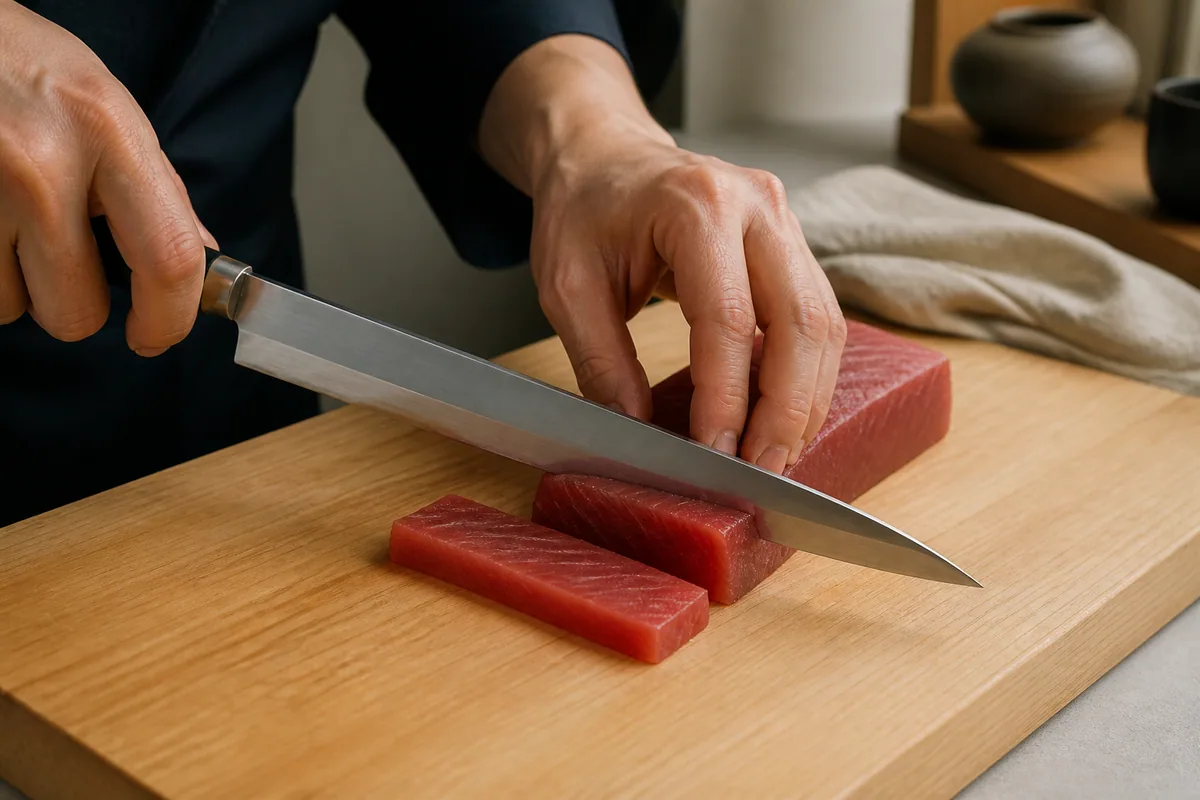
- Use a knife to slice the mackerel thinly.
Vinegar-Curing Procedure
-
Prepping the mackerel:
- As with salting, wash the mackerel and remove the internal organs.
-
Preparing the vinegar marinade:
- Mix vinegar, sugar, and salt to create the curing liquid.
-
Marinating the mackerel:
- Submerge the mackerel in the vinegar marinade and store it in the refrigerator for several hours to overnight.
-
Rinsing and drying:
- Rinse off the vinegar marinade and thoroughly pat dry the surface.
-
Slicing thinly:
- Slice thinly with a knife.
Storage Precautions
-
Freezing Storage:
- Freezing fish intended for raw consumption at -20°C (-4°F) or below for at least 24 hours kills parasites such as Anisakis.
-
Refrigerated Storage:
- Freshness tends to decline rapidly when stored in the refrigerator, so it is best to consume as soon as possible.
Measures to Prevent Food Poisoning
-
Preventing Anisakis Food Poisoning:
- Anisakis are parasites that can be found in fish like mackerel, horse mackerel, and Pacific saury. When eating raw fish, visually inspect for Anisakis larvae and remove them carefully.
-
Preventing Histamine Food Poisoning:
- Histamine is a substance produced when fish freshness deteriorates and is not broken down by cooking. Use fresh fish and strictly manage temperature to prevent histamine formation.
Summary
To safely prepare shime saba, select fresh mackerel, follow proper salting or vinegar-curing procedures, and rigorously control storage temperatures. Especially to avoid risks from Anisakis and histamine-related food poisoning, utilize freezing and other preventive measures when necessary.