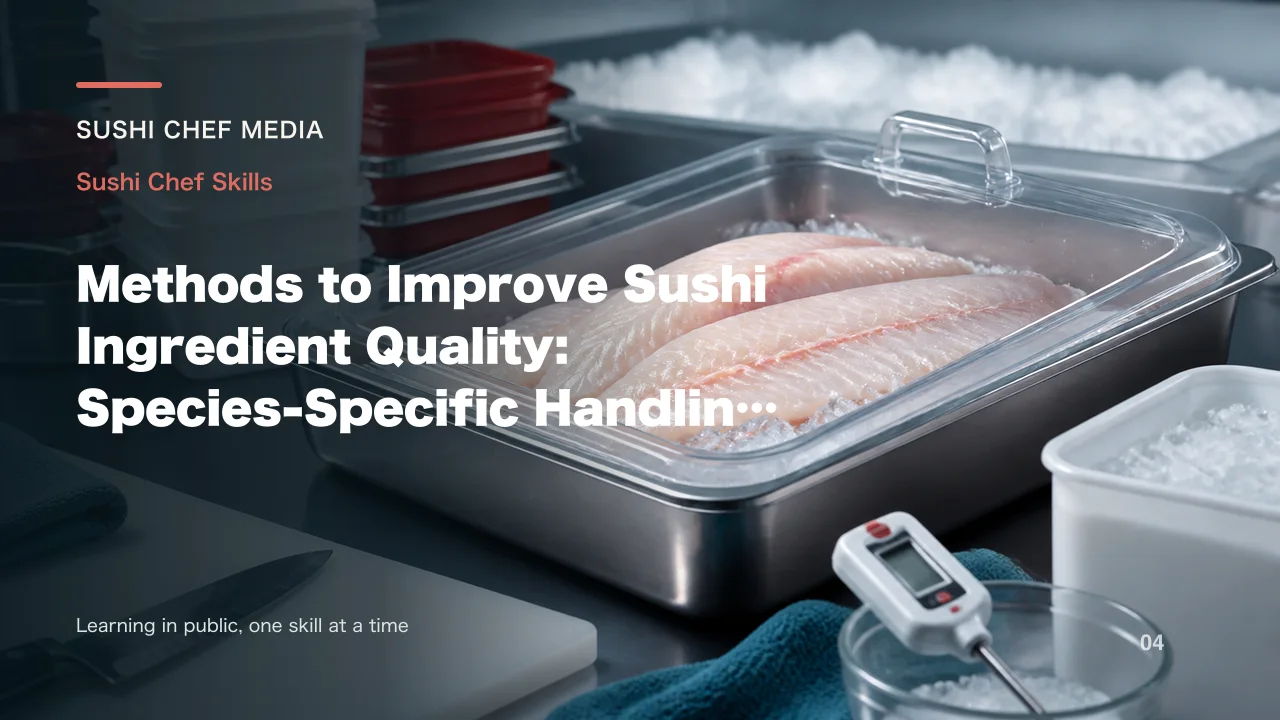
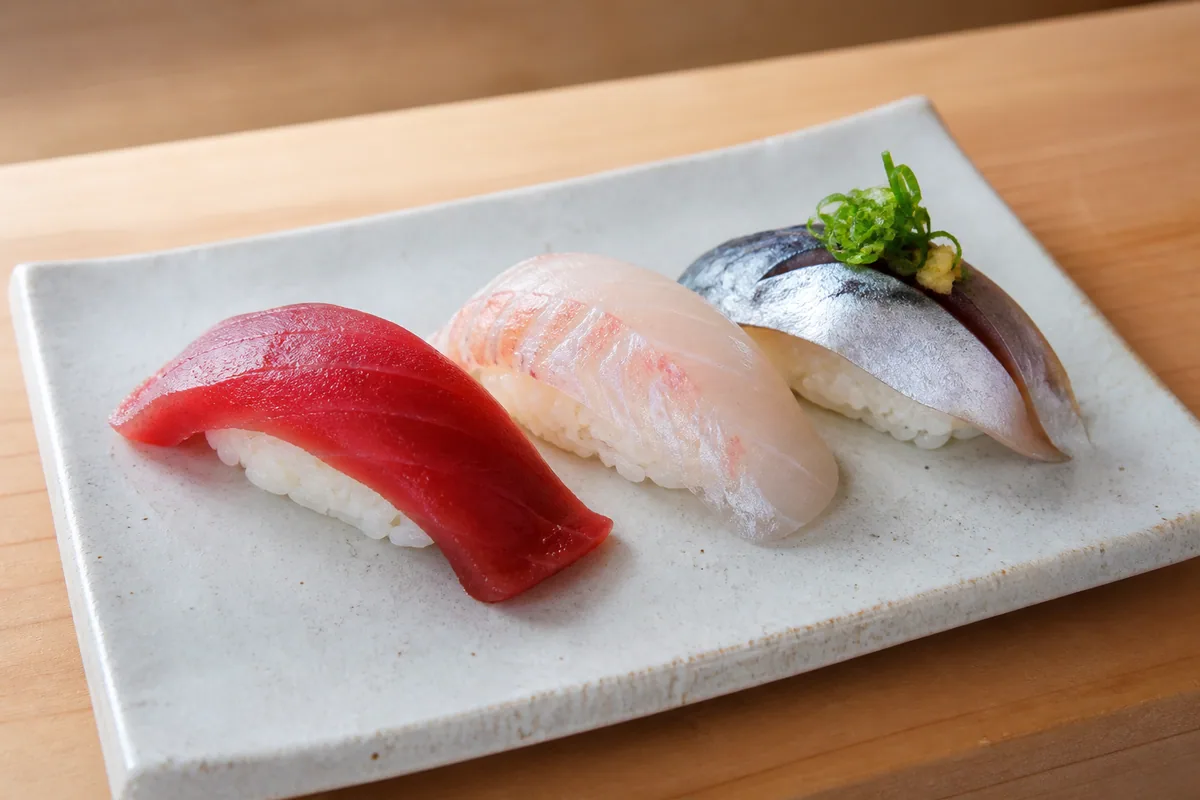
To improve the quality of sushi ingredients, it is important to select proper handling methods tailored to each fish species. Below is a summary of the main species along with their specific handling methods and precautions.
-
Evenly sprinkle salt on the surface of the fish and leave it for several minutes. This draws out excess moisture and firms up the flesh.
-
Kombujime (Kelp Wrapping):
- Wrap the fish with kombu (kelp) and refrigerate it for several hours to overnight. This transfers umami from the kelp to the fish, enhancing its flavor.
Precautions
-
The duration of shiojime and kombujime should be adjusted according to the size and thickness of the fish.
-
Excessive salt curing time can make the flesh tough, so proper time management is essential.
-
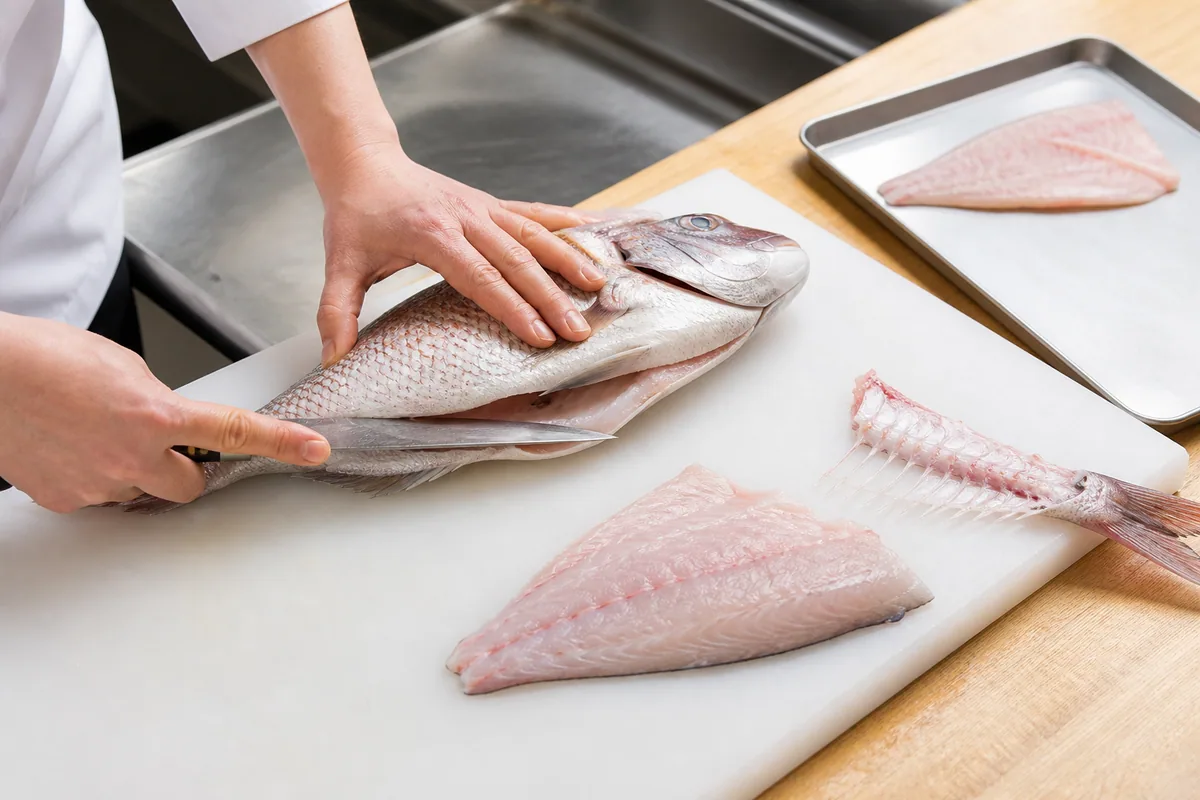
Sprinkle salt on the fish surface and leave for several minutes to draw out moisture and firm the flesh.
-
Suzume (Vinegar Curing):
- Lightly cure the fish with vinegar to suppress odors and enhance flavor.
Precautions
-
Vinegar curing should be brief to preserve the fish’s freshness.
-
The curing duration must be adjusted based on the size and thickness of the fish.
Handling Methods for Tuna
Methods
-
Light Salt:
- Lightly sprinkle salt on the fish surface and leave for a few minutes to draw out moisture and firm the flesh.
-
Marinating (Zuke):
- Soak the fish in soy sauce, mirin, or similar seasonings to add flavor.
Precautions
-
Marinating time should be short to maintain freshness.
-
Salt and marinating times need to be tailored to fish size and thickness.
Handling Methods for Spanish Mackerel (Sawara)
Methods
-
Salt:
- Evenly apply salt to the fish surface and let it rest for several minutes to draw out moisture and firm the flesh.
-
Seared (Aburi):
- Lightly sear the fish surface to add a roasted aroma and enhance flavor.
Precautions
-
Take care not to make the flesh tough when searing.
-
Salt and searing durations should be adjusted according to fish size and thickness.
Handling Methods for Squid
Methods
-
Tenderizing with Knife:
- Lightly pound the flesh using the back of a knife to soften texture and enhance flavor.
Precautions
- Be cautious not to damage the flesh when tenderizing.
Handling Methods for Crab
Methods
-
Heat Treatment:
- Properly cook the crab to ensure food safety.
Precautions
- Avoid overcooking, which can toughen the meat.
Pre-Service Checks
-
Hygiene Management:
- Since raw fish intended for consumption carries risks of parasites and bacteria, proper handling and hygiene management are crucial. It is recommended to follow the guidelines provided by regulatory bodies such as the US Food and Drug Administration (FDA) and the Centers for Disease Control and Prevention (CDC), including freezing treatments and strict hygiene controls.
Summary
Selecting appropriate handling methods for each fish species is key to enhancing the quality of sushi ingredients. By understanding the characteristics of each species and applying suitable treatments, you can provide more delicious sushi.