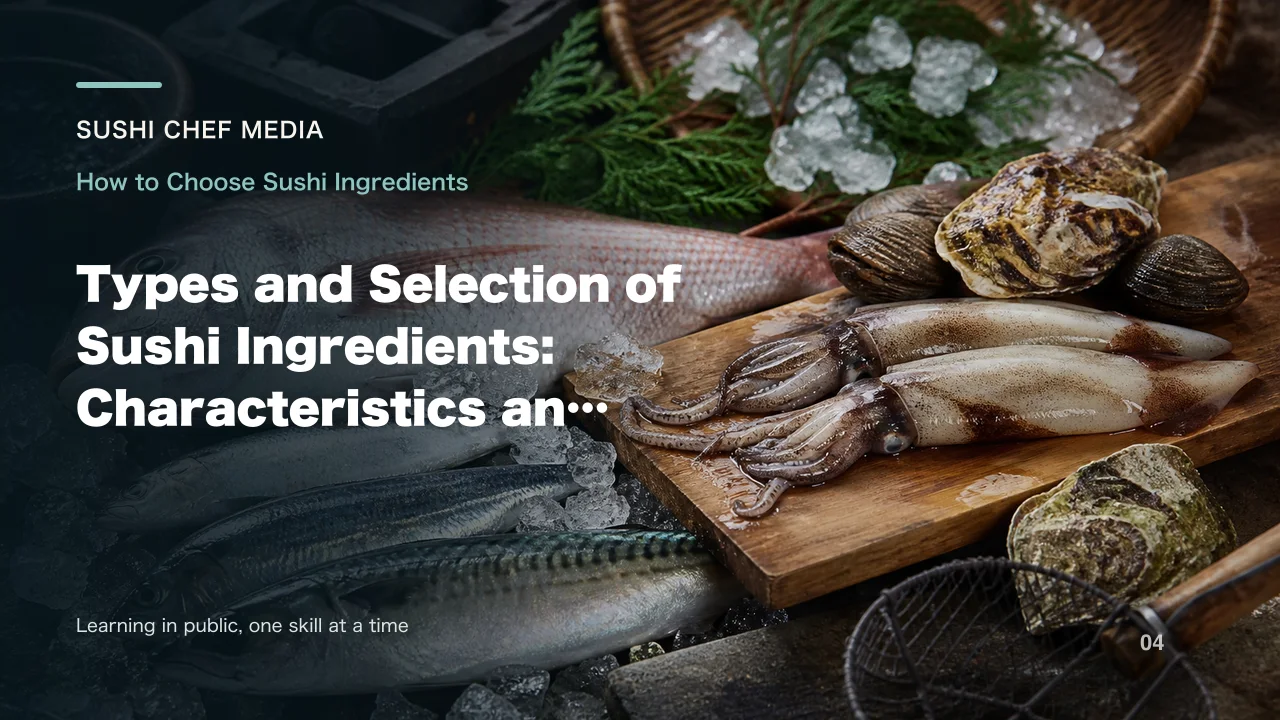
The selection of sushi ingredients depends greatly on the type of fish, freshness, and whether they are meant for raw consumption or cooking. Here we organize the characteristics and selection tips for each type.
Red meat fish offer the appeal of tasting the pure umami and richness of the fish itself without relying on fat. They are characterized by a rich flavor that spreads at the moment of entry into the mouth and a clean aftertaste. Differences in freshness and aging are clearly noticeable, and they pair exceptionally well with wasabi and vinegared rice.
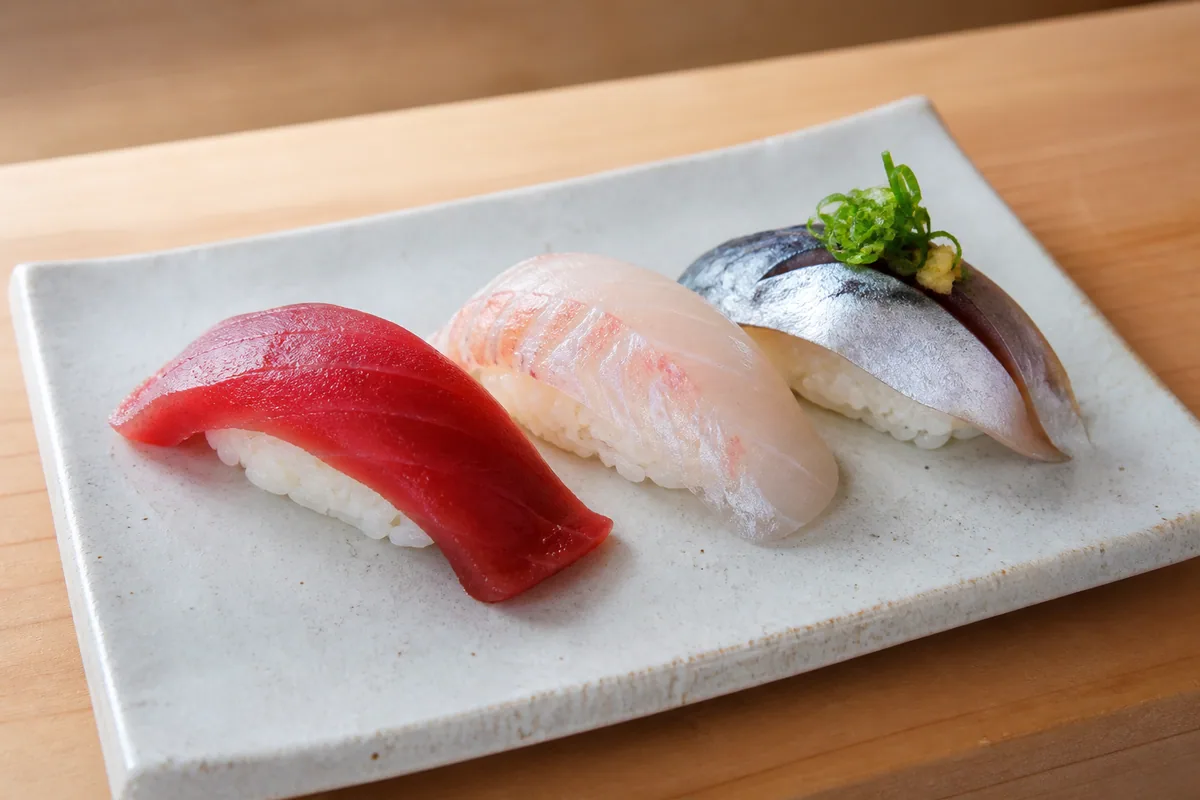
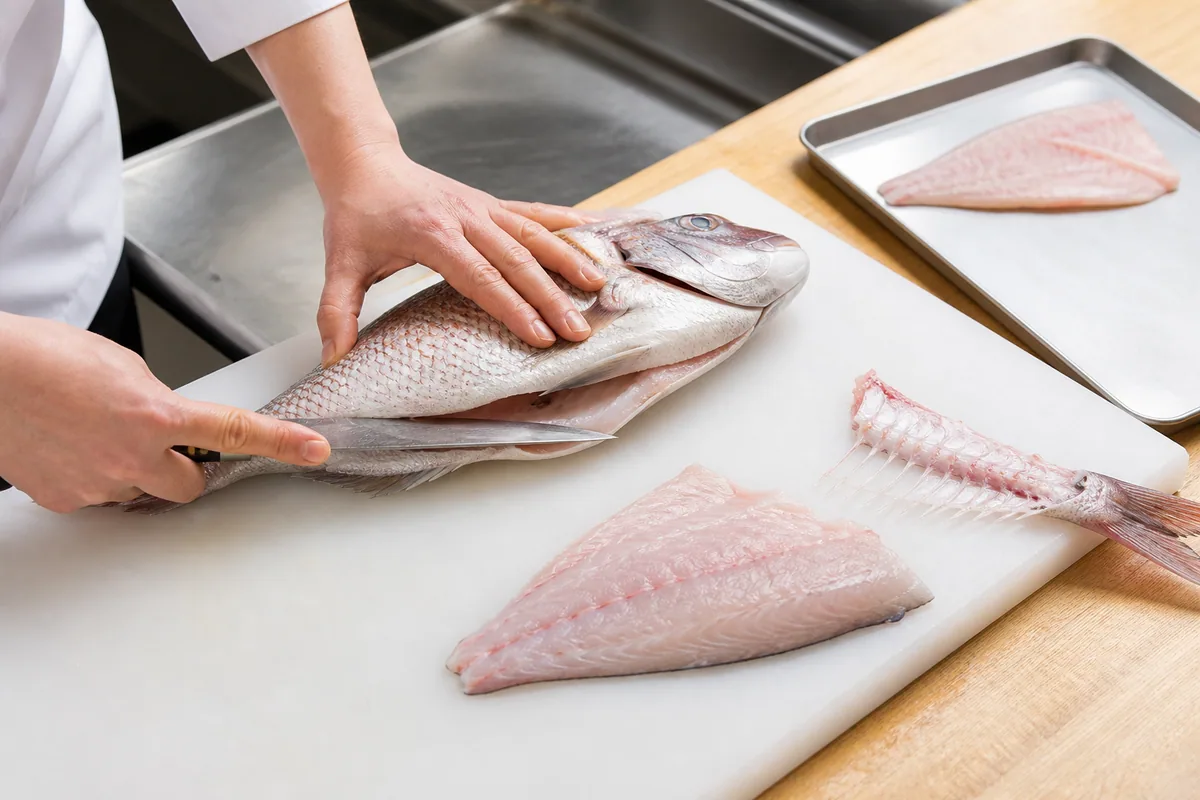
White meat fish have low fat content and their charm lies in enjoying the natural umami and texture of the ingredient itself. They have a mild flavor without strong odors, allowing the delicate sweetness that unfolds with each bite and the firmness of the flesh to be easily appreciated. They taste delicious even with just salt, sudachi (a citrus similar to lime), or wasabi, making the knife skills of the chef and freshness vital to the flavor.
Shiny Fish (Horse mackerel, Mackerel, Sardine, Gizzard shad, Pacific saury, etc.)
Shiny fish are often recognized by their silver-colored skin. They are favored for the balance between rich umami and acidity. They have a rich fatty flavor and distinctive aroma; their taste is enhanced by vinegaring (su-jime) or salting (shio-jime). Managing freshness is challenging, and the skill of the chef is clearly reflected, making these ingredients appreciated by connoisseurs.
Shellfish (Scallop, Abalone, Turban shell, etc.)
For shellfish, freshness is crucial. Those with shells should feel heavy and have tightly closed shells to be considered good. The adductor muscle (the flesh used in sushi) is categorized into raw food and cooked food based on freshness. Raw shellfish must be harvested from safe fishing areas designated by health authorities and purified in sterilized seawater before shipping, whereas cooked shellfish are raised in nutrient-rich waters and have not undergone purification but are intended to be eaten cooked.
Squid and Octopus
Squid is a representative seafood enjoyed both as sashimi and nigiri sushi. When served as sashimi, it is cut finely for easier eating and can resemble Japan’s thin wheat noodles called “sōmen,” hence the term “ika sōmen” for squid sashimi. For sushi, incisions are often made on the flesh to create a tender texture and for hygiene reasons. Octopus is known for its concentrated flavor and firm texture achieved by salt boiling. While high-end restaurants sometimes serve octopus raw, it is rare in general sushi restaurants, where salt-boiled octopus is usually used.
Fish Eggs (Salmon roe, Sea urchin)
Fish eggs’ taste depends directly on freshness and storage conditions. Fresh salmon roe features vivid colors and firm individual eggs. Fresh sea urchin is sweeter with brighter color. Those of poor freshness show dull color and broken eggs, so caution is necessary when purchasing.
Distinction Between Raw and Cooked Seafood
Seafood for raw consumption and for cooking are raised in different marine environments and processed using different methods, with stricter hygiene control for raw-edible seafood. Raw-edible seafood is harvested from safe areas designated by health authorities and must be purified in sterilized seawater before shipment. Cooked seafood comes from nutrient-rich waters without purification treatment but is intended to be consumed cooked. When eating raw-edible seafood as sashimi or sushi, pay close attention to hygiene and purchase from trusted vendors or restaurants.
Summary
Choosing sushi ingredients well involves understanding each ingredient’s characteristics and clearly distinguishing between raw and cooked categories. By paying attention to freshness and hygiene and sourcing from trustworthy suppliers, you can enjoy safe and delicious sushi.
Reference Articles
Learn what to measure and check next by creating a freshness checklist and how to use it to verify the freshness of each ingredient when purchasing.