
Using common dashi kombu, which is primarily intended for making dashi (Japanese soup stock), for kobujime with tai (sea bream) is possible, but there are several important points to be aware of. Dashi kombu tends to have a lighter flavor and may not sufficiently enhance the flavor of kobujime. Moreover, the thickness and quality of the kombu are crucial for kobujime, and dashi kombu may not meet these requirements.
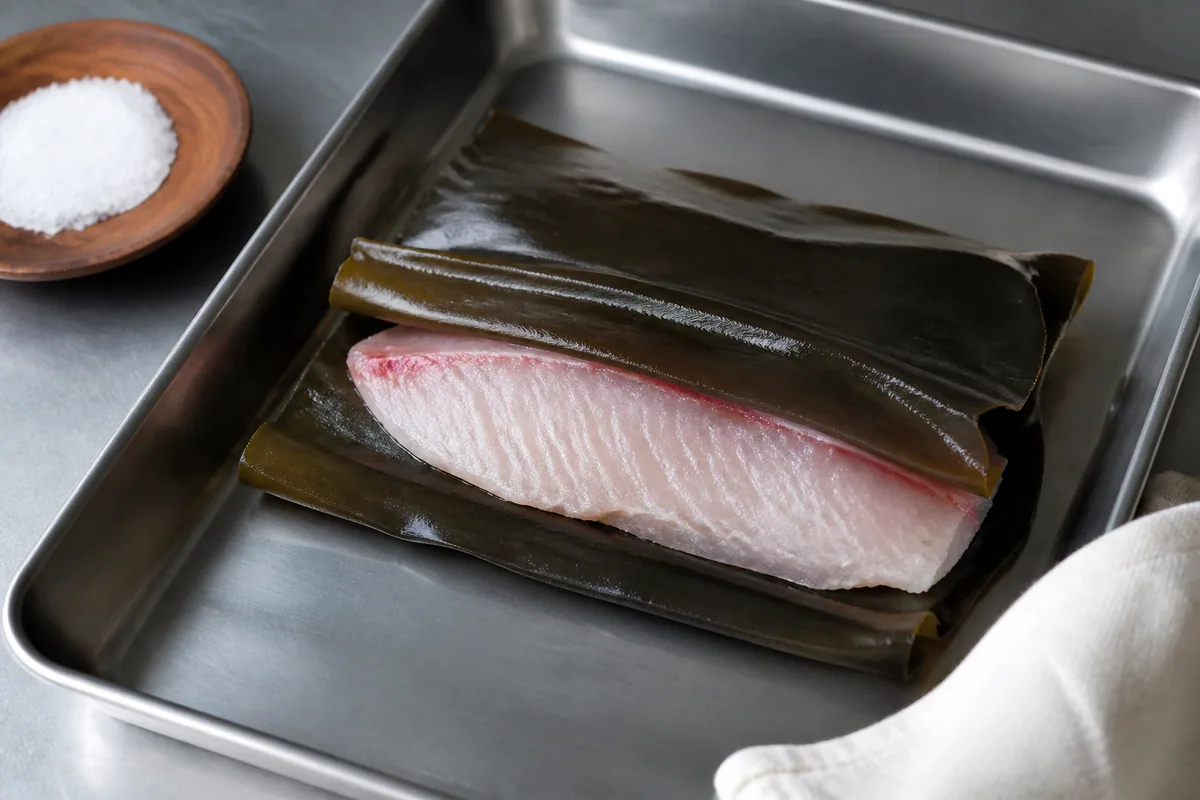
- Prepare the Fish: Take the tai fillets and gently pat them dry with kitchen paper to remove excess moisture.
- Apply Salt: Sprinkle salt evenly on the surface of the fish and let it sit for about 10–15 minutes to draw out extra moisture.
- Prepare the Kombu: Lightly wipe the dashi kombu to clean it, then cut it to a size appropriate for the fish fillet.
- Kobujime Wrapping: Place the kombu directly onto the salted fish surface, then wrap tightly with plastic wrap. Let it rest in the refrigerator for 1–2 hours.
- Finishing: Remove the kombu, slice the fish to a suitable thickness, and serve.
Points of Caution
- Kombu Selection: Since dashi kombu has a milder flavor, it might not fully bring out the characteristic taste expected in kobujime.
- Salt Adjustment: Salt concentration and curing time should be adjusted depending on the type and thickness of the fish.
- Hygiene Management: Pay close attention to hygiene throughout the kobujime process and maintain the freshness of the ingredients.
Pre-Serving Checks
- Quality Assessment of Kombu: Examine the quality and flavor of the dashi kombu to determine if it is suitable for kobujime.
- Sanitation Check: Confirm the cleanliness of your kitchen tools and workspace and ensure measures are in place to maintain ingredient freshness.
Summary
While it is possible to use dashi kombu for making kobujime with tai, careful attention must be paid to flavor and kombu quality. Proper kombu selection, salt adjustment, and strict hygiene control are essential to achieve the best results when preparing kobujime.