After preparing the necessary sushi-making tools, this article explains effective practice methods and points to keep in mind to improve your sushi skills.
Steps and Key Points
-
Preparing the Sushi Rice (Shari)
- Managing Moisture and Temperature:
- The moisture content depends on the rice variety and cooking method. Generally, use 1.2 to 1.5 times the volume of water per cup of rice when cooking. After cooking, keep the shari at body temperature (about 36–37°C) for best results.
- Making the Sushi Vinegar (Awasezu):
- Mix rice vinegar, sugar, and salt in appropriate proportions, and evenly fold into the cooked rice.
- Managing Moisture and Temperature:
-
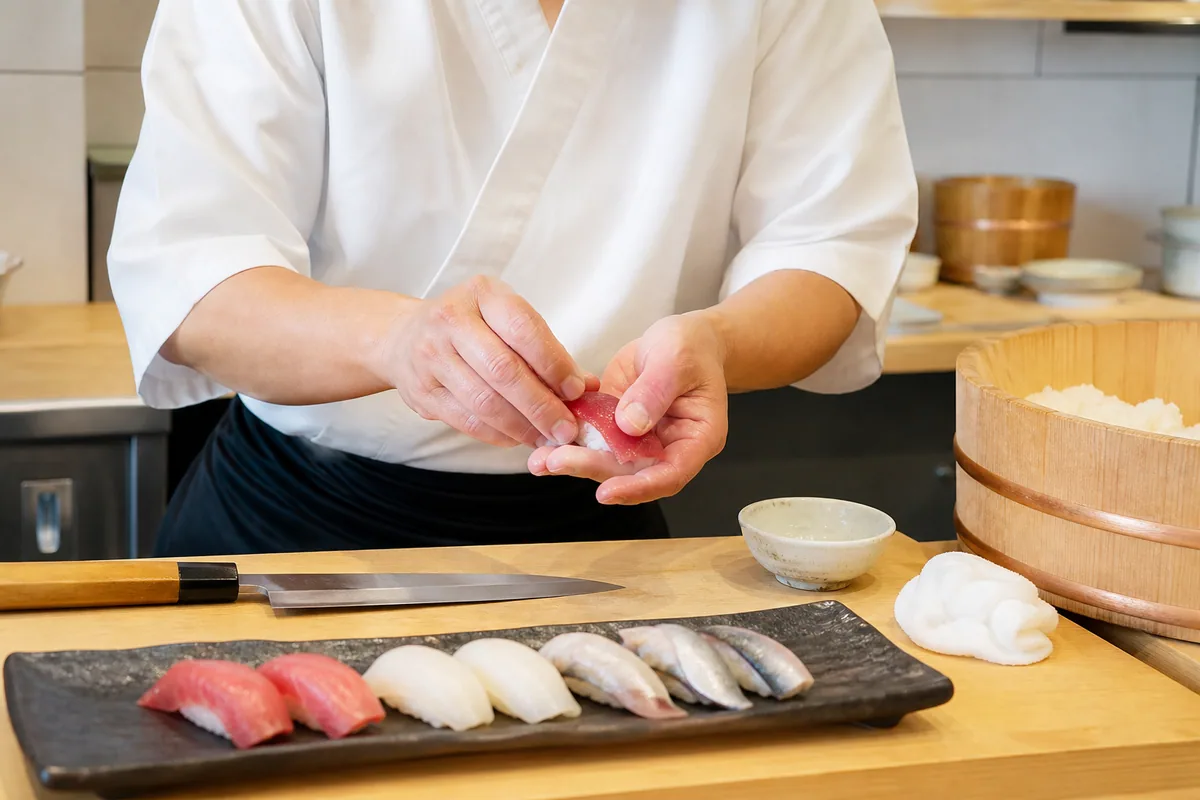
Practicing Nigiri Sushi
- Shaping the Rice:
- Lightly shape the shari with your palm into an appropriate size and form.
- Cutting the Fish:
- Slice the fish thinly at a right angle to the muscle fibers, aiming for smooth cut surfaces.
- Shaping the Rice:
-
Practicing Maki (Rolled Sushi)
- Arranging Ingredients:
- Spread the shari thinly and evenly over the nori seaweed sheet, placing fillings centrally.
- Rolling Technique:
- Using a bamboo rolling mat (makisu), practice rolling carefully to ensure even distribution of ingredients.
- Arranging Ingredients:
Important Points
- Shari Temperature and Moisture:
- If the shari is too hot, the nori becomes soggy; if too cold, it becomes hard to shape. Maintaining proper temperature and moisture is crucial.
- Pressure When Shaping Nigiri:
- Pressing too hard makes the rice too dense; too light, and it falls apart easily. Practicing the right amount of pressure is necessary.
- Amount of Fillings in Maki:
- Too much filling makes rolling difficult; too little results in weak flavor. Learning to judge the right amount is important.
Pre-Service Checklist
- Hygiene Management:
- Handle fresh fish with great care for hygiene and freshness.
- Keep hands and tools clean and practice appropriate handwashing to prevent cross-contamination.
Summary
After preparing your tools, improving your sushi-making requires managing shari properly, practicing nigiri and maki skills, and maintaining hygiene. Focusing on these points through repeated practice will help you create even more delicious sushi.