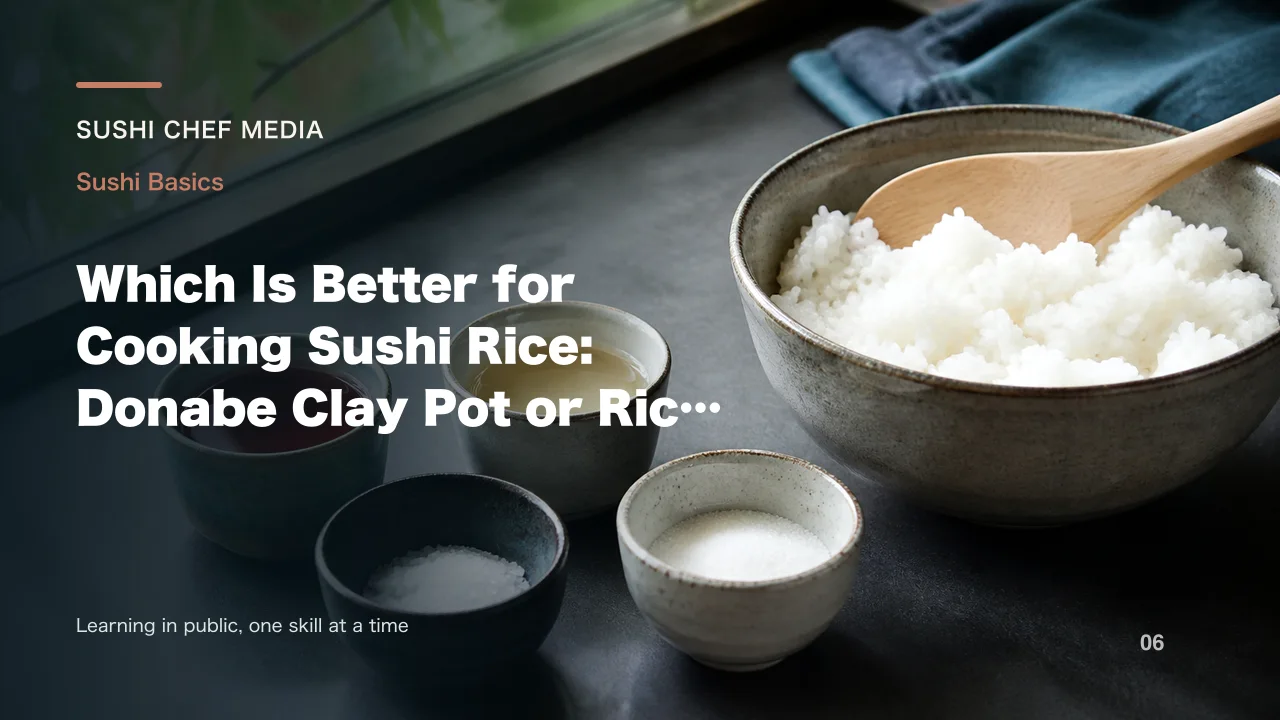
Cooking sushi rice can be done traditionally with a donabe (Japanese clay pot) or using a modern rice cooker. Both methods have their own advantages and disadvantages, so it is important to choose based on your purpose and situation.
Characteristics
- Even Heating: The donabe has excellent heat conduction, allowing the rice to be heated evenly throughout.
- Enhanced Flavor: Cooking with a donabe draws out the umami (savory flavor) of the rice, resulting in richly flavored sushi rice.
Procedure
- Rice Washing: Rinse the rice several times with water to remove excess starch.
- Soaking: Soak the washed rice in water for about 30 minutes to allow absorption.
- Cooking: Place the rice and the proper amount of water in the donabe and heat over high flame. Once boiling, reduce to low heat and cook for about 10 minutes.
- Steaming: Turn off the heat and let the rice steam for 10 minutes.
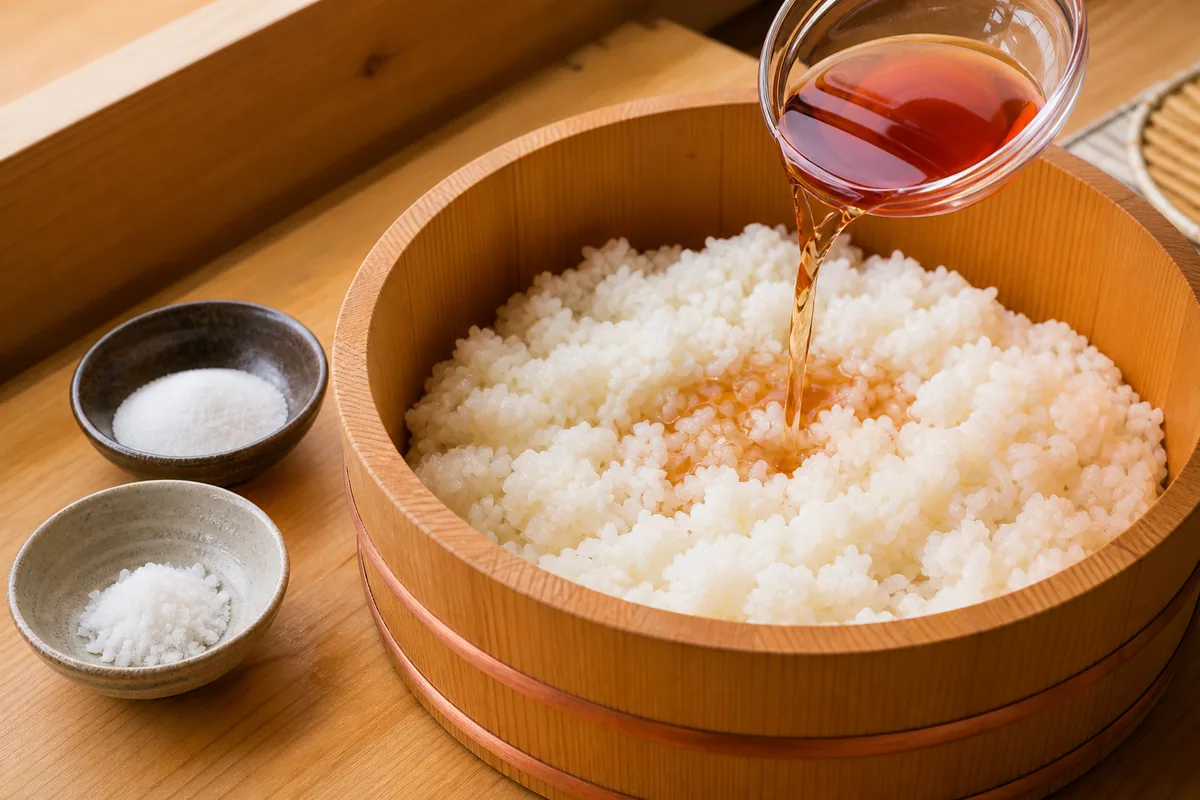
- Preparing Sushi Vinegar: In a separate container, mix vinegar, sugar, and salt, then evenly blend this mixture into the cooked rice.
Points to Note
- Adjusting Heat: Controlling the heat with a donabe can be challenging, and the rice may easily burn. Carefully manage the flame to keep appropriate heat and prevent scorching.
- Preventing Burning: Keep a close eye on the donabe during cooking to avoid the bottom from burning. If necessary, add a bit of water or adjust the heat.
Characteristics
- Convenience: Using a rice cooker simplifies the process, making it easy to cook sushi rice.
- Consistency: Rice cookers have simple settings that produce consistent sushi rice quality every time.
Procedure
- Rice Washing: Rinse the rice several times to remove excess starch.
- Soaking: Soak the rinsed rice in water for about 30 minutes.
- Cooking: Add the rice and appropriate amount of water to the rice cooker and cook using the regular cooking mode.
- Steaming: After cooking, let the rice steam in the cooker for 10 minutes.
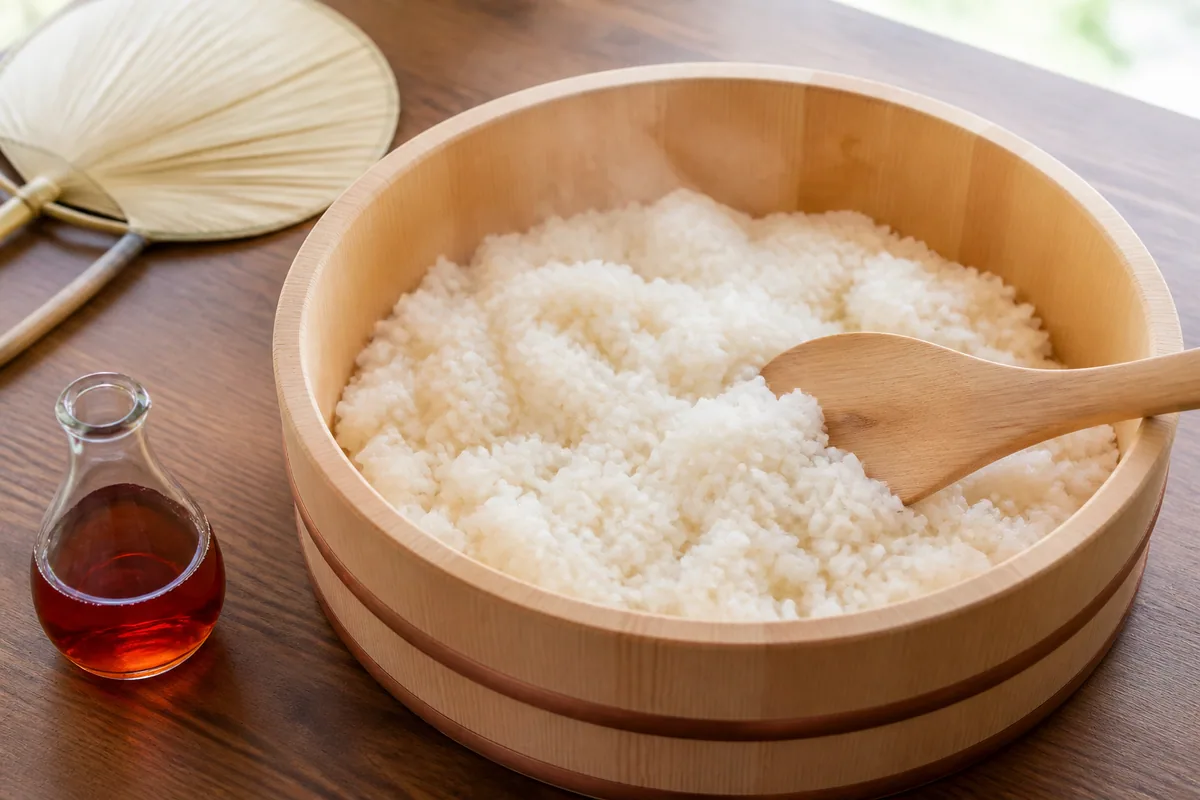
- Preparing Sushi Vinegar: Mix vinegar, sugar, and salt in a separate container and fold it evenly into the cooked rice.
Points to Note
- Adjusting Water Amount: The ideal water ratio may vary depending on the rice cooker model and rice condition. Try multiple times to find your preferred rice texture.
- Rice Cooker Settings: Different rice cooker features and settings may affect the final result. Read the instruction manual carefully and select appropriate settings.
Summary
Both the donabe and rice cooker have their pros and cons. The donabe represents the traditional method that enhances flavor but requires careful heat control and attention to prevent burning. The rice cooker is convenient and allows for consistent results, making it suitable for busy times and beginners, though water ratios and settings need to be optimized. Choose the best method according to your situation and preference.
Next Steps to Review
- Techniques for adjusting heat when cooking rice in a donabe.
- Optimizing water amount for rice cookers.
Reviewing these topics will help you make even more delicious sushi rice.