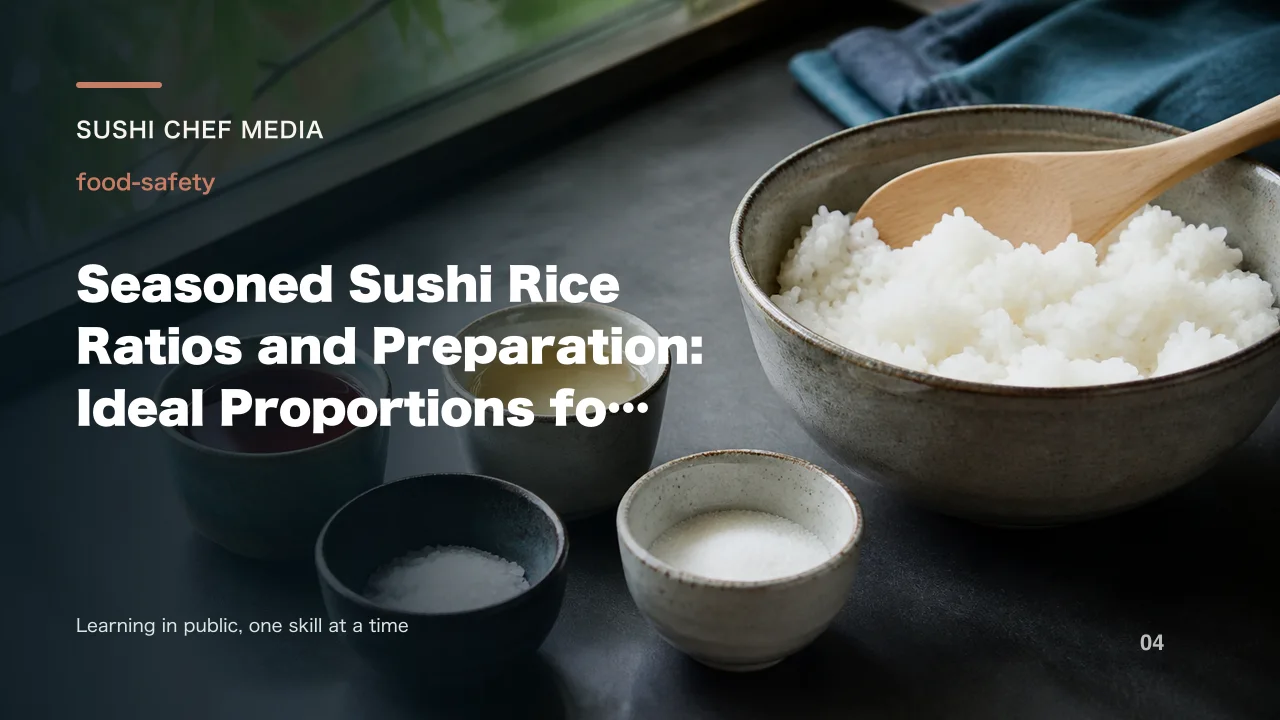
Sushi rice, known as “sume-shi” (酢飯), is a critical element that defines the taste of sushi. By adjusting the ratios of vinegar, sugar, and salt relative to the amount of rice, you can tailor the flavor to your preference. As a general guideline, for 1 go (a traditional Japanese rice measure, approximately 150g) of rice, 30ml of vinegar, 15g of sugar, and 5g of salt are recommended. However, this is only a reference value and may need adjustment depending on the type of rice used and personal taste.
- Prepare the Rice: Rinse 120g of rice and soak it in water for about 30 minutes.
- Cook the Rice: Cook the rice as usual.
- Make the Seasoned Vinegar: Heat 15ml of rice vinegar, 3g of sugar, and 1g of salt in a small pot, stirring until the sugar and salt are completely dissolved.
- Combine with Rice: Transfer the cooked rice to a sushi wooden tub (sushi oke) and evenly pour the seasoned vinegar over it.
- Mixing: Using a rice paddle (shamoji), cut and fold the rice gently while fanning it with an uchiwa fan to cool.
Important Points:
-
Check the pH: It is desirable to keep the sushi rice pH at or below 4.6. A higher pH may compromise the sanitation of the ingredients. Using a pH meter can help confirm the appropriate acidity.
-
Choice of Vinegar: Using rice vinegar (komezu) results in sushi rice with a mild and mellow acidity. On the other hand, sushi vinegar (sushi-zu) often contains sugar and salt already mixed in, so adjustments are necessary depending on the recipe.
Summary:
The seasoning ratio for sushi rice can be tailored by adjusting the amounts of vinegar, sugar, and salt relative to rice quantity. Generally, 30ml vinegar, 15g sugar, and 5g salt per 150g rice serve as a guideline, but variations are necessary based on rice type and taste preference. Maintaining sushi rice pH below 4.6 is important for food safety, and measuring with a pH meter is recommended. Selecting rice vinegar produces a gentle acidity, whereas sushi vinegar requires recipe-specific adjustment.
For your next steps, consider learning about storing sushi rice and pairing it with various sushi toppings.