One of the challenges that sushi chefs encounter is the issue of “shari sticking to the hands.” This refers to the phenomenon where the stickiness of the shari (vinegared sushi rice) adheres to the hands, making the process of shaping nigiri difficult. Below, we explain the causes and effective countermeasures in detail.
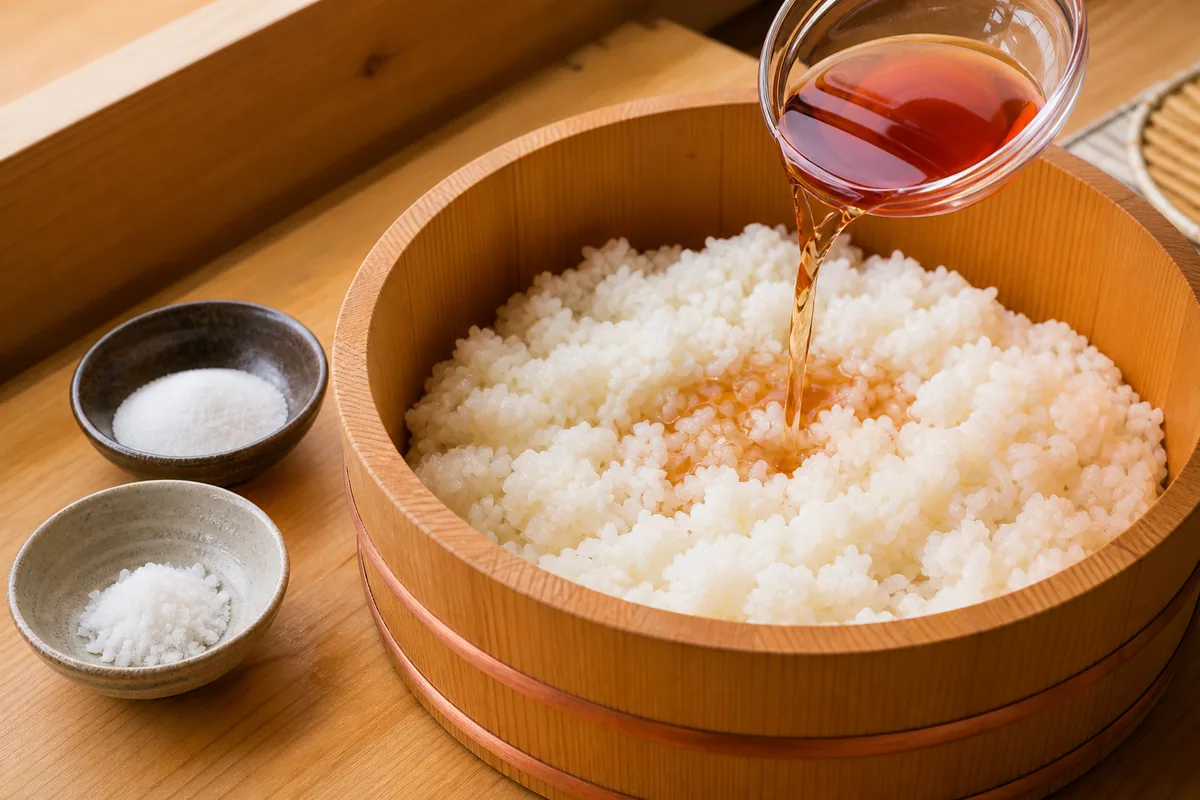
The stickiness of shari is mainly related to the starch in the rice, particularly amylopectin, and moisture content. Freshly cooked shari has gelatinized starch, making its surface soft and sticky. When the temperature of the hands is high in this state, the shari is more likely to stick to them.
Managing Hand Temperature
High hand temperature makes shari more prone to sticking. Sushi chefs’ hand temperature is typically around 33 to 34°C, but ideally, it should be kept near 30°C when shaping sushi. To lower hand temperature, one can use temizu (water for moistening hands) or tezu (water mixed with vinegar for hands).
Usage of Temizu and Tezu
Temizu is water used to wet the hands, while tezu is water mixed with vinegar. Using tezu helps prevent the stickiness of shari. When using temizu or tezu, it is important to maintain hygiene and ensure that the hands are clean before use.
Using Ice
Adding ice to temizu or tezu is another method to cool the hands. However, care must be taken not to apply ice directly to the hands. Proper techniques should be followed when incorporating ice.
Summary
The problem of shari sticking to the hands is mainly caused by hand temperature and the stickiness of the rice. Properly managing hand temperature and using temizu or tezu effectively can reduce this issue. It is important to find the method that best suits you through practice.