Sometimes the vinegar aroma in sushi rice (sumeshi), which is seasoned rice used for making sushi, can seem weak. This can be influenced by the type of vinegar used, the preparation method, and the composition of the vinegar seasoning mixture (awasezu).
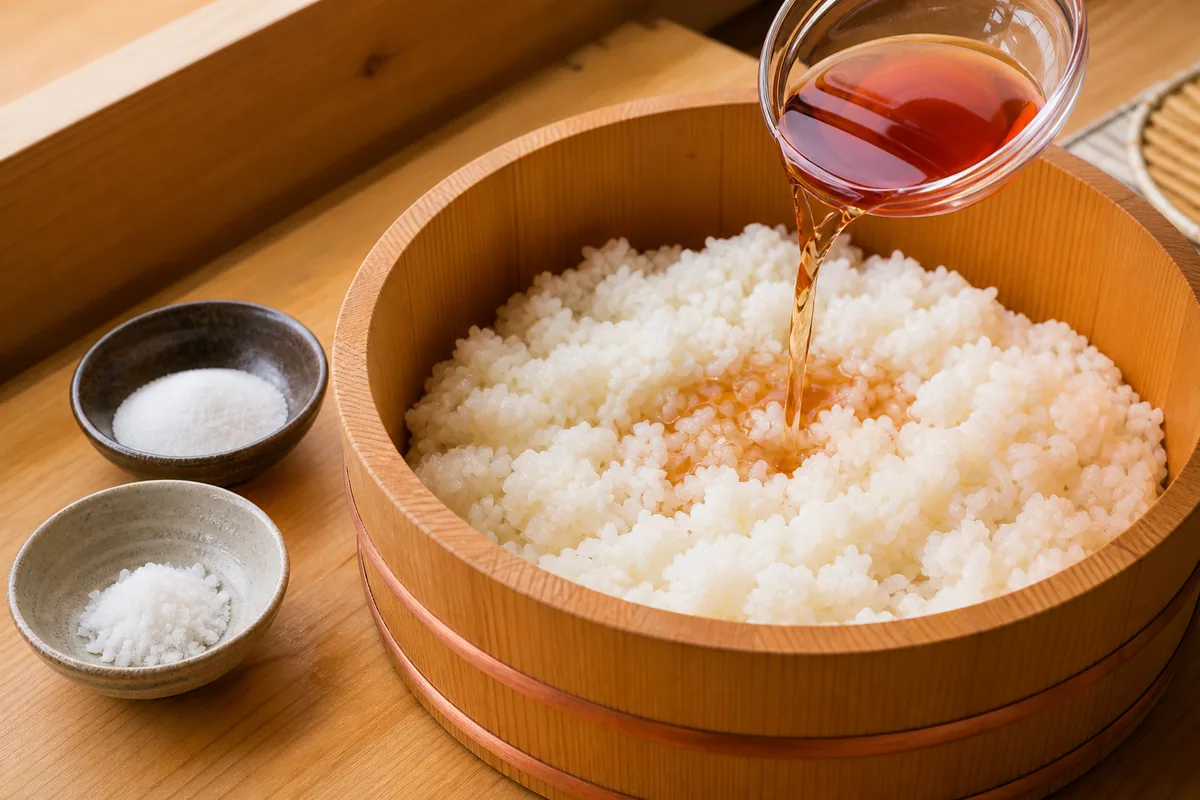
2. Avoid Boiling the Vinegar Mixture
When preparing awasezu (the vinegar seasoning mixture combining vinegar, sugar, and salt), boiling the vinegar causes its aroma to dissipate. Instead, heat the mixture only until the sugar and salt are completely dissolved, then allow it to cool. This helps preserve the fragrance.
3. Adjust the Amount of Vinegar Mixture
Using too little awasezu can result in a weak vinegar aroma. Gradually add small amounts and adjust until you reach your preferred aroma level.
Precautions
- When selecting rice vinegar, choose a high-quality product.
- When adjusting the amount of awasezu, add it gradually while tasting to achieve your desired aroma.
- Be careful not to overheat or boil the vinegar mixture.
Summary
If you feel the vinegar aroma in your sushi rice is lacking, consider switching to rice vinegar, avoid boiling the vinegar mixture when dissolving sugar and salt, and adjust the quantity of the seasoning mixture to your liking. Trying these methods can help you create sushi rice with a preferred vinegar aroma.